
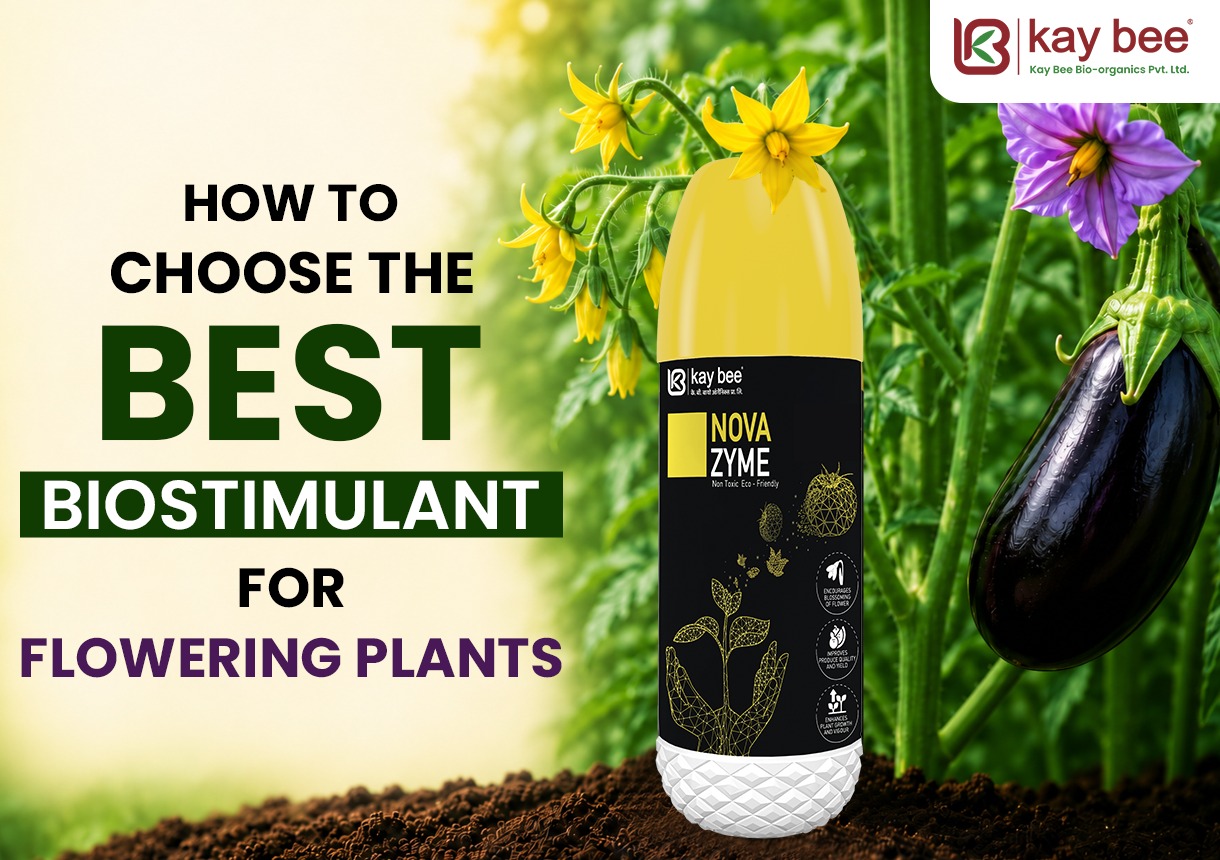
How to Choose the Best Biostimulant for Flowering Plants
The process of flowering isn’t only about how a plant looks; many interacting biochemical signals also control the flowering process. Numerous hormones, chemical messengers, enzymes, and nutrients need to work together perfectly. If these signals are not properly coordinated (timely delivery of nutrients and enzymes and the correct balance of H₂O), then the result will be premature flower drop, poor fruit set, and a yield less than its full potential.
How do you determine which product is going to serve as the best biostimulant for stimulating flowering? With so many biostimulants to choose from, it can be difficult to make an informed decision
Understand What a Biostimulant Actually Does
The term “biostimulant” does not refer to a type of fertilizer. It does not provide sufficient amounts of nitrogen, phosphorus, or potassium; therefore, its role is to modify how and to what extent the plant uses these existing elements. An effective biostimulant can increase the efficiency of nutrient uptake, stimulate the production of naturally occurring hormones, and decrease stress on the plant physiologically. These activities directly contribute to the flowering and fruiting of the plant.
In addition to functionality, the biostimulant must contain various compounds in order to support flowering. The most relevant compounds are:
– Cytokinins are responsible for regulating cell division, initiating flowering, and maintaining buds until flowering occurs.
– Auxins – responsible for initiating fruiting and preventing premature flowering and dropping of blossoms.
– Gibberellic Acid – responsible for helping to develop and elongate floral structures.
– Zeatin – A naturally occurring cytokinin present in Moringa oleifera that works at the cellular level to enhance the growth of flowers and fruits.
– Amino Acids – Required as building blocks for the enzymes and proteins needed for growth and recovery from stress.
Any product claiming to be the “best” at promoting flowering should contain at least some of the above compounds, with the preferred source being naturally occurring as opposed to synthetic.
Key Parameters to Evaluate Before Choosing
Source of Actives
The actives found in natural extracts (e.g., seaweed, plant hydrolysates and moringa) have a greater variety of active compounds (bioactive profile) than those produced synthetically. The active compounds (bioactive profile) of many natural extracts (e.g., seaweed extract from Ascophyllum nodosum) are also greater than those of most synthetic PGRS. An example of this is the fact that seaweed extract from Ascophyllum nodosum has approximately 60 trace minerals and a variety of plant hormones that occur naturally (organically). Although using synthetic PGRs may increase the speed at which they work, they also have the potential to leave residues and cause hormonal imbalances if used repeatedly.
Absorption Mechanism
The optimum Biostimulant for flowering plants should have the ability to be absorbed through the stomatal openings on the leaves. This is very important because products that are formulated for foliar application will get to the plants’ metabolic system much faster than soil-applied products (inputs). Timing is critical for optimal flowering growth stages.
Visible Window of Efficacy
A reliable product should produce measurable results (increased flower count/decreased flower drop/increased bud strength) within 48-72 hours after application.
Crop Range of Compatibility
Flowering occurs in many types of crops, including vegetables, fruits, spices, and ornamental crops. Therefore, the best product for flowering should work consistently in all crops without requiring crop-specific reformulations.
Contribution of Stress Tolerance
Excessive heat, inconsistent irrigation, and transplant shock have caused many flowers to drop due to abiotic stress. When combined with the ability to create resistance to biotic as well as abiotic stress through the use of biostimulants, this increases the level of protection provided by biostimulants that most synthetic plant growth regulators fail to achieve.
When and How to Apply a Biostimulant for Flowering
Best applied at pre-flowering and flowering stages.
Spray during morning or evening hours.
Avoid mixing with copper or sulfur-based products.
Why Nova Zyme by Kay Bee Bio Meets These Standards
Nova Zyme is made up of extremely purified Ascophyllum nodosum (seaweed) extract plus Zeatin from Moringa oleifera and has a variety of naturally occurring cytokinins, auxins, gibberellins, amino acids, enzymes, and vitamins all in their organic, plant-absorbable form; so they may be taken into the plant through stomata to impact a plant’s physiological/biochemical metabolic operations through increasing flower initiation, improving fruit set and reducing fruit drop, and positively impacting the size, color, weight of produce from plants within as little as 72 hours. It can be applied to vegetables, fruits, spices, and horticultural/ornamental crops.
Conclusion
Selecting the proper biostimulant for blooming plants is more than simply stating you will achieve your desired goal; you must do your research to determine what your plant can perform with each ingredient used at the correct time. Using compounds found in nature, such as Cytokinin, Auxin, Gibberellic acid, and amino acids, for your biostimulants when compared to synthetics, will provide greater safety for you and your crops over time and provide healthier crops for you in the future. When you compare these types of solutions to one another you must include the following parameters: absorption efficiency, stress tolerance, and plant compatibility the end result for you will be a biostimulant such as Nova Zyme by Kay Bee Bio, which has been proven and trusted by growers on vegetables, fruits, spices, and ornamental crops, that gives you everything you could need in a biostimulant and more allowing you to make an investment in a biostimulant that works in conjunction with the biology of each plant in your garden, farm and produce the results that show up in every flower you grow, every piece of produce you raise and every harvest you bring home.
Latest Blogs
 Mycorrhiza Technical Manufacturer in India | Kay Bee Bio-Organics Pvt. Ltd.
 Cotton Whitefly Management During Square Formation Stage: Effective Control with Pesto Raze & OrgaNeem
 Calcium for Cabbage Head Formation: How Calboost (Ca-11%) Ensures Tight & Crack-Free Heads
 Citrus Canker Organic Control: A Complete Farmer’s Guide
 Orthosilicic Acid (OSA) for Monsoon Stress: Building Crop Strength & Resilience
COPYRIGHT © 2026 - ALL RIGHTS RESERVED. MADE BY WebAppGigs