
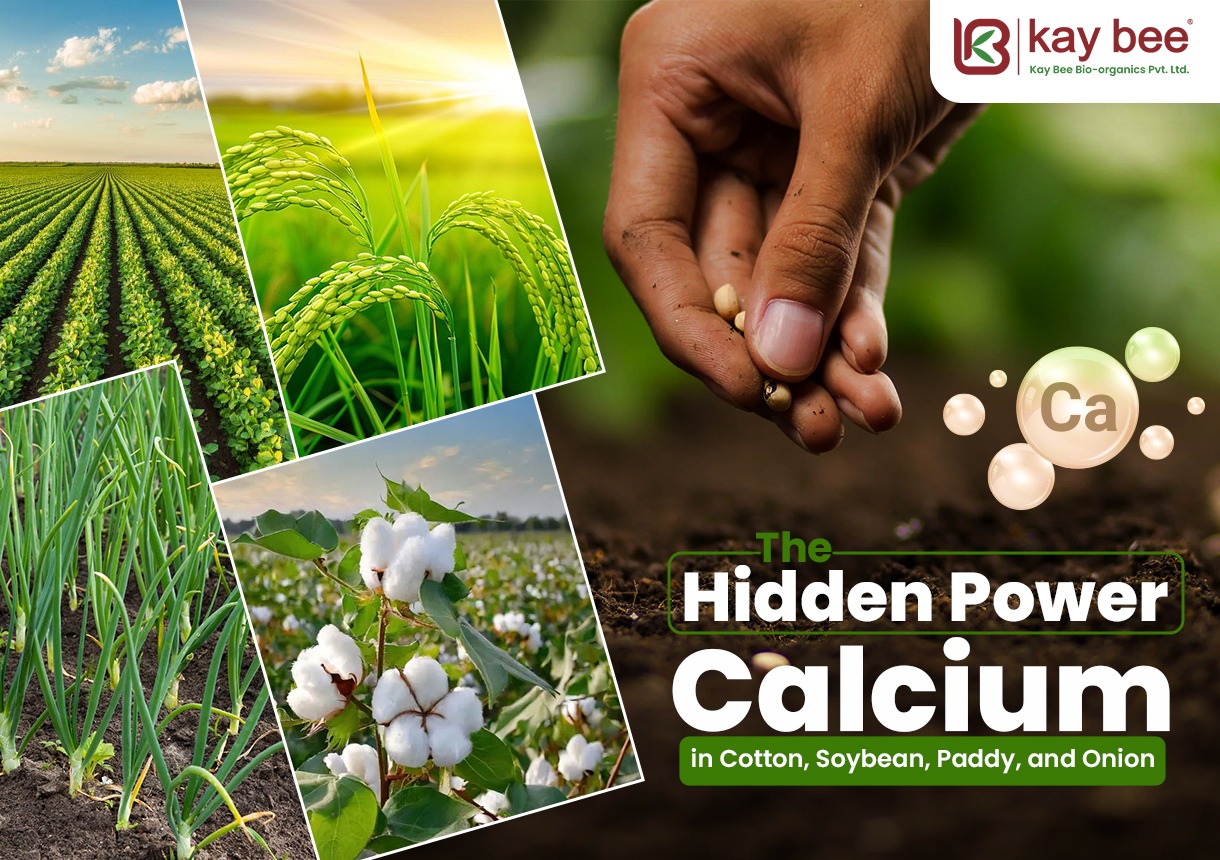
The Hidden Power of Calcium in Cotton, Soybean, Paddy, and Onion
Did you know that calcium is the fourth most required nutrient for plant growth, yet it is the most overlooked in Indian farm nutrition programmes?
The International Plant Nutrition Institute (IPNI) conducted research indicating that approximately 35% of India’s farmland has soil that lacks sufficient quantities of calcium. This deficiency exists in large quantities and seldom is evidenced through routine soil testing, as it is more about the transport of calcium than the overall amount available. Once calcium enters the plant’s tissues, it cannot be moved between new, fast-growing tissues or older tissue. Therefore, internal damage occurs in a healthy crop before the crop needs calcium the most.
Why Calcium Is Not Just Another Nutrient
Calcium is mostly viewed as an amendment to alter soil pH by most farmers; however, the importance of calcium in crops goes far beyond that. Calcium is the cellular structure of every cell wall within the plant. It regulates cell division, controls enzyme activity, strengthens plant resistance against fungal diseases, and affects the quality of fruit and grain at harvest.
It is very common for calcium deficiencies in crops to be inconspicuous. There are many misconceptions that a crop is healthy; they may look great on the outside, but the insides tell a much different story. Outcomes from undetected calcium deficiencies in crops include tomato blossom-end rot, leafy vegetable tip burn, onion internal browning, soybean poor pod fill, and cotton boll shedding.
Calcium Deficiency in Cotton, Soybean, Paddy, and Onion: Crop-Wise Impact
Cotton – Cotton During the square and boll formation process, calcium is an essential nutrient needed for these nutrients to be formed. Calcium-deficient crops such as cotton are more prone to premature boll drop and separating fibers than otherwise healthy crops. Additionally, calcium-deficient cotton crops have a higher possibility of becoming infected with the Alternaria and bacterial blight pathogens. As a result, squares drop off before they have had an opportunity to develop, thereby reducing yield potential.
Soybean – Calcium demand by soybean plants is very high during pod filling (R3-R5). If there is a calcium deficiency at this time, pods will be either empty or shriveled, seed weights will be reduced, and seed will also exhibit poor germination quality following harvest. Crops such as soybeans in the acidic, well-leached soils of Vidarbha and Marathwada demonstrate how important calcium is for crops.
Paddy
Calcium strengthens cell walls in paddy, improving resistance to blast and sheath blight fungal infections. Calcium-deficient paddy shows rolled and twisted young leaves, reduced tiller strength, and weakened grain fill. In waterlogged soils, calcium becomes even more unavailable due to reduced root oxygen.
Onion
For onion, calcium is the single most important mineral governing bulb quality, shelf life, and storage stability. Calcium for crop quality in onions means firmer bulb scales, reduced double-bulbing, lower post-harvest losses, and better market grade. Deficiency leads to soft neck, rotting during storage, and rejection at the mandi.
Why Soil Calcium Alone Is Not Enough
Although there is an adequate level of calcium present in the soil, the plant can still have a large deficiency in the availability of that nutrient to the plant’s roots due to many factors, including:
Only moving along the transpiration stream (xylem) through a transpiration process. Less transpiration = Less amount of Ca delivered to the swelling point of growth.
Waterlogged soils = Less amount of roots = Less amount of gas exchange = Less amount of respiration for Roots = Less amount of calcium through the root zone.
Other cations in the soil (high [K] or [Mg]) will compete with [Ca] for the uptake site on the root.
When growing rapidly during the monsoon season the crop will grow faster than the roots can supply calcium to new tender plant tissue.
This is precisely where soil application falls short. For cotton, soybean, paddy, and onion, foliar calcium delivery through Calboost crop nutrition is the fastest and most reliable way to correct deficiency before irreversible crop damage sets in.
Calboost: Fast-Acting Liquid Calcium for Serious Crop Nutrition
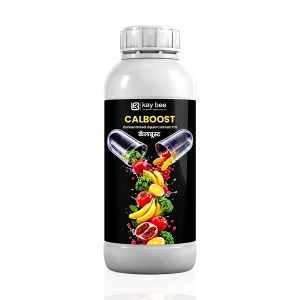
Calboost from Kay Bee Bio-Organics is a liquid calcium fertilizer contain 11% calcium that allows direct foliar application of calcium as an ionic form. Calboost provides a unique, reliable and effective source for supplying crop-quality calcium, by not relying on soil chemistry or the ability of roots to absorb the calcium.
When it comes to supplying crop-quality calcium to the crop, Calboost is the easiest, most reliable method available at the farm level:
- Supplies readily available calcium for rapidly growing shoot tips, fruit, and pods.
- Strengthens cell walls, which reduces tip burn, crack injury, blossom-end rot and boll fall.
- Improves the shelf life and quality of onions, cotton and soybeans in the market.
- Can be used in conjunction with your regular pesticide and fertiliser spraying schedule.
- Application rate is 2-3 ml / litre of water to be applied as a foliar spray; at or near flowering, pod/boll formation, and during the bulbing stage.
CALBOOST – Calcium Fertilizer for Plants
Final Thoughts
Calcium is an essential input for your crops rather than an optional input. In crops such as cotton, soybean, paddy, and onion, calcium is also a yield determining nutrient; unfortunately, many farmers are not using this nutrient at the right time and/or in the correct form.
Calcium deficiencies in crops will not announce their presence with dramatic symptoms, but will gradually decrease pod fill, make bolls weaker, will soften bulbs and adversely affect your market returns before you realize that any damage occurred.
Understand how calcium benefits your crops. Give crop nutrition priority to calboost at important growth stages. Provide the right amount of calcium needed for high-quality crops as soon as possible to avoid any potential problems.
Read More Blogs:
Latest Blogs
 Tomato Nematode Damage: Underground Signs, Crop Loss and Organic Control with Root Fit
 Sugarcane Growth Stages: Root, Tiller & Vegetative Schedule
 Guava Flowering & Fruit Development: Calbolite Powder for Calcium Nutrition
 Management of Cabbage Diamondback Moth with Larvo Raze + OrgaNeem Organic Products
 Papaya Fruit Rot & Powdery Mildew in Monsoon: Identification and Organic Management
COPYRIGHT © 2026 - ALL RIGHTS RESERVED. MADE BY WebAppGigs