
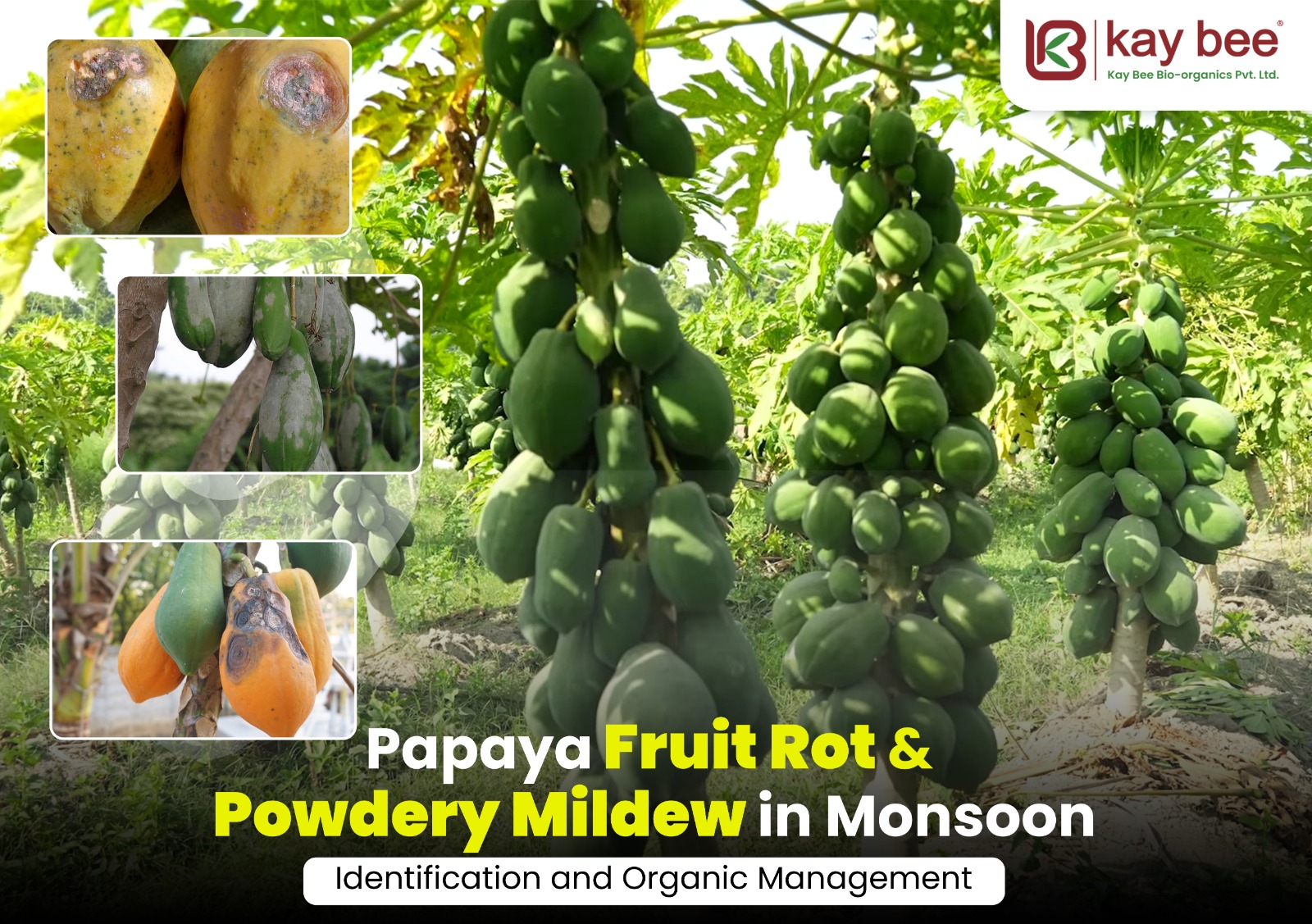
Papaya Fruit Rot & Powdery Mildew in Monsoon: Identification and Organic Management
Monsoon season brings a sigh of relief to farmers, providing much-needed water for crop growth. However, for papaya growers, the high humidity, continuous rainfall, and waterlogging create a perfect breeding ground for fungal diseases.
Without proper papaya disease management, issues like papaya downy mildew and papaya fruit rot can quickly ruin your harvest and reduce your hard-earned profits to zero. To better understand how monsoon weather encourages fungal diseases across different crops, also read our guide on Top 10 Crop Diseases in June and Their Organic Management.
This simple guide will help you easily identify these destructive monsoon diseases using clear visual signs and explore low-cost organic treatments to save your orchard.
-
The Monsoon Threat: Why Papaya Struggles in the Rain
Papaya trees love warmth, but they absolutely hate “wet feet” (water pooling around the roots) and stagnant, humid air.
During the monsoon, relative humidity often shoots above 85%, and temperatures hover between 24°C and 30°C. Spores travel incredibly fast through splashing raindrops and wind. If your soil doesn’t drain quickly, the roots suffocate. This triggers papaya root rot and stem rot of papaya, weakening the tree’s natural immunity and making it easy prey for airborne blights. Healthy root systems are the first line of defense against soil-borne diseases. To learn why strong white roots are essential for crop health and higher yields, also read our guide on The Significance of White Root Development in Enhancing Crop Health and Yield.
-
Identification: Spotting the Symptoms Early
Catching these diseases early is the secret to successful papaya disease management. Here is how to spot the trouble on your fruits and leaves.
-
Papaya Fruit Rot & Phytophthora Blight
Often caused by Anthracnose or Phytophthora fungi, papaya fruit rot starts on green, developing fruits.
Common Symptoms:
- Water-soaked spots: Starts as small, wet-looking, sunken circles on the green fruit.
- Expanding dark lesions: These spots rapidly grow into large, dark brown or black decaying wounds.
- Fungal crust: In high humidity, a pinkish or light-brown fuzzy mold forms in the center of the spots.
- Premature drop: The fruit loses its firmness, rots on the stem, and drops to the ground, making it completely unmarketable. This is a classic sign of phytophthora blight of papaya.
Early identification and timely disease management can significantly reduce crop losses. For more practical organic disease management strategies, also read our guide on Best Organic Farming Products in India.
- Papaya Powdery Mildew Symptoms
On the leaves, high moisture encourages papaya downy mildew and other wet-weather blights.
Key Symptoms:
- White Powdery Patches: Small, ash-like white circular patches appear on both the upper and lower surfaces of the leaves.
- Yellowing & Curling: Infected leaves turn pale yellow, crinkle, and distort, reducing the plant’s ability to make food.
- Premature Leaf Drop: Leaves quickly dry up, turn brown, and fall off early, leaving developing fruits exposed to sunscorch.
Fungal diseases spread rapidly under humid conditions, making preventive organic crop protection especially important during the rainy season. Learn more in our article on Importance of Organic Farming in India.
- Organic Management Practices for the Monsoon
Chemical fungicides can leave harmful residues on the fruit and damage soil health. Organic management, when started early and applied consistently, is highly effective, safe for the environment, and keeps your production costs low. Botanical crop protection products are becoming increasingly popular for sustainable disease management. To explore more natural solutions, also read our guide on Best Neem-Based Pesticides for Agricultural Crops.
- Cultural Practices
- Improve Field Drainage
Ensure that excess rainwater drains out of the orchard within an hour of a heavy downpour. Use a raised-bed or ridge-planting method to keep the root zone above standing water.
- Proper Spacing and Air Circulation
Avoid overcrowding your plants. Maintaining a spacing of at least 2.25 × 2.25 meters allows sunlight to reach the lower trunk and keeps air moving freely, which dries up wet leaves quickly.
- Sanitation (The Most Crucial Step)
Walk through your orchard regularly. Safely pluck off infected fruits and cut away heavily spotted leaves. Do not throw them on the ground. Bury them deep in a pit outside your farm or burn them to prevent spores from splashing back onto healthy trees.
-
Weed Control
Remove all weeds around the base of the papaya trunk. Weeds trap humidity near the ground and act as secondary hosts for pests and fungi.
- Organic Sprays and Biological Treatments
When the weather clears up between rains, apply these organic treatments immediately to form a protective shield over your crop.
- Pseudomonas fluorescens & Trichoderma viride
These are beneficial bio-agents. Mix 50 grams of Trichoderma or Pseudomonas powder in 10 liters of water and drench the soil around the root zone. These friendly microorganisms attack and suppress harmful pathogens naturally. Healthy soil microorganisms play a vital role in improving root development and protecting crops from soil-borne diseases. To learn more, also read our guide on The Significance of White Root Development in Enhancing Crop Health and Yield.
- Botanical Fungicide Root Fit
It is a natural plant-extract bio-fungicide that destroys soil-borne pathogens and root nematodes by contact, curing papaya root rot and fruit rot while promoting healthy root development and higher fruit yields. Mix 1 litre of Root Fit in 200 litres of water per acre for crops above one month of age, and 0.5–1 ml per litre of water for crops below one month of age. Growers looking for long-term soil health and sustainable disease management can also explore our guide on Best Organic Farming Products in India.
- Bio-Fungicide Fungo Raze
It is a plant-based, eco-friendly bio-fungicide that penetrates plant tissues through contact and systemic action to quickly stop fungal infections by breaking down the cell walls of fungal spores. Use 2 ml per litre of water as a foliar spray for controlling papaya powdery mildew. For more information on how botanical fungicides support residue-free farming, also read our guide on Best Neem-Based Pesticides for Agricultural Crops.
- Quick Checklist for Farmers This Monsoon
| Action Item | Timing | Why It Matters |
| Clear Drainage Channels | Before & during rains | Prevents root suffocation and collar rot. |
| Remove Infected Fruits/Leaves | Twice a week | Stops the disease from spreading to healthy trees. |
| Bio-Agent Soil Drenching | Once a month | Protects roots from soil-borne fungi. |
| Neem or Buttermilk Spray | On a clear, sunny morning | Coats the fruits and leaves against airborne spores. |
Following a regular orchard monitoring schedule helps detect disease outbreaks before they become severe. For additional seasonal crop protection tips, also read our guide on Top 10 Crop Diseases in June and Their Organic Management.
Conclusion
Managing a papaya orchard during the monsoon boils down to two simple goals: keeping the root zone well-drained and acting fast with organic protection. By maintaining clear drainage channels to stop waterlogging, keeping the orchard clean, and spraying natural bio-agents like Root Fit and Fungo Raze at the first break in the rain, you can effectively manage root rot, papaya fruit rot, and powdery mildew while protecting overall plant health. Strong root systems and healthy soil biology are the foundation of disease-resistant crops. Learn more in our guide on The Significance of White Root Development in Enhancing Crop Health and Yield.
Taking these low-cost, preventive steps protects your trees from soil to leaf, ensuring a healthy, chemical-free harvest and securing your hard-earned profits. If you’re interested in adopting sustainable farming practices with botanical crop protection solutions, explore our articles on Importance of Organic Farming in India and Why Export Farmers Choose Neem Insecticides.
Latest Blogs
 Mycorrhiza Technical Manufacturer in India | Kay Bee Bio-Organics Pvt. Ltd.
 Cotton Whitefly Management During Square Formation Stage: Effective Control with Pesto Raze & OrgaNeem
 Calcium for Cabbage Head Formation: How Calboost (Ca-11%) Ensures Tight & Crack-Free Heads
 Citrus Canker Organic Control: A Complete Farmer’s Guide
 Orthosilicic Acid (OSA) for Monsoon Stress: Building Crop Strength & Resilience
COPYRIGHT © 2026 - ALL RIGHTS RESERVED. MADE BY WebAppGigs