
Mite Control in Sugarcane: How to Identify and Treat Early
Sugarcane is one of the most important cash crops cultivated across tropical and subtropical regions. To achieve optimum yield and maintain cane quality, farmers must protect the crop from various pests. Among these emerging threats, mite infestation in sugarcane has become a serious concern, especially during hot and dry weather conditions.
Mites are tiny pests that often go unnoticed during the initial stages of attack. By the time visible symptoms appear, considerable damage may already have occurred. Therefore, early identification and timely intervention are critical for effective control.
This article explains how to identify mite damage in sugarcane, understand their life cycle, recognize favorable conditions for outbreaks, and implement effective sugarcane mite management practices using botanical solutions.
Mite Infestation in Sugarcane
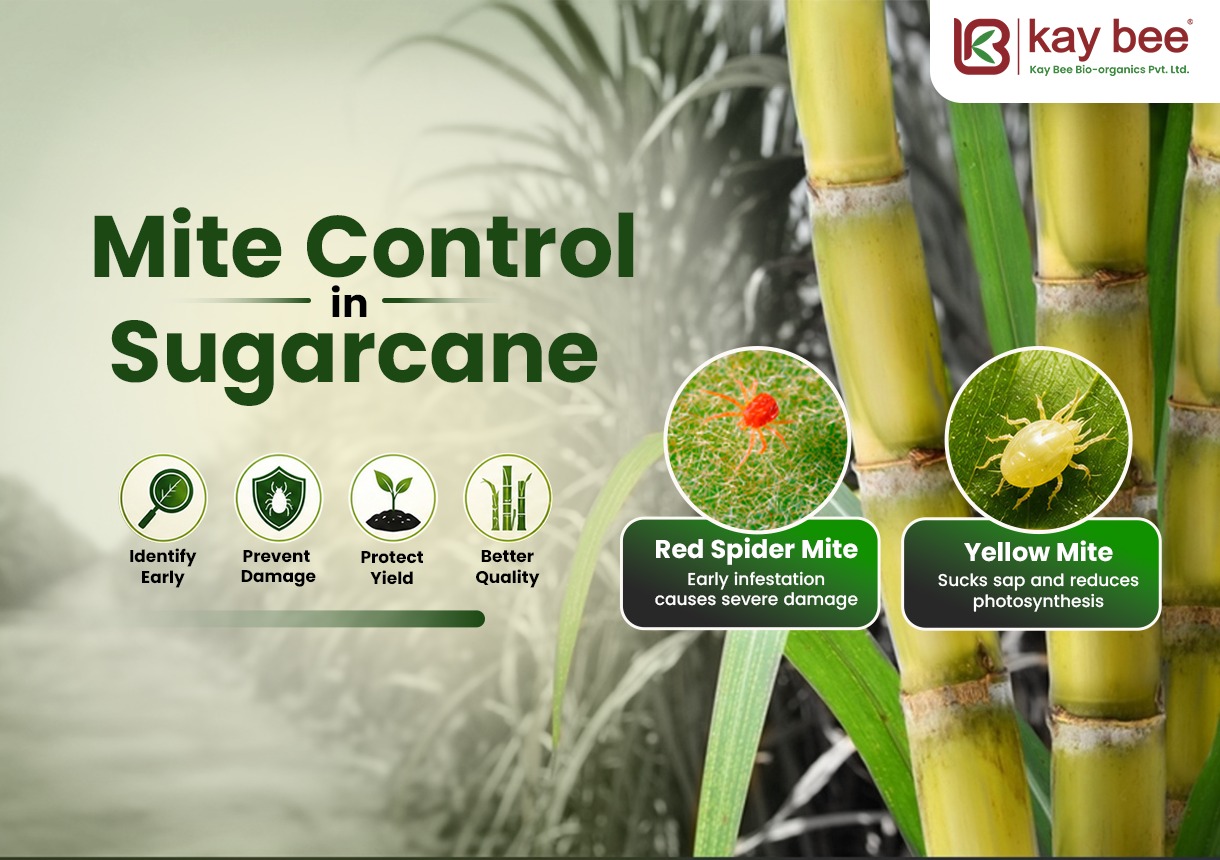
Mites are minute arachnids belonging to the family Tetranychidae. They feed by piercing plant tissues and sucking cell sap from leaves. Under favorable conditions, their populations multiply rapidly, causing severe injury to sugarcane foliage.
Among the important species, the red mite of sugarcane is commonly observed in fields experiencing prolonged dry and warm weather.
Because mites are extremely small, infestations are often overlooked during routine field inspections. Regular monitoring helps detect the problem before economic losses occur.
Identification of Mite Infestation Sugarcane
Early detection is the foundation of successful control. Farmers should inspect the lower surface of leaves regularly, particularly during periods of high temperature and low humidity.
How to Identify Mites
- Tiny reddish, yellowish, or greenish moving organisms are visible on the underside of leaves.
- Fine silken webbing may develop under severe infestations.
- Mites generally congregate along the midrib and veins.
- A hand lens can assist in detecting early populations.
Symptoms of Mite Infestation Sugarcane
Mite feeding destroys chlorophyll-containing cells, reducing photosynthetic efficiency and affecting crop productivity.
Common Symptoms
-
Yellow Speckling
The earliest symptom appears as numerous tiny yellow or whitish spots on the leaves.
-
Bronzing of Leaves
As feeding progresses, leaves develop a bronze or rusty appearance.
-
Leaf Drying
Affected leaves gradually lose vigor and begin drying from the tips and margins.
-
Reduced Photosynthesis
Extensive feeding reduces chlorophyll content, decreasing the plant’s ability to produce carbohydrates.
-
Premature Leaf Senescence
Severely damaged leaves age prematurely and may dry completely.
-
Yield Reduction
Heavy infestations can adversely affect cane growth, sugar accumulation, and overall productivity.
Life Cycle of Red Mite Sugarcane
Understanding the biology of mites is essential for designing effective management strategies.
Egg Stage
Female mites lay tiny spherical eggs on the underside of leaves, often near veins and protected by webbing.
Larval Stage
Eggs hatch into six-legged larvae that immediately begin feeding on plant sap.
Nymphal Stage
Larvae develop into eight-legged protonymph and deutonymph stages, continuing to feed aggressively.
Adult Stage
Adults are small, active, and reproduce rapidly under favorable environmental conditions.
Duration of Life Cycle
- Under warm temperatures, the complete life cycle may be completed within 7–14 days.
- High temperatures accelerate development and multiplication.
- Multiple overlapping generations occur during the season, leading to sudden outbreaks.
Conditions Favoring Mite Outbreaks
Several environmental factors encourage the rapid increase of mite populations.
Favorable Conditions
- Hot and dry weather.
- Low relative humidity.
- Prolonged absence of rainfall.
- Dusty field conditions.
- Excessive and indiscriminate use of broad-spectrum insecticides that destroy natural enemies.
- Moisture stress in sugarcane fields.
Monitoring becomes especially important during summer months and dry spells.
Sugarcane Mite Management
Integrated approaches provide the most sustainable control of mites.
-
Regular Field Monitoring
Inspect sugarcane fields weekly during warm periods.
- Observe the lower leaf surfaces.
- Examine middle and lower canopy leaves.
- Use a magnifying lens for early detection.
Early intervention prevents severe population build-up.
-
Maintain Field Hygiene
Proper crop management reduces favorable conditions for mites.
Recommended Practices
- Avoid excessive dust accumulation.
- Maintain optimum irrigation schedules.
- Remove heavily infested plant parts where feasible.
- Encourage balanced fertilization.
- Avoid excessive nitrogen application.
Healthy crops tolerate pest pressure better.
-
Conserve Natural Enemies
Predatory mites, ladybird beetles, and other beneficial organisms naturally suppress mite populations.
Avoid unnecessary pesticide applications that eliminate these beneficial species.
-
Use Bio Acaricide for Sugarcane
Botanical products provide an eco-friendly alternative for mite suppression and fit well within integrated pest management programs.
R-Mite: Botanical Solution for Mite Management
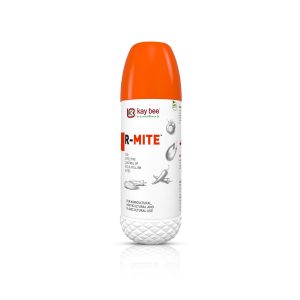
For effective sugarcane mite management, our botanical-based product R-Mite can be used as a bio acaricide for sugarcane.
Recommended Dose
- R-Mite @ 2 ml per litre of water + Balanstick 0.4 ml per litre of water
Ensure thorough coverage of both the upper and lower leaf surfaces, as mites predominantly inhabit the underside of leaves.
Importance of Proper Spray Timing
Spray timing plays a crucial role in achieving better control.
Recommended Spray Time
- Apply R-Mite after 9:00–10:00 AM, when temperatures begin to rise.
- Higher temperatures improve mite activity and exposure, enhancing contact with the botanical formulation.
- Avoid spraying during early morning dew conditions.
- Ensure uniform spray coverage throughout the canopy.
If infestation persists, follow-up sprays may be undertaken based on field observations and infestation levels.
Advantages of Botanical-Based R-Mite
Using a bio acaricide for sugarcane offers several benefits:
- Effective against active mite populations.
- Suitable for integrated pest management programs.
- Botanical-based formulation.
- Supports safer residue management practices.
- Helps conserve beneficial organisms when used judiciously.
- Reduces dependence on repeated chemical acaricide applications.
Preventive Measures against Mite Infestation Sugarcane
Prevention is always more economical than curative treatments.
Farmers Should:
- Conduct regular scouting.
- Manage irrigation efficiently.
- Avoid moisture stress.
- Reduce dust accumulation.
- Use balanced nutrients.
- Monitor fields during hot and dry weather.
- Initiate control measures immediately after early detection.
Conclusion
Mite infestation in sugarcane is often underestimated because of the tiny size of these pests and their ability to multiply rapidly under favorable conditions. However, recognizing the early symptoms, understanding the life cycle of the red mite sugarcane, and adopting timely interventions can significantly reduce crop losses. An integrated approach involving field monitoring, cultural practices, conservation of natural enemies, and the use of botanical products such as R-Mite at 2 ml per litre of water forms the foundation of effective sugarcane mite management. Spraying after 9–10 AM during warmer conditions ensures improved performance and better coverage against active mite populations. By acting early and implementing sustainable practices, farmers can protect sugarcane foliage, maintain plant health, and safeguard yield and sugar quality against damaging mite outbreaks.
Read More Blogs :
Best Red Mite Treatment: Effective Organic Solution for Safe Farming
Red Spider Mite Control for Citrus Orchards With R-Mite
Latest Blogs
 Brown Plant Hopper Paddy Organic Control with Pesto Raze & Mealy Raze
 Mycorrhiza Technical Manufacturer in India | Kay Bee Bio-Organics Pvt. Ltd.
 Cotton Whitefly Management During Square Formation Stage: Effective Control with Pesto Raze & OrgaNeem
 Calcium for Cabbage Head Formation: How Calboost (Ca-11%) Ensures Tight & Crack-Free Heads
 Citrus Canker Organic Control: A Complete Farmer’s Guide
COPYRIGHT © 2026 - ALL RIGHTS RESERVED. MADE BY WebAppGigs