

Causes, Symptoms, and Management of Pink Bollworm in Cotton Crop
When cotton farmers are asked what is the most common and damaging issue in their crop each year, the immediate answer is usually the pink bollworm. Contrary to the common belief that this pest appears only at the boll development stage, its infestation can begin much earlier, right from the square formation stage. If timely and proper planning is not done against this pest, it can cause severe damage to the entire crop.
Life Cycle of Pink Bollworm:
The female moth of the pink bollworm lays around 150–200 eggs in clusters. The egg stage lasts about 3–5 days, after which white larvae emerge. As these larvae grow, they begin to turn pink. In warm regions, the larval stage lasts 8–13 days, during which they cause extensive damage to the crop. A fully grown pink bollworm larva is about 10–15 mm long with a dark-colored head. After completing the larval stage, it enters the pupal stage, which lasts 8–10 days, and then the moth emerges. The complete life cycle takes about 3–6 weeks. The adult moth is greyish-brown with dark spots on its wings.
Causes of Pink Bollworm Infestation:
Often, while selecting cotton varieties, farmers only consider the sowing convenience, not the timing of the sowing. However, the timing of sowing plays a crucial role in pink bollworm infestation. Delayed sowing leads to a higher infestation rate because by the time bolls start forming, the environment and available food become favorable for the bollworm to thrive. Hence, it’s important to choose varieties with higher resistance to pests.
Also, do not grow crops of the same family in succession, for example, okra should not be cultivated immediately after cotton, as pink bollworms thrive on similar plant species. When they find suitable hosts continuously, their population increases rapidly. Therefore, crop rotation is crucial. Furthermore, before planting a new crop, all residues and stubble of the previous crop should be properly disposed of. This helps eliminate any pupae that may be hiding in the crop residues or soil.
How Pink Bollworm Damages Cotton Crop:
After hatching from eggs, pink bollworm larvae feed on different parts of the cotton plant like buds, flowers, and later the bolls. In the early stages, they affect the squares (flower buds), causing them to look chewed, and affected flowers do not open fully. These buds eventually shed off. Affected bolls may also drop prematurely, rot, or split open before fully maturing.
Once inside the boll, the larva feeds and uses its excreta to seal the entry hole, making the early infestation difficult to detect. As a result, the damage goes unnoticed until it becomes severe, leading to significant crop loss. Moreover, the quality of cotton fiber is seriously degraded, resulting in lower market prices.
How to Control Pink Bollworm in Cotton:
Pink bollworm infestation can be seen from the early vegetative stage through to the boll formation stage. If not managed in time, it may lead to complete crop loss. Hence, it’s crucial to install 5–6 pheromone traps in the field during the early flowering or boll stage. These traps help in monitoring and controlling the moth population. Depending on the infestation level detected through these traps, spray schedules can be planned accordingly.
November month offers ideal conditions for the pink bollworm, leading to its peak infestation. Therefore, timely spray planning is necessary. For effective control of pink bollworm in cotton, Kay Bee Bio’s Larvo Raze at 2 ml/litre and OrgaNeem at 1 ml/litre should be sprayed. This combination helps in controlling the larvae and maintaining the overall health and greenness of the crop.
Larvo Raze prevents egg hatching and completely stops the growth of the larvae, ensuring a safe and healthy crop development.
Pink bollworm is one of the most destructive pests in cotton, causing heavy crop and quality loss. Its infestation starts from the square (bud) stage and continues till boll formation. Delayed sowing, lack of crop rotation, and presence of crop residue increase its chances. The larvae bore into buds and bolls, feed internally, and block holes with excreta, making early detection difficult. This leads to shedding of buds and rotting of bolls, ultimately affecting cotton yield and fiber quality. Installing pheromone traps early helps monitor and manage the pest. For effective control, spraying Kay Bee Bio’s Larvo Raze 2.5 ml and Organeem 1ml per liter of water ensures suppression of larvae and protects the crop’s health.
Latest Blogs
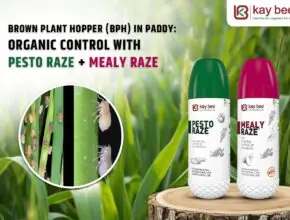 Brown Plant Hopper Paddy Organic Control with Pesto Raze & Mealy Raze
 Mycorrhiza Technical Manufacturer in India | Kay Bee Bio-Organics Pvt. Ltd.
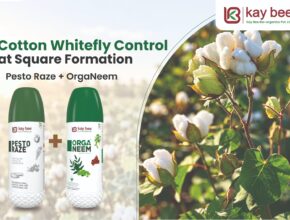 Cotton Whitefly Management During Square Formation Stage: Effective Control with Pesto Raze & OrgaNeem
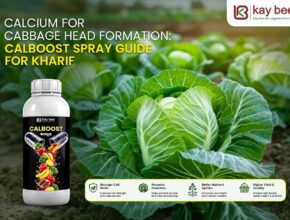 Calcium for Cabbage Head Formation: How Calboost (Ca-11%) Ensures Tight & Crack-Free Heads
 Citrus Canker Organic Control: A Complete Farmer’s Guide
COPYRIGHT © 2026 - ALL RIGHTS RESERVED. MADE BY WebAppGigs