
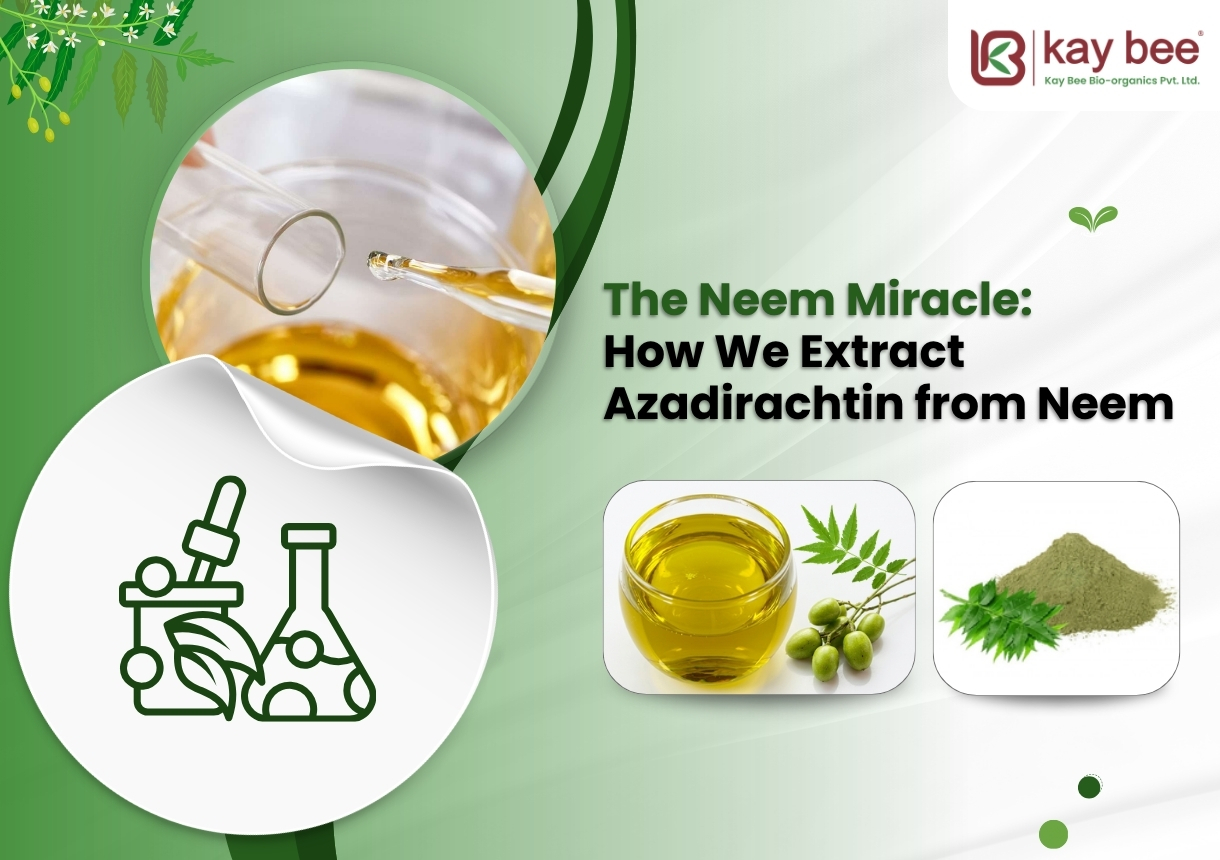
The Neem Miracle: How We Extract Azadirachtin from Neem
India’s farmers have relied on the neem tree for centuries, but until now, harnessing its full power required complicated preparation. Today, advanced cold-press technology has transformed neem into a ready-to-use, high-potency natural insecticide for plants that outperforms many conventional chemical sprays.
In this guide, we explain exactly how neem oil insecticide works, why Azadirachtin is its key active compound, the correct dosage for neem oil 10000 PPM, Why Kay bee decided to work on azadirachtin manufacturing . and why switching to an organic insecticide for plants is one of the smartest decisions a modern farmer can make.
What Is Neem Oil and Why Does It Work as a Natural Insecticide for Plants?
Neem oil is extracted from the seed kernels of Azadirachta indica, the neem tree found across India. Unlike synthetic chemicals that target one pest pathway, neem oil insecticide for plants works through multiple biological mechanisms at once, making it one of the most effective and sustainable crop protection tools available today.
The secret lies in a naturally occurring compound called Azadirachtin.
Azadirachtin Insecticide: The Active Compound That Makes Neem Oil Powerful
Azadirachtin is the primary active compound in neem oil, and it is what sets this organic insecticide for plants apart from every chemical alternative on the market. Here is what Azadirachtin does inside a pest’s body:
- Disrupts the hormonal system of insects, stopping them from growing into adults
- Acts as a powerful antifeedant, pests stop eating your crop within hours of contact
- Prevents insects from completing their reproductive cycle, breaking the pest population at the source
- Controls over 200 species of harmful insects without building resistance
Additional active compounds found alongside Azadirachtin, including limonoids, nimbin, nimbidin, nimbolides, and fatty acids (oleic, stearic, and palmitic), provide further antifungal and soil-health benefits that chemical insecticides cannot match.
Why Neem Seed Kernels Produce the Best Neem Oil Insecticide for Plants
Not all neem oil is equal. The neem tree has many parts, leaves, bark, fruit, and seed, but the seed kernel is by far the most concentrated source of Azadirachtin. High-quality neem oil insecticide must be made exclusively from selected neem seed kernels for three reasons:
- Higher concentration of Azadirachtin per litre, stronger, faster pest control
- More stable oil with a longer shelf life than oil from other tree parts
- Consistent quality across batches, critical for reliable farm results
This is why Orga Neem by Kay Bee Bio Organics uses only cold-pressed neem seed kernels, never leaves or bark, to produce a premium natural insecticide for plants.
Cold Press Extraction: How We Make Pure Organic Insecticide for Plants
Cold press extraction is the gold standard for producing neem oil. It avoids heat and harsh chemicals entirely, preserving every active compound that makes neem oil insecticide for plants so effective. Here is how it works:
| Step-by-Step Cold Press Process
Step 1 – Harvest: Mature, healthy neem seeds are collected and cleaned. Step 2 – Dehull: The outer fruit layer is removed to expose the pure seed kernel. Step 3 – Shade dry: Kernels are dried in the shade, never in direct sun, to protect Azadirachtin. Step 4 – Cold press: Seeds are mechanically pressed at low temperatures to extract oil. Step 5 – Filter: The raw oil is filtered to remove particles, leaving clean, high-potency neem oil. |
Why Cold Pressing Matters for Organic Insecticide Quality
- No Chemicals : The final oil is 100% organic and certified safe
- No Heat : Active compounds like Azadirachtin, nimbin, and salannin are fully preserved
- Better Results : Higher purity means more effective pest control per litre
4 Mechanisms of How Orga Neem Works as a Neem Oil Insecticide for Plants
Unlike a single-action chemical pesticide, Orga Neem’s neem oil insecticide for plants uses four separate protection mechanisms working simultaneously:
- Antifeedant Action – Stops Damage Immediately
The moment a pest tastes a leaf treated with neem oil, it stops feeding. Crop damage stops within hours of the first spray. This is the fastest-acting benefit of neem oil insecticide for plants.
- Growth Regulator – Breaks the Pest Life Cycle
Azadirachtin insecticide interferes with the moulting hormones of young insects, preventing larvae from growing into egg-laying adults. Without adults, the pest population collapses over 2–3 spray cycles.
- Repellent Effect – Keeps New Pests Away
The natural smell and bitter taste of neem oil acts as a powerful repellent, stopping new pests from colonising your crop between spray intervals.
- Egg and Larvae Control – Stops the Next Generation
Adult insects that do survive are prevented from laying viable eggs. Larvae that hatch after treatment are killed before they mature. This complete life-cycle disruption is what makes organic insecticide for plants so devastatingly effective over time.
Organeem 10000 PPM: Correct Dosage and Application Guide
Choosing the right strength and applying it correctly determines how well your neem oil insecticide for plants performs. Here is the recommended dosage chart:
| Product | PPM | Dosage | Interval |
| Orga Neem | 3000 PPM | 3–4 ml / litre water | 7–10 days |
| Orga Neem | 10000 PPM | 1.5–2 ml / litre water | 7–10 days |
View Products: ORGANEEM 10000 PPM
Application Tips for Maximum Effectiveness
- Spray time: Always apply neem oil insecticide in early morning or late evening ; direct midday sun
degrades Azadirachtin and can scorch leaves - Coverage: Spray both the top and bottom surfaces of leaves ; most pests hide and feed on the underside
- Fresh mix: Always prepare a fresh solution before each spray : do not store diluted neem oil overnight
- Shake well: Shake the bottle thoroughly before mixing to activate settled compounds
- Nozzle pressure: Use a fine mist nozzle for even coverage across the entire leaf surface
Built-in Technology That Makes Orga Neem the Best Insecticide for Plants
Modern neem oil formulations go beyond simple cold pressing. Orga Neem includes two advanced features that solve the biggest problems farmers face with traditional neem oil:
Ready-to-Mix Emulsifier (No Soap Needed)
Oil and water do not naturally mix. Traditional neem oil required farmers to add liquid soap separately. Orga Neem includes a built-in organic emulsifier that allows the oil to blend instantly and evenly with water; saving time, cost, and effort.
No-Stick, Non-Clogging Formula
Neem oil is thick and can clog spray nozzles and pump components. Orga Neem’s no-stick technology keeps equipment flowing cleanly, reducing maintenance time and extending the life of your spray pump.
7 Benefits of Using Organic Neem Oil for Plants Over Chemical Pesticides
- Zero resistance buildup – pests cannot adapt to Azadirachtin’s multi-pathway action
- Crop safe – gentle on leaves, flowers, and young growth; no burning or stunting
- Soil health – 100% biodegradable; breaks down within days without harming soil microbes
- Safe for pollinators – does not harm bees, butterflies, ladybirds, or earthworms
- Residue free – no harmful chemical residue on your produce or in groundwater
- Cost effective – fewer sprays needed per season compared to chemical pesticides
- Organic certification compatible – qualifies under Indian and international organic farming standards
Kay Bee Bio-Organics: A Trusted Azadirachtin Manufacturer in India
Kay Bee Bio-Organics is a leading Azadirachtin manufacturer in India, supplying pure, pharmaceutical and agriculture grade Azadirachtin to fertilizer companies, biopesticide manufacturers and agricultural product brands across the country and globally.Produced through a controlled cold press extraction process, our Azadirachtin ensures consistent potency, purity and quality in every batch. When companies need a dependable Azadirachtin manufacturer and supplier, Kay Bee Bio-Organics delivers the quality and consistency their products demand.
Frequently Asked Questions :
1. What is the difference between 3000 PPM and 10000 PPM neem oil insecticide?
Ans: 3000 PPM is ideal for regular maintenance sprays and preventing pest build-up during a healthy season. Neem oil 10000 PPM is professional strength, designed for heavy pest attacks or crops that need rapid, intensive intervention. Use 10000 PPM when you need faster, stronger results.
2. How does Azadirachtin insecticide protect my crops?
Ans: Azadirachtin insecticide provides 3-in-1 protection: it stops pests from eating (antifeedant), prevents larvae from maturing (growth regulator), and deters new pests from settling on treated plants (repellent). No single-mode chemical pesticide offers this breadth of protection.
3. What is the correct dosage for neem oil 10000 PPM?
Ans: Mix 1.5 to 2 ml of neem oil 10000 PPM per litre of water for a standard foliar spray. For heavy infestations, you may use up to 2 ml per litre. Always spray in the morning or evening. Re-spray every 7 to 10 days for continuous protection.
4. Can organic insecticide for plants control soil pests like nematodes?
Ans: Yes. Neem oil insecticide is effective against soil-dwelling pests including nematodes. Apply as a soil drench around the root zone. The Azadirachtin penetrates the soil and disrupts nematode reproduction underground.
5. Is neem oil a safe natural insecticide for plants near harvest?
Ans: Yes. Neem oil biodegrades within 3 to 7 days under normal field conditions. It leaves no harmful chemical residue on produce and is approved for use in organic farming. Always check the pre-harvest interval recommendation on the product label.
6. Which crops can I use neem oil insecticide for plants on?
Ans: Neem oil is safe and effective across a wide range of crops : vegetables (tomato, brinjal, chilli, cucumber), fruits (mango, grapes, pomegranate, banana), cereals, pulses, and ornamental plants. It is suitable for both field crops and greenhouse cultivation.
Latest Blogs
 Mycorrhiza Technical Manufacturer in India | Kay Bee Bio-Organics Pvt. Ltd.
 Cotton Whitefly Management During Square Formation Stage: Effective Control with Pesto Raze & OrgaNeem
 Calcium for Cabbage Head Formation: How Calboost (Ca-11%) Ensures Tight & Crack-Free Heads
 Citrus Canker Organic Control: A Complete Farmer’s Guide
 Orthosilicic Acid (OSA) for Monsoon Stress: Building Crop Strength & Resilience
COPYRIGHT © 2026 - ALL RIGHTS RESERVED. MADE BY WebAppGigs