
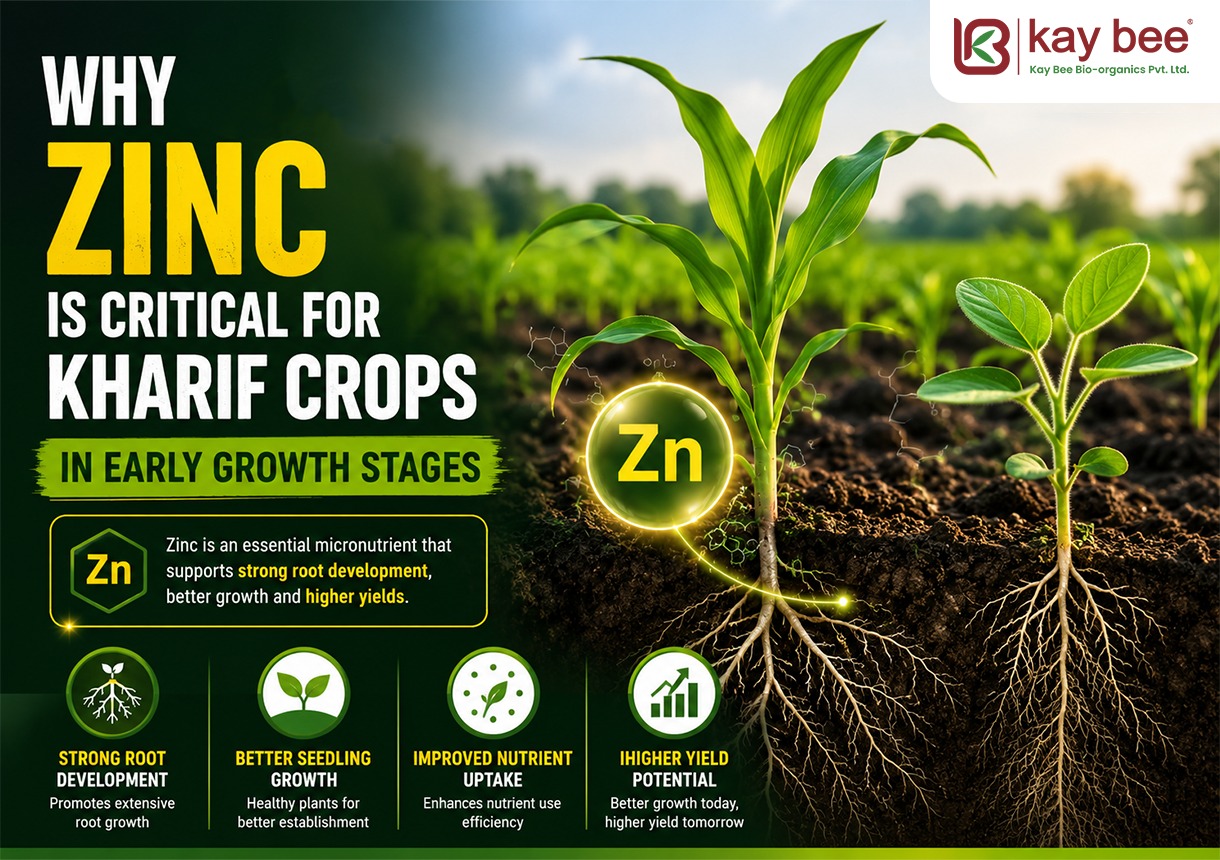
Why Zinc is Critical for Kharif Crops in Early Growth Stages
Introduction
The kharif season is crucial for growing crops in India. We grow lots of crops like rice, maize, soybean, cotton, groundnut, vegetables, and pulses during the kharif season. It is very important to get the crops going early. This helps us get a yield at the end. When the crops are just starting to grow, they need tiny nutrients. Zinc for kharif crops is one of these nutrients that is really important. The zinc helps the roots development, nutrient utilization, and vigorous plant growth.
Despite its importance, zinc deficiency in early growth kharif is one of the most common micronutrient disorders affecting agricultural soils. Inadequate zinc availability during the early growth stages can restrict crop development and reduce yield potential. Understanding the importance of zinc deficiency in agriculture can help farmers make informed nutrient management decisions and achieve better crop performance throughout the kharif season.
Why Zinc is Essential During Early Growth Stages of Kharif Crops
The first few weeks after germination are critical for crop establishment. During this period, zinc for Kharif crops plays a vital role in supporting rapid cell division and root growth.
1. Strong Root Development
Zinc helps plants grow roots. This means they can take in water and nutrients better. As a result, the plants become healthier and more robust. Strong roots are key to plants.
2. Improved Seedling Growth
Seedlings need zinc to grow properly. It helps them make energy and work correctly. When seedlings get zinc, they grow evenly and become strong plants.
3. Enhanced Nutrient Utilization
Zinc helps plants use nutrients like nitrogen and phosphorus efficiently. This means plants can make the most of the nutrients they get. As a result, they grow in a way.
4. Better Stress Tolerance
Crops often face conditions like too much rain and not enough nutrients. Zinc helps plants deal with these stresses. It makes them stronger and more resilient.
5. Improved Photosynthesis
Zinc helps plants make chlorophyll. This is important, for capturing sunlight and making energy. When plants have zinc, they can grow well and stay healthy
Zinc Deficiency During Early Growth in Kharif Crops
Many agricultural soils do not have enough available zinc, particularly alkaline, calcareous, and intensively cultivated soils. As a result, zinc deficiency early growth Kharif is a common problem affecting crop productivity.
When there is not zinc for kharif crops during the early stages of growth plants have weak roots. They also grow slowly. Are not as strong. This hurts how crop we can get.
Zinc is important, for Kharif crops. Without zinc Kharif crops do not grow well.
Zinc Deficiency Symptoms in Crops
Stunted Growth
Plants exhibit reduced growth and poor development compared to healthy plants.
Interveinal Chlorosis
Yellowing appears between the veins of younger leaves while the veins remain green.
Smaller Leaves
New leaves on crops with zinc deficiency are often smaller than normal.
Reduced Tillering
Zinc deficiency can affect crops like rice and maize. It can stop them from growing many new shoots and tiller as they should.
Delayed Crop Development
Plants may take longer to reach important growth stages, affecting overall productivity.
Poor Root Growth
The roots of crops with zinc deficiency are not as strong as they should be. This makes it hard for them to get the water and nutrients they need.
Recognizing these zinc deficiency symptoms in crops at an early stage can help prevent long-term damage to crop growth and yield.
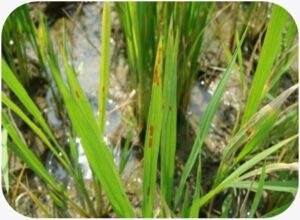
Khaira Disease in Rice Caused by Zinc Deficiency |
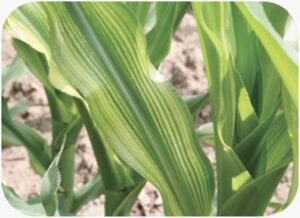
Early Zinc Deficiency Symptoms in Maize Plants |

Interveinal Chlorosis Caused by Zinc Deficiency in Soybean |

Zinc Deficiency Effects on Groundnut Crop |
Factors Affecting Zinc Availability in Soil
Several factors can reduce zinc availability to plants even when zinc is present in the soil.
High Soil pH
Alkaline soils often reduce zinc solubility and availability to plants.
Excessive Phosphorus Application
When there is too much phosphorus in the soil it can stop plants from taking in zinc.
Low Organic Matter
If the soil doesn’t have organic matter it can’t hold onto micronutrients like zinc and plant roots can’t work properly.
Waterlogged Conditions
If the soil gets too wet like during the monsoon season it can make plant roots less efficient. Affect how well they absorb nutrients.
Continuous Cropping
Continuous growing of crops without adding back the nutrients, the zinc, in the soil will get used up.
Strategies to Improve Zinc Nutrition in Kharif Crops
Conduct Soil Testing
Regular soil tests help find out if the soil has zinc and what nutrients it needs.
Apply Zinc at Early Growth Stages
Supplying zinc to crops when they are just starting to grow helps them develop roots and shoots.
Maintain Balanced Fertilization
Using the mix of nutrients helps crops take in all the nutrients they need more efficiently.
Improve Soil Health
Incorporating organic matter into the soil helps make micronutrients like zinc more available to crops and improves the soil’s structure.
Use Quality Zinc Fertilizers
Choosing a quality zinc fertilizer ensures that crops get a steady supply of zinc throughout their growth.
Zilite: Advanced Zinc Nutrition for Kharif Crops
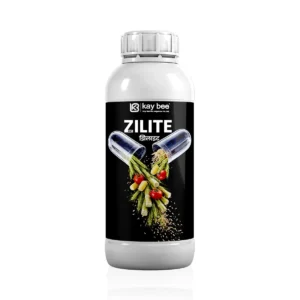
To maximize crop performance during the Kharif season, farmers need a reliable source of zinc that can be readily absorbed by plants during critical growth stages.
Zilite (Zinc Oxide 39.5% SC) from Kay Bee Bio-Organics, this product is made from premium-grade materials, featuring ultra-fine particles and water-soluble biopolymers for rapid absorption and effective correction of zinc deficiency. It enhances enzyme activity, chlorophyll formation, root growth, stress tolerance, and flowering, promoting higher yields and superior-quality produce.
Key Features of Zilite
- Activates essential enzymes for smooth metabolic functions.
- Enhances chlorophyll formation for improved photosynthesis and greener plants.
- Boosts protein and sugar metabolism for better energy use and nutrient transport.
- Improves flowering and pollen quality for stronger fruit set.
- Increases tolerance to heat, drought, and early-season stress.
- Enhances yield, grain filling, fruit size, brix, and overall crop quality.
- Ensures even leaf coverage for rapid zinc deficiency correction.
Recommended Doses
- Field Crops: 1.0-1.5 ml/l
- Vegetable Crops: 0.5-1.5 ml/liter
- Fruit Crops: 0.75-1.5 ml/liter
Note: Dose depends on crop stage.
Conclusion
Zinc is an essential micronutrient that supports strong root development, efficient nutrient utilization, improved photosynthesis, and better stress tolerance in Kharif crops. Zinc deficiency during the early growth stages can significantly reduce crop vigor and yield potential. Timely zinc application and proper nutrient management help ensure healthy crop establishment and higher productivity. Advanced zinc solutions like Zilite (Zinc Oxide 39.5% SC) provide readily available zinc to support vigorous growth and maximize Kharif season yields.
Latest Blogs
 Brown Plant Hopper Paddy Organic Control with Pesto Raze & Mealy Raze
 Mycorrhiza Technical Manufacturer in India | Kay Bee Bio-Organics Pvt. Ltd.
 Cotton Whitefly Management During Square Formation Stage: Effective Control with Pesto Raze & OrgaNeem
 Calcium for Cabbage Head Formation: How Calboost (Ca-11%) Ensures Tight & Crack-Free Heads
 Citrus Canker Organic Control: A Complete Farmer’s Guide
COPYRIGHT © 2026 - ALL RIGHTS RESERVED. MADE BY WebAppGigs