
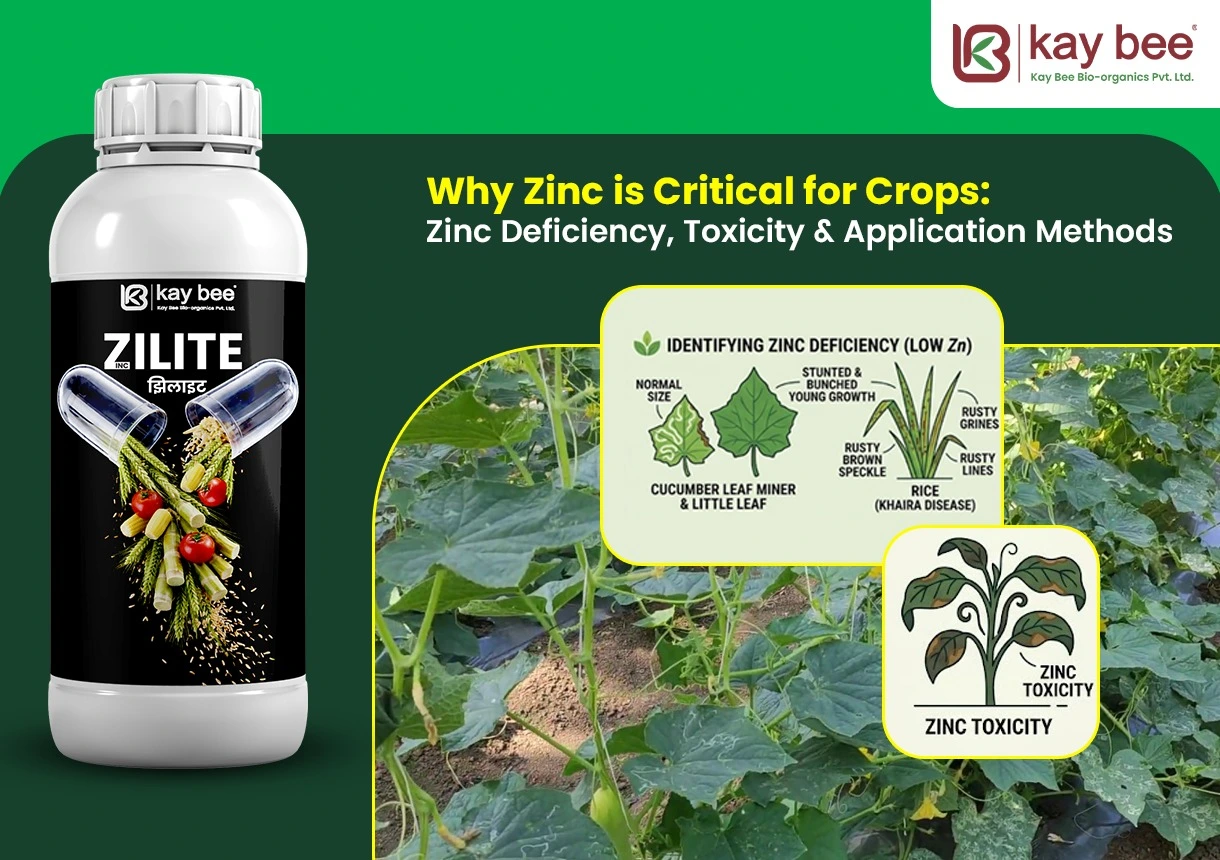
Why Zinc is Critical for Crops: Zinc Deficiency, Toxicity & Application Methods
Zinc is a small nutrient but has a big impact on crops. Zinc is a micronutrient and is required in small amounts but plays an important role in plant growth and development, yield, and quality in crops. Understanding the importance of zinc in plants, recognizing zinc deficiency in agriculture, and giving the proper zinc fertilizer for crops can significantly improve crop productivity.
Importance of Zinc for Crops Production
Activate photosynthetic rate:
Zinc decreases yellowing of leaves and helps with chlorophyll formation in crops, which increases energy production in plants.
Stress Management:
Zinc mitigates the biotic and abiotic stresses in crops because it has an antioxidant property that helps to increase cell membranes and regulate water use efficiency in crops.
Growth Regulator:
Zinc helps to increase the auxin hormone activity in crops, which expands leaf area and manages stem elongation activity in crops.
Reproductive development:
Zinc is an important micronutrients for plants, flowering, fruit setting, and seed formation.
Protein synthesis:
Zinc helps in protein synthesis, which are the building blocks for plant tissues. Deficiency can lead to stunted growth.
Carbohydrate Production:
Zinc is involved in carbohydrate and sugar metabolism in plants. It helps in the synthesis and translocation of sugars and starch, thereby improving crop growth, yield, and quality.
Zinc Deficiency in Agriculture
Zinc deficiency is due to low organic matter content, high soil pH, waterlogging conditions in soil, and also high phosphorus nutrient content, which reduce the solubility of zinc and antagonize the effect of calcium, magnesium, and iron, which are excessively taken up by plants.
Zinc shows deficiency symptoms in different ways, like interveinal chlorosis, stunted growth, little leaf, poor root development, and improper grain filling in grain crops in alkaline or sandy soils.
Zinc deficiency in important crops.
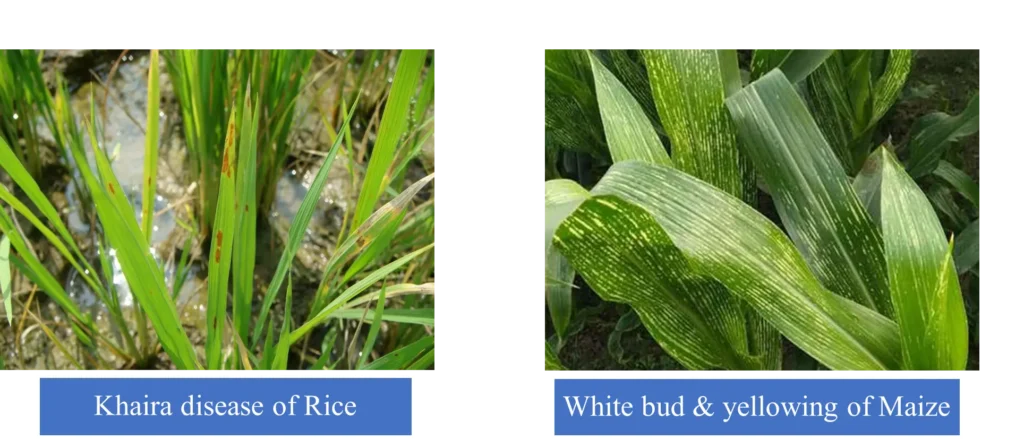
- Khaira disease in rice: – Yellowing of leaf, brown bronzing, and small growth of plant.
- Little leaf in brinjal: – Leaves are small and narrow, and young leaves show interveinal chlorosis, and also leaves may be crinkled or deformed.
- White bud in maize: White or light-yellow stripes on the leaves and base of the leaf turning white.
- Interveinal chlorosis in beans/soybeans Yellowing between veins and rusty brown spots on older leaves.
Zinc Toxicity in Plants
While zinc deficiency is more common, excess zinc can also harm plants.
Causes of Toxicity
- Overrated application of zinc fertilizers
- Industrial contamination or polluted irrigation water
Symptoms:
- Leaf chlorosis (yellowing)
- Reduced root growth
- Nutrient imbalance (especially iron deficiency)
- Lower crop yields
View Products: ZILITE – Zinc Fertilizer
Zinc fertilizer sources as per FCO standard
As per India’s Fertilizer Control Order (FCO), zinc fertilizers are regulated, and only specific sources/forms are approved for agricultural use. These are broadly grouped into inorganic salts, chelated forms, and fortified fertilizers.
1. Primary zinc fertilizer sources
The most common straight zinc fertilizers included under FCO are the following:
- Zinc sulphate (ZnSO₄)
- Zinc sulphate heptahydrate (~21% Zn)
- Zinc sulphate monohydrate (~33% Zn)
- This is the most widely used and standard FCO zinc fertilizer.
- Zinc oxide (ZnO)
- Used mainly in suspension/liquid formulations
- Zinc carbonate (ZnCO₃) (limited use)
2. Chelated / complex zinc fertilizers (FCO grade)
These are more efficient (especially in high pH soils):
- Zn-EDTA (Chelated zinc, usually 12% Zn)
- Other chelates (less common in India): Zn-HEDTA, Zn-NTA
3. Zinc in fortified / mixed fertilizers
FCO also permits zinc to be supplied through fortified fertilizers, such as
-
- Zincated NPK fertilizers
- Zincated DAP (Di-ammonium phosphate)
- Zincated SSP (Single super phosphate)
- Micronutrient mixtures containing zinc
4. Other recognized zinc forms (less common but technically included)
(Depending on formulation approval and standards)
- Zinc oxysulphate
- Basic zinc sulphate
- Zinc chloride / nitrate (rare in field use)
Zinc Fertilizer Application Methods
Applying zinc correctly to ensure optimum uptake and crop response.
-
Soil Application
- Commonly used zinc source: zinc sulfate agriculture grade (ZnSO₄)
- Use at sowing or before planting
- Recommended dose varies from 5 to 25 kg/ha depending on soil conditions.
- This fertilizer is best for long-term correction of zinc deficiency.
-
Foliar Spray
The best solution for quick and effective management of zinc deficiency is Zilite (Zinc Oxide 39.5% SC), a high-efficiency formulation designed to improve zinc availability, crop growth, and overall yield performance.
Economic Benefits of Zilite
Increased Crop Yield and Quality: Application of Zilite ultra-fine particles and water-soluble biopolymers for rapid absorption and effective correction of zinc deficiency and increased yield in various crops by improving seed germination, seedling vigor, and root growth.
Lower Input Costs and Higher Efficiency: Application of Zilite fertilizers are more efficient than conventional zinc sulfate, requiring fewer application amounts to achieve high results and reducing repeated applications, thereby lowering labor and input costs.
Mitigation of Abiotic Stresses: Zilite helps crops withstand abiotic stresses like drought and salinity, reducing yield losses in challenging environments.
How does it work?
- Activates essential enzymes for smooth metabolic functions.
- Slow release, nano formulation, easily absorbed by the plant.
- Enhances chlorophyll formation for improved photosynthesis and greener plants.
- Boosts protein and sugar metabolism for better energy use and nutrient transport.
- Improves flowering and pollen quality for stronger fruit set.
- Enhances yield, grain filling, fruit size, brix, and overall crop quality.
- Ensures even leaf coverage for rapid zinc deficiency correction.
Recommended Doses
- Field Crops: 1.0-1.5 ml/L
- Vegetable Crops: 0.5-1.5 ml/liter
- Fruit Crops: 0.75-1.5 ml/liter
Note: Dose depends on crop stage.
Compatibility of Zilite
Zilite, or zinc oxide (ZnO), particularly in nanoparticle (ZnO NPs) or suspension concentrate (SC) form, is widely compatible with many agricultural products like insecticides, fungicides, PGR, and fertilizer and offers high stability for foliar applications.
Conclusion
Zinc is an essential micronutrient that plays a crucial role in improving plant growth, photosynthesis, flowering, stress tolerance, and overall crop productivity. Proper identification and timely correction of zinc deficiency through suitable zinc fertilizers can significantly enhance crop yield and quality. With advanced formulations like Zilite (Zinc Oxide 39.5% SC), farmers can achieve faster zinc correction, better nutrient use efficiency, improved crop performance, and higher economic returns under diverse agricultural conditions.
Latest Blogs
 Tomato Nematode Damage: Underground Signs, Crop Loss and Organic Control with Root Fit
 Sugarcane Growth Stages: Complete Root, Tillering & Vegetative Growth Schedule
 Guava Flowering & Fruit Development: Calbolite Powder for Calcium Nutrition
 Management of Cabbage Diamondback Moth with Larvo Raze + OrgaNeem Organic Products
 Papaya Fruit Rot & Powdery Mildew in Monsoon: Identification and Organic Management
COPYRIGHT © 2026 - ALL RIGHTS RESERVED. MADE BY WebAppGigs