
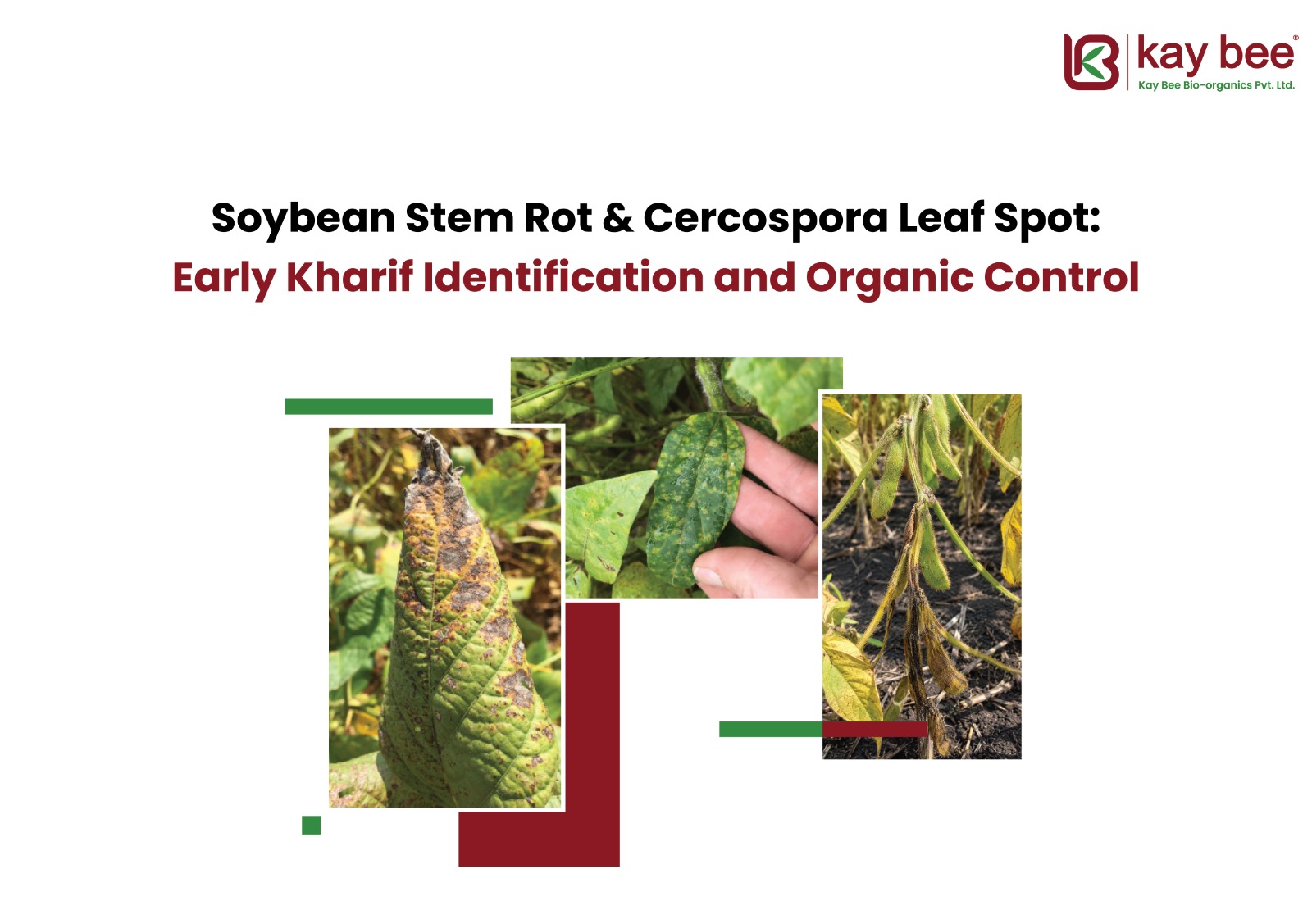
Soybean Stem Rot & Cercospora Leaf Spot: Early Kharif Identification and Organic Control
Soybean is the best oilseed crop in India. Soybean has become an important oilseed crop in India in a very short period with approximately 10-million ha area under its cultivation. India is divided into five agro-climatic zones for soybean cultivation. As a farmer, watching your soybean fields grow during the early Kharif season brings a lot of hope. However, the warm, humid weather that helps your crops flourish also creates the perfect environment for harmful fungi. Among the most common threats to your yield are soybean stem rot and Cercospora leaf spot.
If left unchecked, these soybean stem diseases can quietly destroy your plants from the inside out, leading to severe crop loss. To protect your hard-earned harvest, you need to know how to spot these diseases early and manage them using safe, organic methods. Let’s break down exactly what to look for and how to fight back naturally.
What Are These Diseases?
Before we look at the symptoms, it is helpful to understand what we are dealing with.
- Soybean Stem Rot: This is caused by Sclerotinia sclerotiorum fungus that attacks the lower portion of the plant. It blocks the flow of water and nutrients, causing the plant to wilt and die early.
- Cercospora Leaf Spot Soybean: This is caused by Cercospora personata widespread soybean fungal disease kharif farmers face. It primarily targets the leaves, reducing the plant’s ability to absorb sunlight and make food, which ultimately shrinks your soybean size.
Symptoms of Soybean Stem Rot and Cercospora Leaf Spot
To save your crop, you must catch the infection before it spreads across the entire field. Here is what you should look for when walking through your rows:
-
Symptoms of Soybean Stem Rot
- Water-Soaked Lesions: Look closely at the base of the stem near the soil line. You will see dark, wet-looking patches.
- The “White Mold” Appearance: In high humidity, a fluffy white growth (like cotton) will appear on the stem.
- Inside the Stem: If you split the stem open, a healthy plant will be white inside. A plant suffering from brown stem rot soybean will have a dark brown, rotted center (pith).
- Sudden Wilting: Leaves will suddenly turn brown, dry up, and die, but they will often stay tightly attached to the dead stem
Note: It is easy to confuse stem rot with phytophthora root and stem rot of soybean. While both cause wilting, Phytophthora usually causes a dark brown discoloration that starts below the soil on the roots and moves up the stem, usually appearing in low-lying, poorly drained parts of your field
-
Symptoms of Cercospora Leaf Spot
- Leathery Purple Leaves: The top leaves exposed to the sun will start showing a distinct purple-to-bronze discoloration.
- Dark Spots: You will notice small, reddish-brown to dark purple spots on both sides of the leaves.
- Premature Leaf Drop: As the disease gets worse, the leaves turn yellow and drop off the plant completely, leaving the stems bare.
Early Kharif Identification:
The early Kharif season (typically during the first 30 to 45 days after sowing) is the critical window. Regular field scouting is your best weapon.
- Check Post-Rainfall: Fungal spores thrive on moisture. Check your fields 2 to 3 days after a heavy Kharif rain.
- Inspect V-Shapes and Lower Canopy: Walk in a V-shape pattern across your field. Bend down and look at the lower canopy and the base of the stems. If the lower leaves are spotting or the bottom stems look dark, the fungus is active.
- Look for Stunted Patches: If you notice patches of your field looking yellow or shorter than the rest, pull a few plants out and inspect the roots and stems for rot.
Organic Control: Natural Ways to Protect Your Yield
You don’t need harsh, expensive chemical drops to handle these infections. Soybean stem rot organic control relies on a mix of smart farming practices and natural bio-pesticides.
-
Seed Treatment
Before sowing next time, or for late-sowing windows, treat your seeds with Trichoderma viride or Pseudomonas fluorescens (use 10 grams per kg of seed). This creates a protective shield around the young root system against soybean stem diseases.
-
Bio-Control Foliar Sprays
If you spot early symptoms of Cercospora or stem rot during your Kharif scouting, spray the crop with organic bio-fungicides:
- Trichoderma Spray: Mix 5 grams of Trichoderma powder per liter of water and spray thoroughly, ensuring it hits the stems and soil base.
- Neem oil (Orga Neem): Spraying 3000 PPM concentration of pure Orga Neem mixed a 3 ml per Liter of water helps coat the leaves, preventing Cercospora spores from embedding into the leaf tissue.
- Cow Urine & Dashparni Arka: A traditional Indian organic remedy involves spraying diluted fermented cow urine (1:10 ratio with water), which acts both as a mild antifungal and a nutritional boost.
- Root Fit: A botanical-based bio-fungicide applied via soil drenching or drip irrigation at 750 ml to 1 L per acre (depending upon crop stage dose should be minimize) to directly destroy soil-borne fungal pathogens (like Sclerotinia sclerotiorum ,Phytophthora and Pythium) and nematodes that cause soybean stem rot.
- Fungo Raze: Broad spectrum botanical-based bio-fungicide applied as a foliar spray at 2ml per Liter of water to effectively control Cercospora leaf spot in soybeans by breaking down fungal cell walls and stopping spore germination.
-
Cultural and Field Management
- Improve Drainage: Fungi love standing water. Ensure your Kharif fields have proper drainage channels so water doesn’t accumulate around the crop bases.
- Crop Rotation: Never plant soybeans back-to-back in the same soil next year. Rotate with non-host crops like maize, sorghum, or millet to break the fungal lifecycle.
- Optimal Spacing: Don’t sow seeds too close together. Proper spacing allows air to flow freely between the plants, drying up excess moisture quickly and preventing fungal growth.
Conclusion
Protecting your Kharif soybean crop from soybean stem rot and Cercospora leaf spot doesn’t require harsh chemicals that ruin your soil health. By understanding the early warning signs—like the purpling leaves of Cercospora or the dark, hollowed stems of a brown stem rot soybean infection—you can act before the damage spreads.
By combining robust cultural practices like proper field drainage and regular scouting with advanced botanical solutions, you can protect your yield naturally. Use Kay Bee Bio’s Root Fit as a targeted soil drench to directly destroy the deep fungal pathogens causing stem rot, and apply Kay Bee Bio’s Fungo Raze as a foliar spray to stop Cercospora leaf spot from destroying your canopy. Keep your eyes on the field, treat your plants with these organic powerhouses, and secure a bountiful, healthy harvest this season!
Latest Blogs
 Tomato Nematode Damage: Underground Signs, Crop Loss and Organic Control with Root Fit
 Sugarcane Growth Stages: Root, Tiller & Vegetative Schedule
 Guava Flowering & Fruit Development: Calbolite Powder for Calcium Nutrition
 Management of Cabbage Diamondback Moth with Larvo Raze + OrgaNeem Organic Products
 Papaya Fruit Rot & Powdery Mildew in Monsoon: Identification and Organic Management
COPYRIGHT © 2026 - ALL RIGHTS RESERVED. MADE BY WebAppGigs