
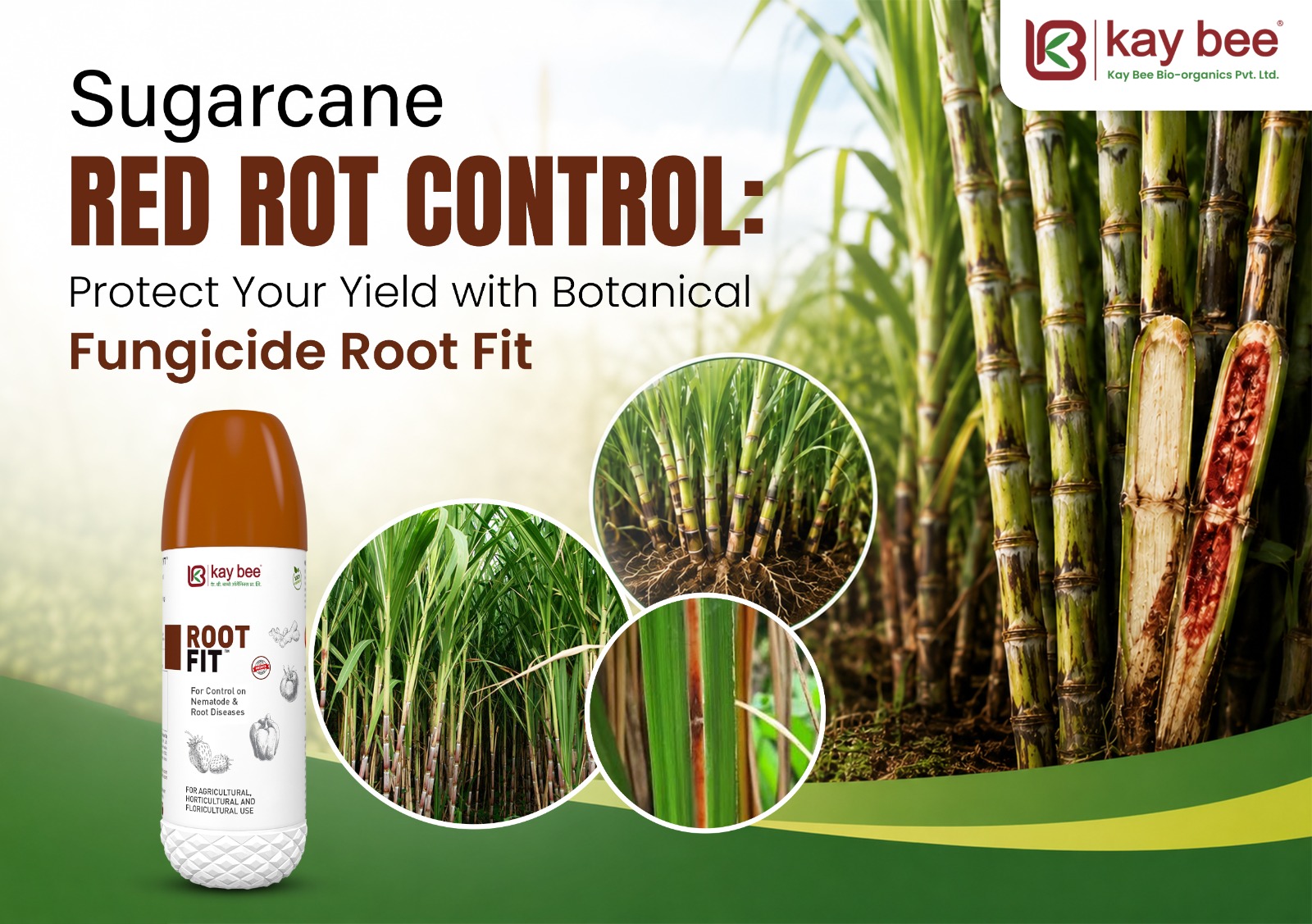
Sugarcane Red Rot Control: Protect Your Yield with Botanical Fungicide Root Fit
Sugarcane is one of the most profitable cash crops for farmers, but fungal infections can silently wipe out entire fields overnight. Among all diseases affecting sugarcane, red rot — often referred to as the “cancer of sugarcane” — is the most destructive. When this fungus takes hold, farmers face severe losses in crop yield, juice quality, and overall income.
To achieve effective sugarcane red rot control, farmers need a clear understanding of how the disease spreads, the common mistakes that encourage its growth, and modern, sustainable solutions. Using biological treatments like Root Fit offers a natural, powerful defence to keep your soil healthy and your crop thriving. For a broader understanding of how botanical solutions protect crops from soil-borne diseases, read our pillar guide on Root Fit — a breakthrough in soil-borne fungal disease and nematode control.
What is Red Rot Disease in Sugarcane?
Red rot disease in sugarcane is caused by the fungal pathogen Colletotrichum falcatum. It attacks the internal tissue of the sugarcane stalk, breaking down sucrose into glucose and acid. This drastically reduces juice yield and recovery percentage at sugar mills. Once infected, the vascular system of the cane becomes clogged, preventing water and nutrients from reaching the upper leaves, which eventually leads to complete plant failure.
Because the fungus attacks from within the vascular system, the damage caused by red rot disease in sugarcane is similar in principle to how soil-borne wilt pathogens attack other crops. To understand this mechanism better, read our guide on guide to managing soil-borne wilt and nematodes.
Early and Late Symptoms to Look For
Spotting red rot early is key to stopping its spread across your fields. Pay close attention to these signs:
- Leaf Yellowing and Drying: The third or fourth leaf from the top starts losing green colour, turning pale yellow, and drying out from the tip downwards.
- Stalk Discoloration: The outer rind of infected canes loses its natural lustre and turns dull yellow or reddish.
- Internal Red Strains with White Patches: When you split open an infected cane lengthwise, you will see a deep red colour interspersed with white horizontal patches across the tissues. This is the ultimate characteristic sign of red rot.
- Sour Alcoholic Odour: Splitting the stalk releases a distinct sour, fermented juice smell due to the conversion of sugars.
- Hollow and Shrivelled Canes: In advanced stages, the internal tissue completely dries up, leaving the cane hollow, light in weight, and easy to break.
Common Mistakes Farmers Make
Many farmers unintentionally create ideal conditions for red rot due to a few common management errors:
- Using Infected Seed Canes (Setts): Planting setts taken from previously infected fields introduces the fungus directly into new soil.
- Continuous Cultivation of Susceptible Varieties: Growing the same susceptible sugarcane variety year after year allows the pathogen population to multiply in the field.
- Ignoring Soil Health: Overusing chemical fertilizers without organic amendments weakens root health, making plants vulnerable to fungal infection. To understand the impact of chemical treatments on soil biology, read our guide on the impact of fungicides on plant roots and soil.
- Improper Drainage: Excess field moisture and standing water create an ideal breeding ground for fungal spores to spread from root to root.
- Ratoon Crop Retention on Infected Fields: Keeping ratoon crops in a field that suffered red rot in the previous season guarantees a higher disease outbreak.
How Does This Fungal Disease Attack?
Understanding sugarcane fungal disease management starts with knowing how the fungus attacks.
The fungal spores survive in crop residue, infected setts, and the soil. When warm weather combines with high humidity, spores germinate and enter the cane through natural openings, root primordia, or injuries caused by stem borers and soil pests. Once inside, the fungus invades the vascular bundles, spreading rapidly through nodes and internodes while blocking water and nutrient transport. For more on how stem borers create these entry wounds, read our guide on paddy stem borer — a major threat to rice cultivation and see how similar entry mechanisms are managed in other crops.
Essential Precautions for Prevention
Prevention is always better than cure when dealing with red rot:
- Select Resistant Varieties: Choose proven red rot-resistant sugarcane varieties recommended by local agricultural universities.
- Healthy Sett Selection: Always source disease-free, certified seed canes from healthy mother nurseries.
- Crop Rotation: Rotate sugarcane with non-host crops like legumes, mustard, or paddy every 2 to 3 years to break the fungal life cycle.
- Field Sanitation: Burn or safely destroy crop debris and infected stubble after harvest instead of leaving it in the field.
- Proper Drainage: Ensure effective drainage channels to prevent waterlogging during heavy rainfall.
Effective Management with Root Fit — Triple Action
For long-term protection and restorative soil health, biological management is essential. Root Fit provides complete protection through a specialized triple-action formula designed specifically for sugarcane fungal disease management.
The Triple Action Defence
- Control Soil-Borne Fungus: Root Fit works through contact, systemic, and fumigant action to destroy soil-borne fungal pathogens like Colletotrichum falcatum at the root zone, stopping the fungus before it can invade the vascular system.
- Control Nematodes: Root Fit also targets plant-parasitic nematodes that damage sugarcane roots and create entry wounds for fungal pathogens. This dual action is critical because nematode damage significantly accelerates red rot infection. For more on how nematodes work as disease vectors, read our guide on botanical nematicides and how they keep roots moving.
- White Root Development: Root Fit stimulates the growth of healthy, nutrient-absorbing white feeder roots, improving the sugarcane plant’s ability to take up water and nutrients and recover from early disease pressure. Learn more about the significance of white root development in crop health.
Application and Recommendations
| Method of Application | Dose |
|---|---|
| Sett Treatment | 1 ml per litre water (sett dip method) |
| Drip Application / Flood Application / With Fertilizer Application | Below one month crop: 100 to 250 ml per acre Above one month crop: 1 litre per acre |
| Compatibility | Do not tank mix with copper, sulphur fungicides, or Bordeaux mixture |
Conclusion
Achieving complete sugarcane red rot control requires a proactive approach. By avoiding common management mistakes, recognizing early symptoms, and adopting Root Fit, farmers can safeguard their crops against red rot disease in sugarcane. Integrating eco-friendly biological solutions into your sugarcane fungal disease management plan ensures healthier soil, stronger cane stalks, higher sucrose content, and maximum farm profitability.
For complete sugarcane crop care — including mite and pest management during the growing season — also read our guides on sugarcane growth management during monsoon and mite control in sugarcane. Protect your roots today for a sweeter harvest tomorrow!
Latest Blogs
 Management of Cabbage Diamondback Moth with Larvo Raze + OrgaNeem Organic Products
 Papaya Fruit Rot & Powdery Mildew in Monsoon: Identification and Organic Management
 Citrus Leaf Miner: Lifecycle, Monsoon Damage and Organic Control with Larvo Raze
 Next-Generation Botanical Crop Protection with Kay Bee Bio Organic’s CIB Registered Molecules
 Banana Panama Wilt: Protect Your Plantation Organically with Root Fit
COPYRIGHT © 2026 - ALL RIGHTS RESERVED. MADE BY WebAppGigs