
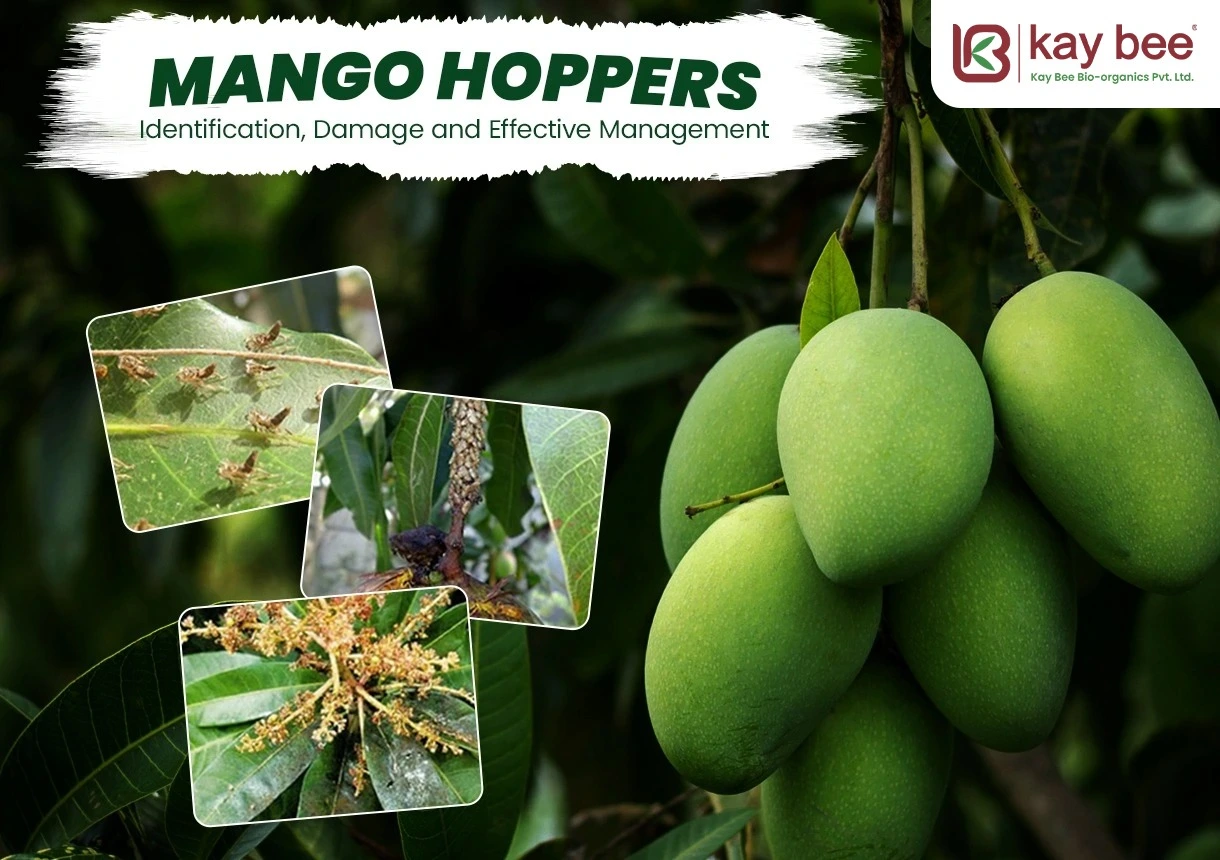
Mango Hoppers : Identification, Damage and Effective Management
Introduction
Mango (Mangifera indica L.), popularly known as the “King of Fruits,” is valued for its delicious taste, rich aroma, and high nutritional content. It is widely cultivated in tropical and subtropical regions, especially in India. However, mango production is severely affected by several insect pests, among which mango hoppers are the most destructive mango flowering pests. Mango hoppers damage tender shoots, leaves, and flower panicles by sucking plant sap, leading to flower drying, fruit drop, poor fruit setting, and heavy yield losses. Severe hopper damage in mango orchards may reduce production by 50–80%, making effective mango hopper control essential for profitable cultivation. Excessive use of synthetic hopper insecticide products has caused insect resistance, harmful residues, environmental pollution, and destruction of beneficial insects, creating major challenges in orchard pest management. To overcome these problems, farmers are adopting botanical and eco-friendly mango pest management practices. Botanical insecticides provide residue-free protection, reduce resistance development, and support sustainable mango yield protection and orchard health.
Important Species of Mango Hoppers
The major hopper species attacking mango orchards include the following:
- Amritodus atkinsoni
- Idioscopus clypealis
- Idioscopus niveosparsus
These pests belong to the family Cicadellidae under the order Hemiptera and are widely distributed in mango-growing regions.
Identification of Mango Hoppers
Mango hoppers are small wedge-shaped insects measuring about 4–5 mm in length. Adults are usually golden brown to dark brown, while nymphs are pale yellow or yellowish-brown with reddish eyes.
Key Identification Features
Nymphs remain highly active and generally hide beneath leaves, inside bark cracks, and on tender shoots during daytime.
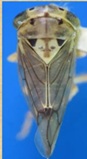
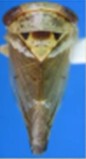
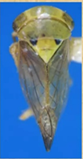
| Amritodus atkinsoni | Idioscopus nitidulus | Idioscopus clypealis |
|---|---|---|
| 1. Bigger among three
2. Two spots on the scutellum and two spots on the pronotum and also marking on vertex 3. Three generations / year in Karnataka 4. Abundance: Octo – March |
1. Medium size
2. Three spots on the scutellum and white bands across the wing 3. Three generations / year 4. Abundance: Octo – March |
1. Smallest among three
2. Two spots on the scutellum and male without dark spots on the vertex and female with dark spots on vertex 3. One generation / year 4. Jan – March |
 |
 |
 |
Female hoppers lay eggs singly inside flower buds, leaf veins, and inflorescence stalks. Eggs hatch within 4–7 days depending upon climatic conditions.
The nymphal stage lasts about 8–10 days, after which adults emerge. The complete life cycle is completed within 12–17 days, allowing several overlapping generations during the flowering season.
Warm and humid weather favours rapid multiplication of these major mango flowering pests.
Nature of Damage of Mango hoppers
Both nymphs and adults damage mango plants by puncturing tissues and sucking sap from tender plant parts. Severe hopper damage in mango orchards directly affects flowering, fruit setting, and overall productivity.
Major Symptoms of Hopper Damage in Mango
- Drying and Shedding of Flowers: Hoppers feed heavily on flower panicles, causing flowers to dry and shed prematurely. Severe infestation drastically reduces fruit setting and weakens mango yield.
- Wilting of Tender Shoots: Continuous sap sucking weakens young shoots and inflorescences, making them shriveled and weak.
- Honeydew Secretion: The insects excrete sticky honeydew on leaves and flowers, which attracts ants and supports fungal growth.
- Sooty Mold Development: Black sooty mold develops on honeydew deposits, covering leaf surfaces and reducing photosynthesis.
- Fruit Drop and Yield Loss: Heavy infestation during flowering and fruit-setting stages causes immature fruit drop and severe economic losses.
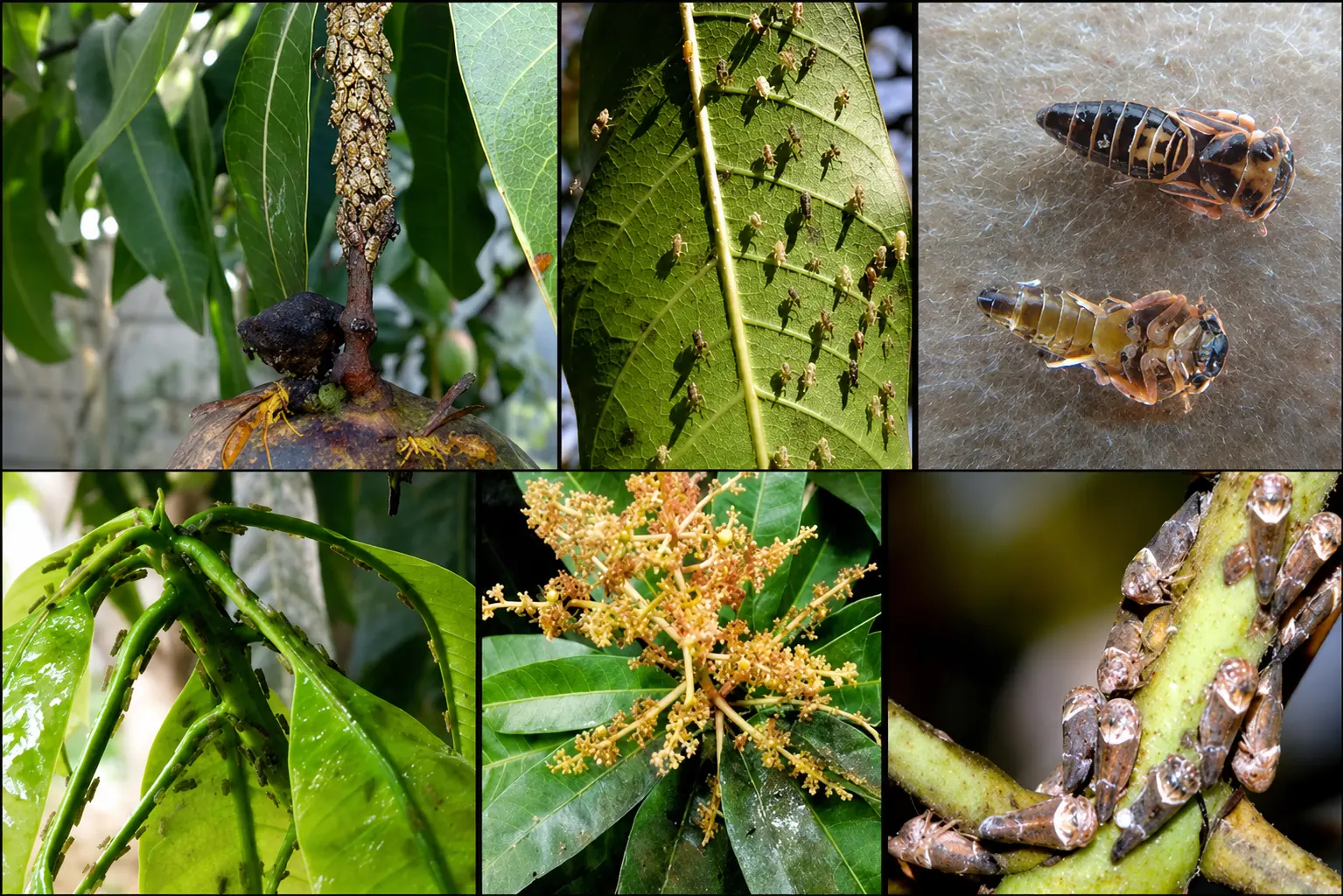
Symptoms of Hopper Damage in Mango
Favourable Conditions for Hopper Development
Mango hoppers thrive under the following conditions:
- Temperature around 25–30°C
- Relative humidity above 70%
- Dense and poorly ventilated orchards
- Dry periods between rainfall
- Excess shade and neglected orchard sanitation
Poorly maintained orchards are more vulnerable to severe infestations, making proper orchard Pest Management highly important.
Initial Symptoms Farmers Should Observe
Early detection is essential for successful mango hopper control. Farmers should regularly monitor orchards for:
- Pale yellow wedge-shaped nymphs on young leaves
- Sticky honeydew deposits
- Curling and yellowing of leaves
- Increased hopper activity near flowers and young fruits
Effective Mango Hopper Control and Management
Integrated Pest Management (IPM) is the most effective and sustainable strategy for mango pest management. It combines cultural practices, orchard sanitation, monitoring, and eco-friendly botanical insecticides.
Cultural Management Practices
Orchard Sanitation
- Remove dried twigs and infested plant parts regularly
- Maintain proper orchard hygiene to reduce breeding sites
Pruning
- Prune overcrowded branches to improve sunlight penetration and air circulation
- Avoid dense canopies that favor hopper multiplication
Weed Management
- Keep orchards free from weeds that may harbor pests
Monitoring
- Inspect flowering panicles and tender shoots regularly during flowering season
Advantages of Botanical Hopper Insecticide
Botanical formulations are becoming increasingly popular alternatives to chemical hopper insecticide products because they are safer and environmentally sustainable.
Management with Pesto Raze
Pesto Raze is an eco-friendly botanical insecticide used for effective mango hopper control and sustainable mango pest management. It provides quick knockdown action against sucking pests while remaining safe for beneficial insects and the environment.
Key Benefits of Pesto Raze
- Effective against mango hoppers and other sucking pests
- Residue-free and suitable for export-quality fruits
- Reduces resistance development compared to chemical insecticides
- Supports sustainable orchard pest management
- Improves crop quality and mango yield protection
Recommended Dose
Pesto Raze 2 ml per liter of water
Regular and timely application of Pesto Raze helps reduce hopper damage in mango orchards and supports healthy flowering and fruit setting.
Why Farmers Prefer Pesto Raze
- Effective against major mango hoppers
- Provides quick knockdown action
- Visible reduction in pest population within 48 hours
- Residue-free and suitable for export-oriented crops
- Safe for organic farming
- Improves fruit quality and marketable yield
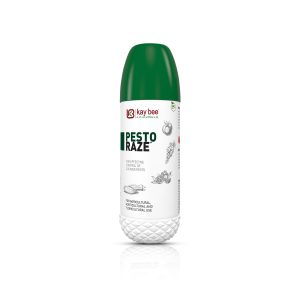
Mode of Action of Pesto Raze
Contact Action: Direct spray contact immediately affects hopper feeding and survival.
Fumigant Action: Vapor activity helps manage hidden hopper populations inside dense canopies.
Systemic Action: The formulation gets absorbed within plant tissues and provides internal protection.
Anti-Feeding Effect: It disrupts hopper feeding behavior soon after exposure.
Population Suppression: Regular application reduces multiplication and colony establishment.
Spray Timing and Application
Best Time for Spraying
- Early morning or late evening
- Avoid spraying before rainfall
Spray Schedule
- First spray at initial pest appearance
- Repeat every 5–6 days depending upon infestation level
- Ensure thorough coverage of both upper and lower leaf surfaces
Effective mango hopper control provides several advantages:
- Protects flowers and tender shoots
- Reduces fruit drop
- Prevents sooty mold development
- Improves photosynthesis and tree vigor
- Enhances fruit size, shine, and quality
- Increases productivity and profitability
- Strengthens long-term mango yield protection
Conclusion
Mango hoppers are serious mango-flowering pests that cause flower drying, fruit drop, poor fruit setting, and significant hopper damage in mango orchards. Overuse of synthetic hopper insecticide products has led to resistance, harmful residues, and environmental concerns. Adopting sustainable mango pest management practices such as orchard sanitation, pruning, monitoring, and eco-friendly botanical insecticides helps achieve effective mango hopper control. Organic solutions like Pesto Raze support residue-free orchard pest management and improve overall mango yield protection for profitable mango cultivation.
Latest Blogs
 Brown Plant Hopper Paddy Organic Control with Pesto Raze & Mealy Raze
 Mycorrhiza Technical Manufacturer in India | Kay Bee Bio-Organics Pvt. Ltd.
 Cotton Whitefly Management During Square Formation Stage: Effective Control with Pesto Raze & OrgaNeem
 Calcium for Cabbage Head Formation: How Calboost (Ca-11%) Ensures Tight & Crack-Free Heads
 Citrus Canker Organic Control: A Complete Farmer’s Guide
COPYRIGHT © 2026 - ALL RIGHTS RESERVED. MADE BY WebAppGigs