

Why Farmers Prefer Neem Insecticides for Global Export Markets
Introduction
A farmer has just completed loading his export harvest. A great deal of labor went into this crop over the previous months; all of the irrigation and field inspections were done based on prior planning, and all of the spraying was done based on prior planning. The produce looks to be in very good shape, and the shipment is ready to go.
Then the inevitable happens: The phone rings with the call that no one wants to receive.
The consignment has failed its residue testing. Pesticide residue levels are above permissible limits, and the shipment cannot move forward.
This is not an imaginary problem for many farmers producing crops for export. The crop may appear to be healthy and ready for market; however, late season pesticide use can leave residual pesticide traces on the harvested produce that may cause serious problems when attempting to export.
The problem is usually not a result of poor farming practice. Rather, it is due to the fact that many chemical pesticides take time to degrade, and if the crop is harvested too soon, it can contain residual pesticide concentrations that are too high according to international inspections’ standards.
Consequently, many growers are increasingly using neem-based insecticides because they are effective in controlling pests and therefore reduce the likelihood of being denied access to international markets or losing the ability to export their crops.
What Export Markets Are Actually Checking
Globally, buyers of agricultural goods are increasingly purchasing verified sources rather than simply purchasing produce. A German supermarket or a distributor in Dubai wants to have documentation to support that the produce that they sell from their stores comes from a farm that uses no chemical inputs that could be used in food production. They have to provide customers with legitimate proof as they have some responsibility to their customers.
The European Union has established (EC) 396/2005 to regulate the amount of residue that can be on produce, while the United States requires that all produce sold as “certified organic” comply with the National Organic Program (NOP) regulations. Japan and countries in the Gulf are developing and enforcing more stringent regulations each year. Compliance requirements are not optional; one failure to test for contamination with a pesticide or harmful chemical means that the shipment cannot proceed into the importing country (or returned).
This is why the inputs of export agriculture are equally important as the production that is being exported. A farmer’s August pesticide application will ultimately determine if the crop he ships in October will actually pass through U.S. customs or if it will be returned to his farm without exception.
Why Neem Changes the Equation
Neem has been a part of agriculture in India for centuries, but now there are modern methods of processing it into a consistent professional input with measurable levels of the active compounds. The main compound is azadirachtin, which interrupts the hormonal system of insects, stopping their growth cycle and preventing larvae from maturing or feeding and laying eggs, leading to a decrease in pest populations over time rather than a temporary decrease.
For farmers growing crops for export, azadirachtin naturally degrades and disappears from the treated area (the area where the neem product was applied) after a few days and does not adhere to fruit or vegetables like organophosphates or carbamates. Therefore, a crop sprayed with a neem product at least two weeks prior to harvest would not have detectable levels of azadirachtin on a residue test, giving export farmers the assurance they need that their products will pass inspection.
In addition, neem is very gentle on beneficial insects, allowing bees and predatory insects, such as beetles, to continue to thrive while helping farmers control pests. Farmers switching to neem input products report improved soil health over multiple growing seasons and an increase in microbial life in the soil due to no longer disrupting it repeatedly with chemical-based pesticides.
What Ecocert, NPOP, and NOP Certification Actually Means for Farmers
Having the ability to become an organic producer is not simply something you can do because you have an “organic” label; it creates an opportunity for you to expand your market and build long-term relationships with your customers at better prices than before.
Using inputs from the Ecocert approved neem they sell saves the farmer a lot of time during the certification process. Since those inputs were already certified by Ecocert, there will not be additional reviews of those inputs by the auditor.
Practically speaking, Ecocert is recognized in over 80 countries and throughout Europe and the Middle East, making it one of the most recognized standards in global organic trade; NPOP is India’s own certification standard; and NOP is a standard that is managed by the USDA and is the baseline standard for producers selling into the U.S. organic market.
If you are growing organic produce and use Ecocert-certified neem (which have all three certification standards), you will eliminate the need for separate documentation, and you will provide a clean, verifiable input chain for your auditors in a multitude of international markets.
The Organeem Range from Kay Bee Bio Organics
The Organeem product line, developed by Kay Bee Bio Organics, caters to commercial and export farming environments and features five concentrations of azadirachtin (300, 1500, 3000, 10000, and 50000 PPM). Each concentration can be used to meet the pest pressure and crop needs.
Farmers can utilize Organeem 300 PPM to preventatively protect crops and provide light control of early-type infestations on vegetables and lowerrisk crops without much intervention.
Organeem 1500 PPM is a good option for moderate pest populations throughout fruit crops and larger commercial fields where growers need to provide a consistent form of protection during each of the growing seasons.
Farmers can use Organeem 3000 PPM to provide effective control of both sucking and chewing insect populations and is the most commonly used of all Organeem concentrations across all cropping systems as it gives farmers managing multiple pest species an excellent result.
Most export farmers utilize the Organeem 10000 PPM concentration as it will provide effective control of heavy infestations, while complying with the food safety pesticide regulations of all major importing regions.
Organeem 50000 PPM is the most concentrated formulation offered. It is typically used by
large-scale operations and/or professional pest management providers who have multiple farms or control numerous field sites.
What Farmers Report After Switching
The information is always backing me up. Exports that were rejected dropped after test results showed no chemical residue, so buyers from premium countries paid better prices for certified organic produce. There was also a decrease in the time required to conduct certification audits because all of the inputs listed on the applicator’s spray record have been verified as compliant.
A grape grower from Sangli put it this way: After starting to use neem products, he no longer had to worry about what the port lab would tell him when he sent his exports to the port every season. Once he switched, he knew that his crop was leaving the farm being tested and would have the money to pay for it.
Every export grower wants to achieve these results.
Also Read:
Rising Global Demand for Certified Azadirachtin-Based Products
The Neem Miracle: How We Extract Azadirachtin from Neem
Latest Blogs
 Mycorrhiza Technical Manufacturer in India | Kay Bee Bio-Organics Pvt. Ltd.
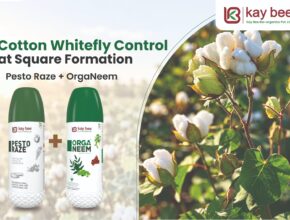 Cotton Whitefly Management During Square Formation Stage: Effective Control with Pesto Raze & OrgaNeem
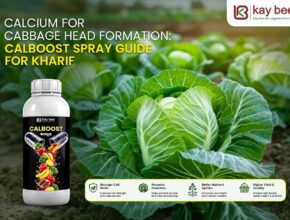 Calcium for Cabbage Head Formation: How Calboost (Ca-11%) Ensures Tight & Crack-Free Heads
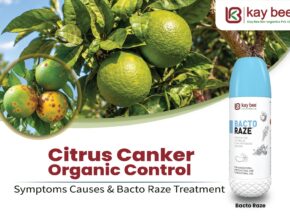 Citrus Canker Organic Control: A Complete Farmer’s Guide
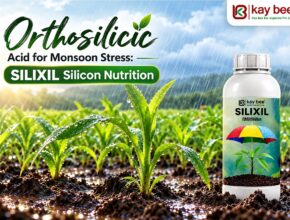 Orthosilicic Acid (OSA) for Monsoon Stress: Building Crop Strength & Resilience
COPYRIGHT © 2026 - ALL RIGHTS RESERVED. MADE BY WebAppGigs