
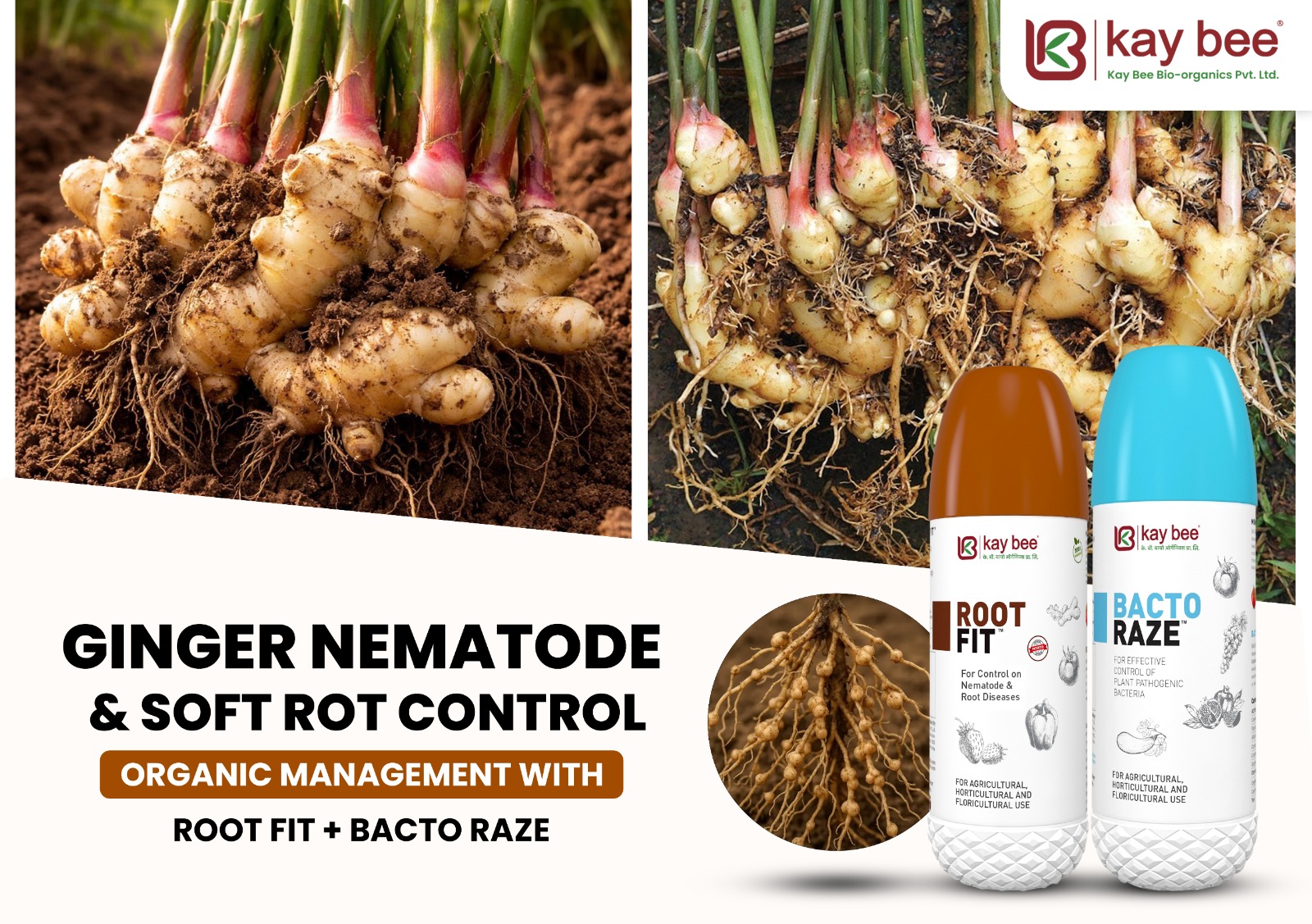
Ginger Nematode & Soft Rot Control: Organic Management
Zingiber officinale is one of India’s most valuable spice crops, widely cultivated for its culinary, medicinal, and pharmaceutical importance. India is among the world’s leading producers of ginger, with major cultivation in Kerala, Karnataka, Maharashtra, Meghalaya, Odisha, and the North-Eastern states. Healthy ginger rhizomes are essential for obtaining higher yields, better quality, and improved market value.
However, soft rot, root rot, bacterial infections, and plant-parasitic nematodes are among the most destructive problems affecting ginger cultivation. These diseases become particularly severe during the monsoon season and at the ginger tillering stage disease period, causing significant yield losses if left unmanaged. For a broader look at how rhizome rot is managed across ginger and turmeric, read our guide on managing rhizome rot in ginger and turmeric.
An integrated organic approach using Root Fit and Bacto Raze from Kay Bee Bio Organic provides an effective solution for ginger nematode and soft rot control while promoting healthy root development and residue-free production.
Importance of Healthy Root Systems in Ginger
Unlike many crops where the harvested part is above the ground, the economic yield in ginger is the underground rhizome. Therefore, maintaining healthy roots and rhizomes is critical throughout crop growth.
Healthy roots help:
- Better nutrient absorption
- Improved water uptake
- Strong tiller production
- Enhanced rhizome development
- Better tolerance against diseases
- Higher marketable yield
Any damage to the root system directly affects rhizome size, quality, and productivity. For more on why healthy root development is the foundation of crop yield, read our guide on the significance of white root development in crop health and yield.
Major Problems in Ginger
1. Soft Rot Disease in Ginger
Soft rot, also known as rhizome rot, is the most destructive disease of ginger and can cause complete crop loss under favourable conditions. It is a soil-borne disease primarily caused by Pythium aphanidermatum, while Pythium myriotylum and Pythium vexans are also associated with the disease. The pathogen becomes highly active under warm, humid conditions and during the southwest monsoon, when soil moisture is high. Young sprouts are particularly susceptible to infection.
Nature of Damage
The infection begins at the collar region of the pseudostem and gradually spreads both upward into the shoots and downward into the rhizomes. As the disease progresses, the collar region becomes water-soaked, and the pathogen invades the underground rhizomes, causing soft rot. In advanced stages, the roots are also infected, severely affecting water and nutrient uptake. For more on how soil-borne pathogens spread through vascular systems in other crops, read our guide on guide to managing soil-borne wilt and nematodes.
Symptoms
- Initial light yellowing of the tips of lower leaves
- Yellowing gradually spreads along the leaf margins while the middle portion remains green during the early stage
- Progressive yellowing of all leaves from the bottom upward
- Water-soaked lesions at the collar region of the pseudostem
- Soft, brown, and rotting rhizomes with a foul smell
- Poor tillering and reduced plant vigour
- Drooping, wilting, and drying of pseudostems
- Easy pulling of infected plants due to rotted roots and rhizomes
- Complete collapse of affected plants under severe infection
Survival and Spread
The soft rot pathogen survives in soil, infected seed rhizomes, and infected crop debris. It spreads through contaminated soil, irrigation water, infected planting material, and farm implements. The disease spreads rapidly during the rainy season when excess soil moisture favours pathogen multiplication.
2. Nematode Problems in Ginger
Root-knot nematodes (Meloidogyne spp.), burrowing nematodes (Radopholus similis), and lesion nematodes (Pratylenchus spp.) are among the most destructive soil-borne pests of ginger. These nematodes attack the roots, tender rhizomes, and the base of the pseudostem, impairing water and nutrient uptake and significantly reducing crop growth and yield. Their feeding also creates wounds that allow fungal and bacterial pathogens to invade, increasing the severity of rhizome rot and soft rot diseases. For more on how botanical nematicides protect root systems, read our guide on botanical nematicides and how they keep roots moving.
Nature of Damage and Symptoms
- Stunted plant growth and reduced vigour
- Yellowing (chlorosis) and necrosis of leaves
- Poor tillering and weak pseudostem development
- Characteristic root galls caused by root-knot nematodes
- Brown lesions on roots due to lesion and burrowing nematodes
- Reduction in feeder roots, affecting nutrient absorption
- Brown, water-soaked areas on the outer tissues of infected rhizomes
- Poor rhizome development, resulting in lower yield and inferior quality
- Increased susceptibility to soft rot and other soil-borne diseases due to root injuries caused by nematode feeding
Survival and Spread
Nematodes survive in the soil and in infected seed rhizomes, serving as the primary source of infestation for the next crop. They spread through contaminated soil, infected planting material, irrigation water, and agricultural implements. Plant debris left in the field after harvest can also harbour nematodes and contribute to their persistence.
3. Bacterial Diseases
Various bacterial pathogens enter through wounds created by nematodes, insects, or cultivation operations.
| Symptoms |
|---|
| Water-soaked lesions |
| Rhizome discoloration |
| Foul smell |
| Internal tissue breakdown |
| Plant wilting |
Why the Ginger Tillering Stage Is Critical
The ginger tillering stage disease period is one of the most important growth stages because:
- Rapid root development occurs.
- New tillers emerge.
- Rhizome initiation begins.
- Nutrient demand increases significantly.
If fungal pathogens, bacteria, or nematodes attack during this stage, the crop suffers irreversible yield reduction. Therefore, preventive disease management during tillering is highly recommended.
Organic Management of Ginger Root Rot, Nematodes, and Bacterial Diseases
A preventive integrated approach offers the best protection.
Cultural Practices
- Use healthy seed rhizomes.
- Ensure proper field drainage.
- Avoid water stagnation.
- Follow crop rotation.
- Apply well-decomposed organic manure.
- Remove infected plants immediately.
- Avoid injuries to roots during interculture.
Along with these practices, botanical crop protection products play a major role in maintaining healthy root systems. To understand why botanical solutions are the right choice for spice crops, read our guide on why India needs biopesticides in agriculture.
Root Fit — Organic Protection against Fungal Diseases and Nematodes
Root Fit is Kay Bee Bio Organic’s advanced botanical formulation for soil application, developed using proprietary Marker Compound Technology and Nano Formulation Technology. It effectively manages soil-borne fungal pathogens and plant-parasitic nematodes, including those responsible for ginger soft rot and nematode infestations, while promoting healthy root development and vigorous crop growth. Its broad-spectrum action provides reliable protection against major soil-borne diseases, making it an ideal solution for sustainable and residue-free ginger cultivation. For a detailed breakdown of how Root Fit works, read our pillar guide on Root Fit — a breakthrough in soil-borne fungal disease and nematode control.
Benefits of Root Fit
- Helps manage soft rot-causing fungal pathogens.
- Suppresses plant-parasitic nematodes.
- Encourages healthy white root development.
- Promotes stronger tillering.
- Improves nutrient absorption.
- Supports vigorous rhizome formation.
- Strengthens overall plant health.
- Suitable for residue-free farming.
Healthy white roots formed after Root Fit application absorb nutrients more efficiently, resulting in improved crop growth and higher productivity.
Bacto Raze — Organic Protection against Bacterial Diseases
Bacto Raze is Kay Bee Bio Organic’s advanced botanical bactericide formulated to help manage bacterial diseases in ginger. It provides effective control against major plant-pathogenic bacteria, including Xanthomonas, Erwinia, Pseudomonas, Ralstonia, and Clavibacter. Developed using botanical extracts, Bacto Raze helps protect plants from bacterial infections, supports healthy crop growth, and is an ideal solution for sustainable and residue-free farming.
Benefits of Bacto Raze
- Helps suppress bacterial infections.
- Protects rhizomes from bacterial decay.
- Reduces disease spread.
- Maintains healthy underground tissues.
- Supports healthy crop growth.
- Compatible with organic crop production.
Using Bacto Raze along with Root Fit provides broader protection against fungal, bacterial, and nematode problems.
Recommended Dose
For effective ginger nematode and soft rot control, apply Root Fit + Bacto Raze as a soil drench around the root zone:
| Crop Age | Root Fit (per acre) | Bacto Raze (per acre) |
|---|---|---|
| Below 1 month | 250 ml | 100 ml |
| Above 1 month | 750 ml | 250 ml |
Apply during the ginger tillering stage or at the first appearance of disease symptoms. Preventive application before severe infection provides the best results.
Advantages of Root Fit + Bacto Raze in Ginger
- Organic solution for fungal, bacterial, and nematode management
- Encourages healthy white root development
- Supports vigorous tillering
- Improves rhizome growth
- Reduces disease incidence
- Helps maintain healthy soil biology
- Suitable for sustainable and residue-free ginger production
- Compatible with integrated disease management programmes
Conclusion
Effective ginger nematode and soft rot control requires early intervention and integrated disease management. Since soft rot, bacterial infections, and nematodes often occur together, managing only one problem rarely provides satisfactory results. Combining good agronomic practices with Root Fit and Bacto Raze offers an effective ginger root rot nematode organic management strategy.
Root Fit supports healthy white root development while helping manage fungal pathogens and nematodes, whereas Bacto Raze provides protection against bacterial diseases. Together, they safeguard the crop during the critical ginger tillering stage disease period, promoting healthy rhizome development, improved plant vigour, and higher yields.
For complete spice crop protection, also read our guide on turmeric shoot borer — lifecycle, damage and organic control and explore best neem-based pesticides for agricultural crops for additional tools in your spice crop protection programme.
Latest Blogs
 Tomato Nematode Damage: Underground Signs, Crop Loss and Organic Control with Root Fit
 Sugarcane Growth Stages: Root, Tiller & Vegetative Schedule
 Guava Flowering & Fruit Development: Calbolite Powder for Calcium Nutrition
 Diamondback Moth Management in Cabbage with Larvo Raze + OrgaNeem
 Papaya Fruit Rot & Powdery Mildew in Monsoon: Identification and Organic Management
COPYRIGHT © 2026 - ALL RIGHTS RESERVED. MADE BY WebAppGigs