
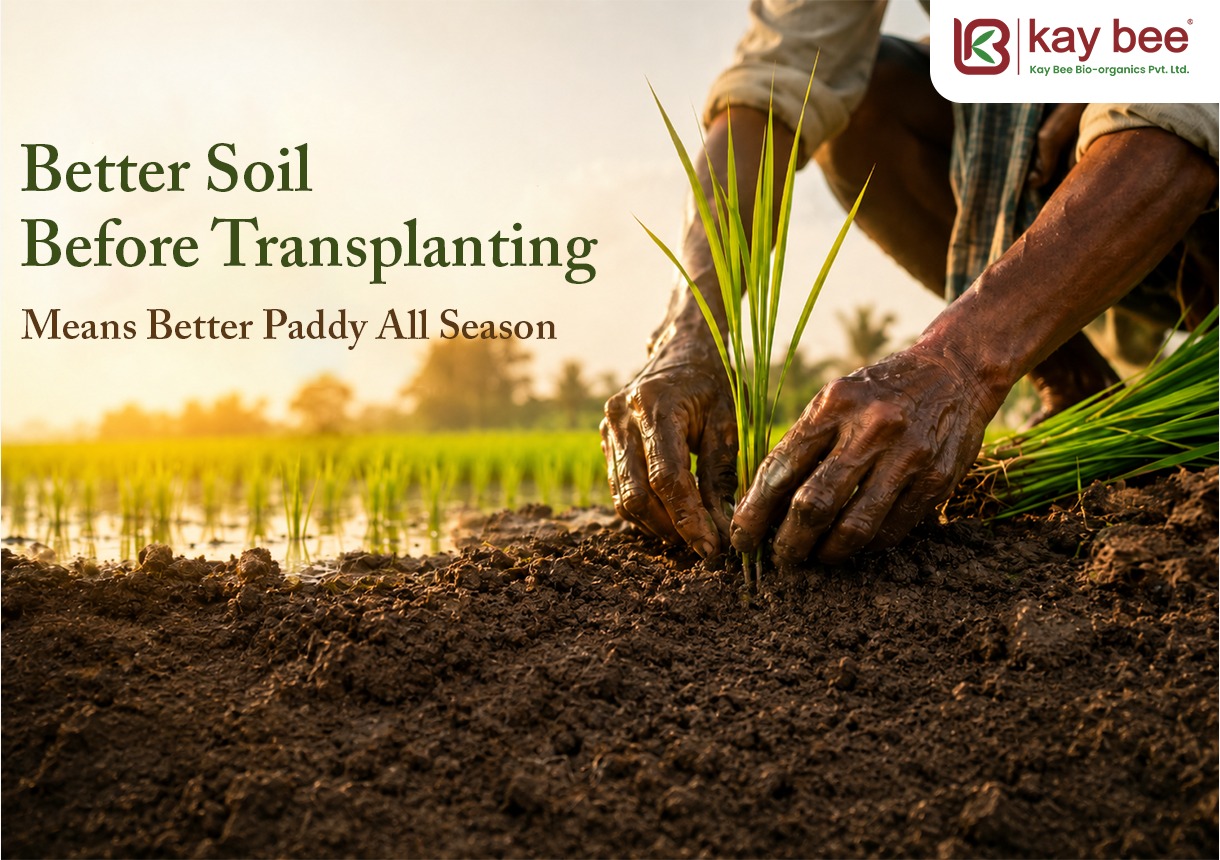
Better Soil Before Transplanting Means Better Paddy All Season
Why Soil Conditioning at Transplanting Stage Decides Your Paddy Yield
Across India, paddy transplanting season carries a feeling unlike any other.
In the villages of Konkan, women wade into flooded fields pushing seedlings into red laterite soil. In the plains of Punjab, perfectly levelled fields receive rows of seedlings by hand. In the deltas of Andhra and Tamil Nadu, farmers follow transplanting schedules passed down through generations. In Chhattisgarh and Odisha, the first rains signal entire communities to begin.
Every region does it differently. Every region does it together. And in every region the same quiet mystery plays out by harvest time. Same village. Same rain. Same variety. Different yield.
The farmer who gets more was not luckier. He simply understood one thing , what decides a paddy crop is not what you do on transplanting day. It is what you do to the soil before that day arrives.
Paddy transplanting tips that focus only on seedling age or spacing miss the most critical factor entirely. The soil that receives the seedling is either ready or it is not.
What Happens Underground in the First 72 Hours
The moment a paddy seedling leaves the nursery, its world changes completely. New soil. New chemistry. New competition.
In those first 72 hours, the seedling either roots quickly and begins establishing or it sits in shock, struggling against compacted, nutrient-locked ground.
Paddy establishment in this window is everything. A seedling that anchors deep and fast tillers on time, grows uniformly, and carries more panicles to harvest. A seedling that struggles loses days it can never recover in a paddy season.
Whether the soil is acidic laterite, heavy clay, or waterlogged delta – the root establishment challenge is real. The solution starts with the soil itself.
Neutralite – India’s First Soil pH Reducer and Conditioner for Paddy
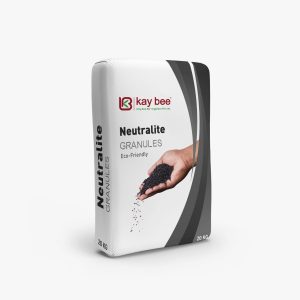
Most farmers apply fertilizer into soil that is not ready to receive it. Acidic or compacted soil locks nutrients chemically -meaning even well-fertilized fields deliver poor results because roots simply cannot access what is already there.
Neutralite is India’s first unique product that works both as a soil conditioner for rice transplanting and a natural soil acidifier releasing trapped nutrients and making them available to plants from the moment roots start exploring.
What Neutralite does in your paddy field:
- Releases locked nutrients trapped in the soil : phosphorus, zinc, and micronutrients become plant-available
- Reduces soil pH naturally : correcting acidic imbalance common across paddy-growing regions
- Improves soil structure, porosity, and aeration : roots penetrate with less resistance
- Supports nutrient absorption and accumulation in the plant
- Prepares the soil biology to receive and support incoming seedling roots
Mycoris – The First Friend Your Paddy Root Makes
Healthy soil prepares the ground. But the seedling still needs to navigate it alone unless it has help.
This is where mycorrhiza at transplanting changes the game entirely. Mycorrhizal fungi both Endo and Ecto Mycorrhiza attach directly to the root surface. From that moment, they begin growing alongside the root, building a fungal network that explores far beyond the root’s own reach.
In waterlogged paddy conditions where nutrient movement is slow and competition between plants is high, this network quietly pulls phosphorus, zinc, and water from zones the root itself could never access and delivers them straight to the plant.
The seedling does not just survive transplanting. It thrives from it.
The Transplanting Action Plan for Paddy
Before transplanting, mix Neutralite 4 kg and Mycoris Premium 2 kg together with your basal dose fertilizers and apply directly to the soil.
That is it. One step. Two products. Complete soil and root preparation done together – saving time, saving labour, and giving your paddy field everything it needs before the first seedling goes in.
Apply during morning or evening hours. Ensure sufficient soil moisture or irrigate after application.
Prepare the Soil. Protect the Root. Trust the Harvest.
Across every paddy field in India from Konkan to Punjab, from the Godavari delta to the plains of Bihar : the transplanting moment looks the same. Seedlings, soil, water, hands.
But the farmers who condition their soil with Neutralite and activate their roots with Mycoris give their seedlings something invisible and invaluable : Ground that is ready, receptive, and alive.
The seedling enters the soil only once. What that soil does in the next 72 hours decides everything that follows.
Latest Blogs
 Brown Plant Hopper Paddy Organic Control with Pesto Raze & Mealy Raze
 Mycorrhiza Technical Manufacturer in India | Kay Bee Bio-Organics Pvt. Ltd.
 Cotton Whitefly Management During Square Formation Stage: Effective Control with Pesto Raze & OrgaNeem
 Calcium for Cabbage Head Formation: How Calboost (Ca-11%) Ensures Tight & Crack-Free Heads
 Citrus Canker Organic Control: A Complete Farmer’s Guide
COPYRIGHT © 2026 - ALL RIGHTS RESERVED. MADE BY WebAppGigs