
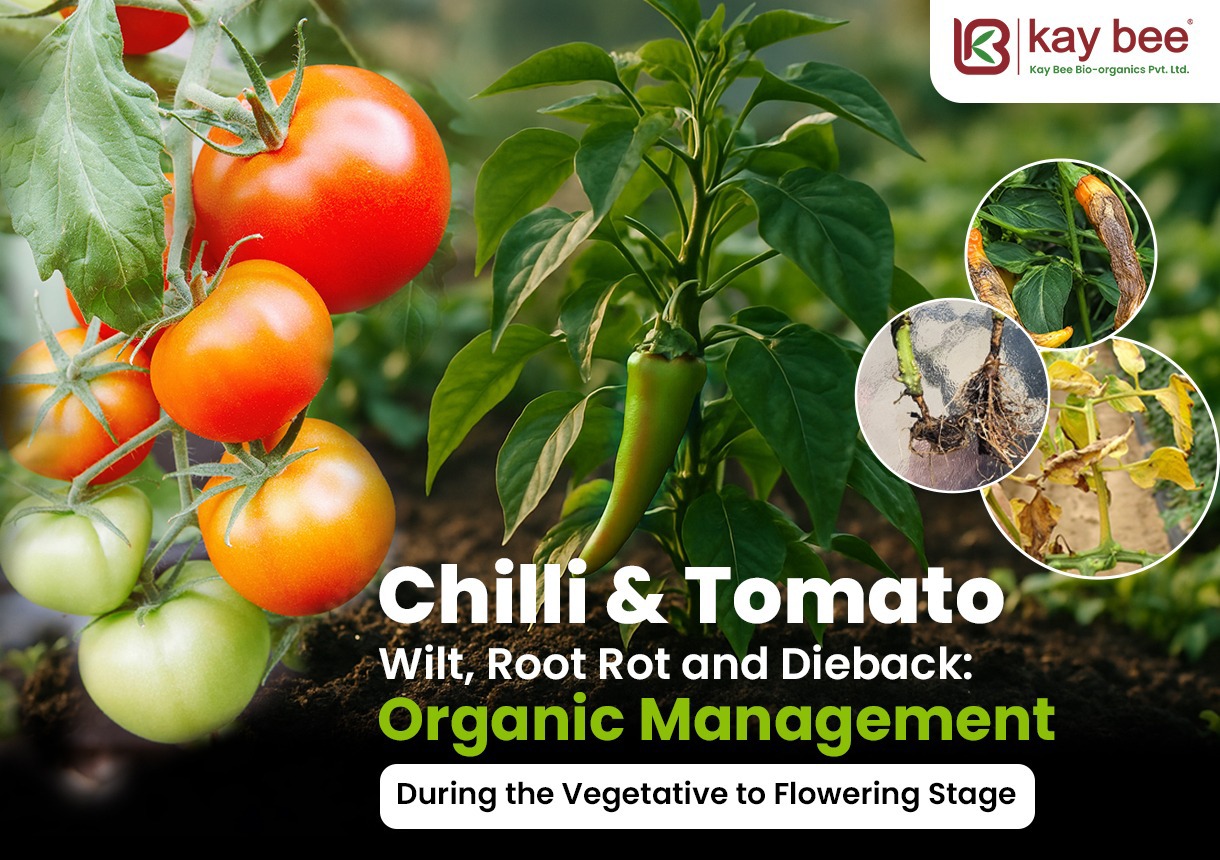
Calbolite & Calboost for Chilli and Tomato: Calcium Nutrition from Vegetative to Flowering
Calcium is a structural nutrient, not just a background nutrient. When it runs short, tomato and chilli plants can look healthy while fruit quality falls apart. This blog explains calcium deficiency in tomato and chilli, how to identify it, and how Calbolite (Zn 3%, B 0.5%, Ca 6%) and Calboost (Ca 11%) support both crops from the vegetative stage through flowering. For the full picture of calcium’s role across crops, read our guide on calcium deficiency in plants — symptoms and treatment.
1. Why Calcium Matters for Tomato and Chilli
- Calcium builds and strengthens cell walls, so it directly affects how firm and well-formed fruit turns out.
- Unlike mobile nutrients like nitrogen, calcium moves slowly inside the plant and does not relocate easily from old tissue to new growth.
- This is why calcium deficiency in tomato plants often shows up in new leaves and developing fruit first, even when soil calcium levels look adequate on paper.
- Because chilli fruit and tomato fruit both expand fast, calcium demand spikes right when supply is hardest for the plant to keep up with.
- Left unmanaged, calcium deficiency in tomato plants tends to reappear each season the same irrigation pattern repeats.
2. Calcium Deficiency in Tomato: What to Watch For
- Blossom end rot tomato symptoms are the most recognizable sign — a dark, sunken, leathery patch at the base of the fruit, opposite the stem.
- Young leaves may curl, pucker, or take on a slightly distorted, crinkled shape.
- Growing tips can look pale or stall out compared to the rest of the plant.
- Fruit cracking around the shoulders sometimes appears alongside classic blossom end rot tomato
For more on managing wilt and root diseases that often accompany calcium stress in chilli and tomato, read our guide on managing wilt and root diseases in chilli.
3. Calcium Deficiency in Chilli: Key Signs
Calcium deficiency in chilli tends to show up on the growing tip and youngest leaves before anywhere else on the plant.
- Calcium deficiency in chilli often first appears as tip die-back on the pod, where the growing end turns dark and shrivels.
- Leaves near the growing point may curl downward or show an uneven, wavy edge.
- Fruits can develop thin, weak walls that bruise or split more easily during handling.
- Plants under calcium stress also tend to flower less evenly, spacing out fruit set across the plant.
For complete chilli disease management, also read our guides on how to control black thrips in chilli and tospo virus in chilli and tomato for a full-season crop protection plan.
4. Calcium for Tomato & Chilli Plants: Why Soil Levels Alone Aren’t Enough
- Calcium for tomato plants works best as a season-long habit, not a single soil test followed by one application.
- Even soils that test well for total calcium can still leave plants short, because uptake depends heavily on steady soil moisture.
- Irregular watering interrupts the slow, steady flow calcium needs to reach the fruit, worsening calcium deficiency in tomato plants over time.
- High nitrogen, potassium, or magnesium levels can compete with calcium at the root, reducing how much actually gets absorbed.
- This is why calcium for tomato plants has to be managed as an ongoing programme, not a one-time soil correction. For a broader look at how hidden nutrient deficiencies affect crop performance, read our guide on hidden hunger in crops.
5. Blossom End Rot Tomato and Root Rot in Tomatoes: Spotting the Difference
- Blossom end rot tomato is a calcium and water-management issue — the tissue damage starts at the fruit’s blossom end and stays localized there.
- Root rot in tomatoes, by contrast, is usually driven by waterlogged soil and fungal pathogens, showing up as wilting, yellowing, and a mushy, discoloured root system.
- A weak, stressed root system from root rot in tomatoes can also reduce calcium uptake, so the two problems sometimes appear together in poorly drained fields. Read our guide on guide to managing soil-borne wilt and nematodes for root rot prevention strategies.
- Correcting drainage is essential before any foliar calcium programme can work well against either issue.
- Scouting roots directly, not just leaves, is the most reliable way to rule out root rot in tomatoes.
6. Calcium Deficiency in Vegetables: The Bigger Picture
Calcium deficiency vegetables face isn’t limited to tomato and chilli. This same pattern shows up across many other fruiting crops too and is often mistaken for disease.
- Calcium deficiency vegetables commonly affected include tomato, chilli, pepper, cabbage, and cucurbits — anywhere fruit or head tissue expands quickly.
- Across these crops, the pattern repeats: new growth and developing fruit are hit first, while older leaves often look normal.
- Soil pH below 5.5 or above 7.5 tends to reduce calcium availability across most calcium-sensitive vegetables, regardless of crop type.
For more on the role of micronutrients in kharif vegetable crops, read our guide on role of micronutrients in kharif crops.
7. Calbolite: Building Calcium Reserves During the Flowering Stage
Applying Calbolite during the vegetative stage helps prevent early calcium deficiency in tomato plants before flowering season adds extra pressure, making it a foundational step in calcium for tomato plants programmes.
- Calbolite contains Zinc (3%), Boron (0.5%), Calcium (6%), along with plant extracts that provide natural phytohormones, vitamins, minerals, and bioactive compounds to support flowering, pollination, and early fruit development.
- Boron enhances calcium utilization within plant tissues and plays an important role in pollen germination, pollen tube growth, and fruit set.
- Zinc supports enzyme activity and chlorophyll production during the leaf-building phase.
7.1 Recommended Dose — Calbolite
- Calbolite (Powder) @ 1 to 1.5 g/litre of water for spray
- Soil application: 500–1000 g/acre
8. Calboost: Meeting Calcium Demand at Vegetative Stage
- Calboost contains 11% Calcium along with plant extracts that supply natural phytohormones, vitamins, minerals, and bioactive compounds for vigorous vegetative growth.
- A foliar application at flower initiation helps deliver calcium directly to the tissue that needs it most, bypassing slow root-to-fruit movement.
- Regular Calboost sprays through flowering can meaningfully reduce blossom end rot tomato incidence in fields with a history of the problem.
- For chilli, the same timing helps limit tip die-back and supports stronger, more uniform pod walls.
8.1 Recommended Dose — Calboost
- Calboost @ 1.5 to 2 ml/litre of water for spray
9. Stage-Wise Spray Plan: Vegetative to Flowering
| Crop Stage | Product & Dose | Goal |
| Vegetative Stage (20–25 DAT) | Calboost @ 1.5–2 ml/l | Build steady calcium + micronutrient base while canopy and root system establish |
| Pre-Flowering (40–45 DAT) | Calboost — continue monitoring; spray if signs of deficiency appear after irregular watering or heat stress | Prevent calcium gap before flowering demand spikes |
| Flower Initiation to Fruit Set | Calbolite @ 1–1.5 g/l spray OR 500–1000 g/acre soil application | Meet sharp rise in calcium demand; reduce blossom end rot and tip die-back |
For better spray adhesion and canopy coverage, add Balanstick (0.4 ml/l) to your foliar spray mix.
10. Practical Tips for Farmers
- Keep irrigation as even as possible — this single change often does more for calcium uptake than any spray programme alone.
- Watch new leaves and young fruit closely, since calcium deficiency in tomato and chilli almost always shows there before anywhere else.
- Test soil pH each season, since calcium availability shifts as pH drifts outside the ideal range.
- Improve field drainage where possible, since standing water is often the root cause behind recurring root rot in tomatoes.
- Keep spray records for both Calbolite and Calboost so timing can be fine-tuned season after season.
Final Thoughts
Calcium deficiency in tomato and chilli often goes unnoticed until blossom end rot, fruit cracking, or pod tip die-back begins to affect marketable yield. A planned calcium nutrition programme using Calboost during vegetative growth followed by Calbolite from flowering to early fruit development helps ensure a continuous supply of calcium and essential micronutrients when crop demand is highest.
Combined with proper irrigation, balanced fertilization, and regular crop scouting, this approach supports healthier plants, improved fruit quality, and higher yields throughout the season. For more on improving vegetable crop nutrition and root health, also read our guide on improving vegetable root development in June and our overview of hidden power of calcium in crops.
Latest Blogs
 Mycorrhiza Technical Manufacturer in India | Kay Bee Bio-Organics Pvt. Ltd.
 Calcium for Cabbage Head Formation: How Calboost (Ca-11%) Ensures Tight & Crack-Free Heads
 Citrus Canker Organic Control: A Complete Farmer’s Guide
 Orthosilicic Acid (OSA) for Monsoon Stress: Building Crop Strength & Resilience
 Ginger Nematode and Soft Rot Control: Organic Management with Root Fit & Bacto Raze
COPYRIGHT © 2026 - ALL RIGHTS RESERVED. MADE BY WebAppGigs