
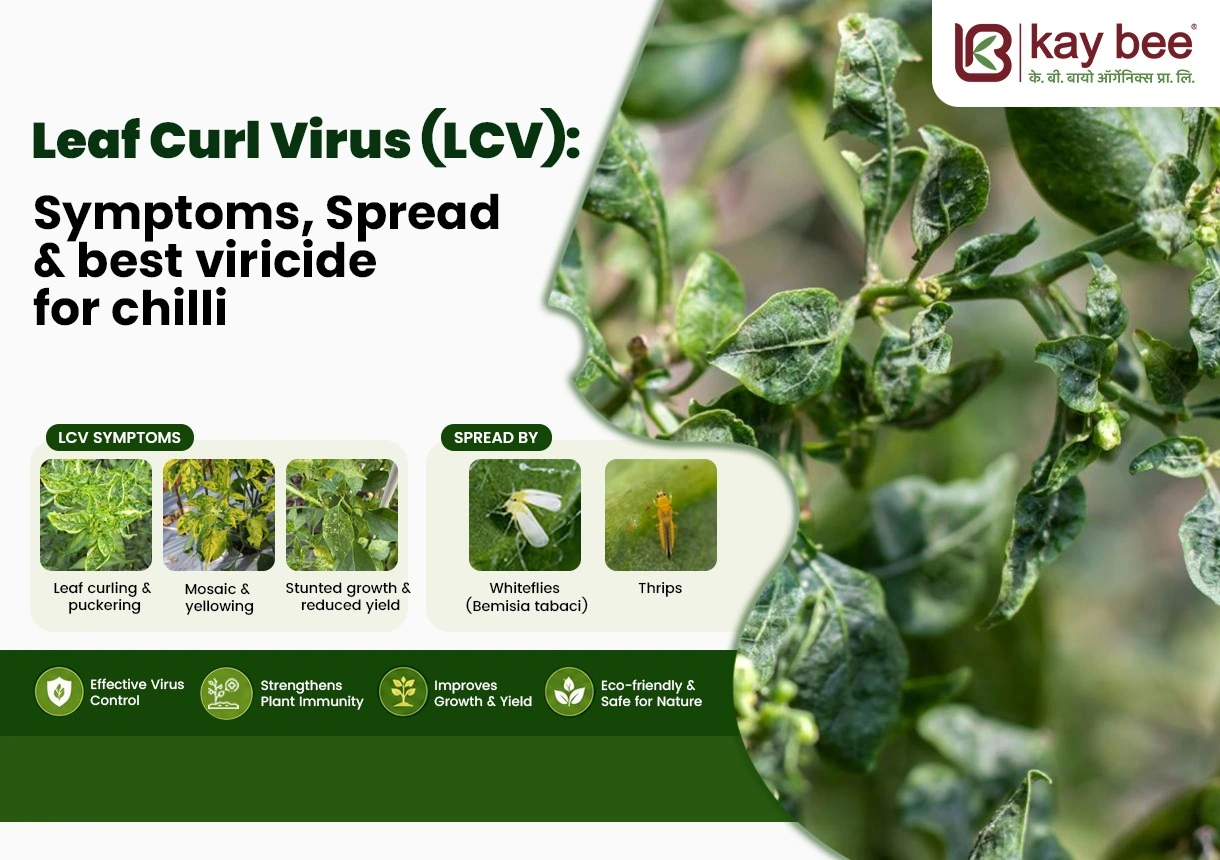
Leaf Curl Virus (LCV): Symptoms, Spread & best viricide for chilli
Chilli is a highly important crop, but its productivity is often affected by chilli virus disease, especially chilli leaf curl virus (LCV chilli). This disease, caused by a begomovirus chilli complex, can result in heavy yield losses if not managed in time. A deeper understanding of symptoms, spread, and integrated practices is essential for effective control.
WHAT IS CHILLI LEAF CURL VIRUS?
Chilli leaf curl virus (LCV chilli) belongs to the begomovirus chilli group, which affects plant growth at the cellular level. Once inside the plant, the virus interferes with normal physiological processes such as photosynthesis and nutrient transport. This leads to poor vegetative growth and reduced fruit development. Like fungal or bacterial diseases, viral infections cannot be cured once they occur, making prevention and early management through virus-resistant chili management crucial.
SYMPTOMS OF CHILLI LEAF CURL VIRUS
Leaf Curling
One of the earliest and most characteristic symptoms is curling of leaves, either upward or downward. Young leaves become puckered, crinkled, and distorted due to abnormal growth of leaf tissues. In severe cases, the entire leaf blade may twist, reducing the photosynthetic area and affecting normal plant growth.
Leaf Thickening and Brittleness
Affected leaves become noticeably thicker than healthy leaves because of their irregular cell enlargement. The leaf surface turns rough, leathery, and hard to touch. Such leaves lose their natural elasticity and become brittle, making them prone to tearing or breakage under wind or handling.
Vein Yellowing / Vein Clearing
The veins of infected leaves show yellow discoloration or a transparent, clear appearance. This occurs due to disturbance in chlorophyll synthesis and impaired nutrient movement within the leaf tissues. As the condition progresses, interveinal areas may also turn pale green or yellow.
Stunted Plant Growth
Infected plants exhibit poor vegetative growth and remain shorter than healthy plants. Internodes become shortened, causing the plant to appear compact and bushy. Reduced root and shoot development further weakens the plant and delays crop maturity.
Reduced Flowering and Flower Drop
The number of flowers produced decreases significantly in affected plants. Existing flower buds may dry up or drop prematurely before opening. Poor flowering directly reduces fruit set and lowers the productive potential of the crop.
Fruit Deformation
Fruits formed on infected plants are generally smaller in size, misshapen, twisted, or unevenly developed. Surface texture may become rough, and fruits often fail to attain normal colour and marketable quality. Such fruits have low consumer acceptance and reduced economic value.
Severe Yield Loss
Under heavy infection, plants may become highly weakened and fail to bear sufficient flowers or fruits. In extreme cases, severely affected plants may not produce any harvestable yield, resulting in serious economic losses to farmers.
HOW LCV SPREADS
The disease spreads mainly through the whitefly vector management, specifically Bemisia tabaci, which is responsible for carrying the virus from infected plants to healthy plants. Whiteflies feed by inserting their mouthparts into plant tissues and sucking sap. During feeding on infected plants, the insect acquires the virus, and when it later feeds on healthy plants, the virus is introduced into new tissues, initiating infection. This method of transmission makes the spread rapid and difficult to control once vectors are established in the field.
Role of Whitefly Vector
Whiteflies (Bemisia tabaci in LCV) are highly mobile insects capable of moving from plant to plant within a field and also between nearby fields. Even a small population can start disease spread, while larger populations can cause severe epidemics in a short time. Both nymphs and adults are associated with crop infestation, but adults are primarily responsible for transmitting the virus over longer distances.
Acquisition and Transmission Process
When whiteflies feed on infected plants, they acquire viral particles within a short feeding period. After acquisition, they can retain the virus and transmit it to multiple healthy plants during subsequent feeding. Repeated feeding behaviour increases the number of infected plants continuously throughout the crop season.
Spread within the Field
Initially, symptoms may appear in scattered plants, usually near field borders or areas where whiteflies first enter. Gradually, the disease spreads inward as whiteflies move across rows. If not controlled early, infection may become widespread, affecting most plants in the field.
Influence of Weather Conditions
Warm temperatures and moderate humidity favour rapid multiplication and activity of whiteflies. Under such favourable climatic conditions, insect populations increase quickly, resulting in faster virus transmission. Dry weather with limited rainfall often encourages greater whitefly movement and survival.
Continuous Cropping and Nearby Hosts
Growing chilli or other susceptible crops continuously provides a constant food source for whiteflies and continuous availability of infected plants. Nearby crops such as tomato, tobacco, okra, cotton, and other host plants may also help sustain vector populations and disease spread.
Role of Weeds as Reservoir Hosts
Many weeds growing around field bunds, irrigation channels, or uncultivated areas can harbour both the virus and whiteflies. These weeds maintain the disease during off-season periods and become an important primary source of infection when a new crop is planted.
Human-Assisted Spread
Movement of infected seedlings from nurseries to the main field can introduce the disease into previously healthy areas. Transport of infested plant material may also carry whiteflies to new locations.
Seasonal Spread
The disease is usually more severe in seasons when whitefly populations are naturally high. Early-planted crops may escape severe infestation, whereas late-planted crops often suffer greater damage due to higher vector pressure.
INTEGRATED MANAGEMENT OF LCV IN CHILLI
Resistant Varieties
Select hybrid varieties with tolerance to chilli leaf curl virus (LCV chilli). These varieties slow down virus multiplication and reduce symptom severity, making virus-resistant chilli management the first line of defence.
Cultural Practices
- Rouging: Remove infected plants immediately to prevent spread
- Spacing: Maintain proper spacing for better sunlight and air circulation
- Mulching: Reflective (silver/black) mulches repel whiteflies
- Crop Rotation: Avoid growing chilli or solanaceous crops continuously
- Weed Control: Eliminate alternate hosts around the field
These cultural practices reduce both virus sources and vector habitat.
Whitefly Vector Management
Since whiteflies are the main carriers, their control is a crucial part of managing chilli virus disease in chilli crops.
- Monitoring: Use yellow sticky traps to track population levels
- Botanical Sprays: Neem oil or azadirachtin reduces whitefly feeding
- Biological Control: Encourage natural predators like ladybird beetles and lacewings
- Sanitation: Keep nursery and main field clean
Viricide Application
Although viruses cannot be completely eliminated, but some products help suppress their activity and strengthen plant defense. Viricide application is recommended to manage LCV chilli effectively.
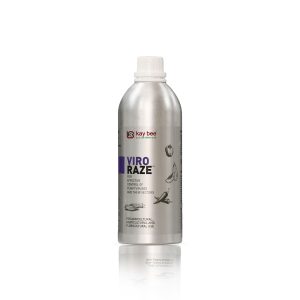
BEST RECOMMENDED SOLUTION: KAY BEE BIO’S VIRO RAZE
Viro Raze is a botanical (plant-based) bio-viricide developed by combining different plant extracts. It is mainly used to control viral diseases in crops and also helps manage the insects (vectors) that spread those viruses.
HOW IT WORKS:
-
Vector Control:
Viro Raze has bio-insecticidal properties that help control pests like thrips and whiteflies, reducing further spread of chilli leaf curl virus (LCV chilli)
-
Inhibits Virus Multiplication:
Phytochemical compounds interfere with viral replication within plant cells, particularly at the ribosomal level
-
Supports Plant Recovery:
Promotes new, healthy, virus-free leaves, enabling plants to regain vigour
-
Enhances Natural Immunity:
Strengthens the plant’s defense mechanisms, improving resistance to future infections
CORRECT SPRAY SCHEDULE
Preventive (Best Method)
For effective chilli leaf curl virus (LCV chilli) control, preventive spraying is the most reliable approach under virus-resistant chilli management strategy.
- Start spray at 15–20 days after transplanting
- Dose: 1–1.5 ml per litre water
- Interval: Every 7 days
CURATIVE (IF LCV ALREADY SEEN)
In case chilli virus disease symptoms are already visible, immediate viricide application is necessary to reduce further spread.
- Dose: 2–2.5 ml per litre water
- Spray 3 times continuously at 5–7 day interval
- Remove heavily infected plants on priority basis
IMPORTANT PRECAUTIONS
- Spray in morning or evening only
- Do NOT mix with copper fungicides or sulphur
- Use fine spray (mist) for full leaf coverage (especially underside)
- Follow proper whitefly vector management if pest population is high, as vectors spread begomovirus chilli infections
Simple Farmer Advice If LCV Problem
- Start Viro Raze immediately for managing LCV chilli
- Follow strict whitefly vector management
- Remove severely infected plants
- Continue viricide application regularly as per schedule
Conclusion
Chilli leaf curl virus (LCV chilli), caused by begomovirus chilli, is a serious threat to chilli cultivation and can cause heavy yield losses if not managed early. Since it spreads mainly through whiteflies, effective whitefly vector management is the key to reducing infection.
A strong virus-resistant chilli management approach should combine resistant varieties, field sanitation, and timely control measures. Proper viricide application also helps in reducing disease impact when used as part of an integrated strategy.
Kay Bee Bio’s Viro Raze is one of the popular product for virus control specially designed to help reduce viral infection spread and improve plant resistance. Recommended spray dose for chilli LCV is usually 1.0–2.0 ml per litre of water as foliar spray. It also supports in management of chilli virus disease by controlling whiteflies as it also contains insecticidal properties, reducing virus multiplication, promoting new healthy growth, and improving plant immunity.
Latest Blogs
 The Neem Seed is the Brain of the Plant : Kay Bee Extracts Its Genius in the Form of Azadirachtin
 Mango Hoppers : Identification, Damage and Effective Management
 Healthy Roots, Wealthy Farmers: A Guide to Managing Soil-Borne Wilt and Nematodes
 Why MICRO Nutrients Create MACRO Changes in Your Harvest : The invisible elements your crop cannot grow without
 Enhancing Fruit Size in Watermelon and Muskmelon with Gibberellic Acid
COPYRIGHT © 2026 - ALL RIGHTS RESERVED. MADE BY WebAppGigs