
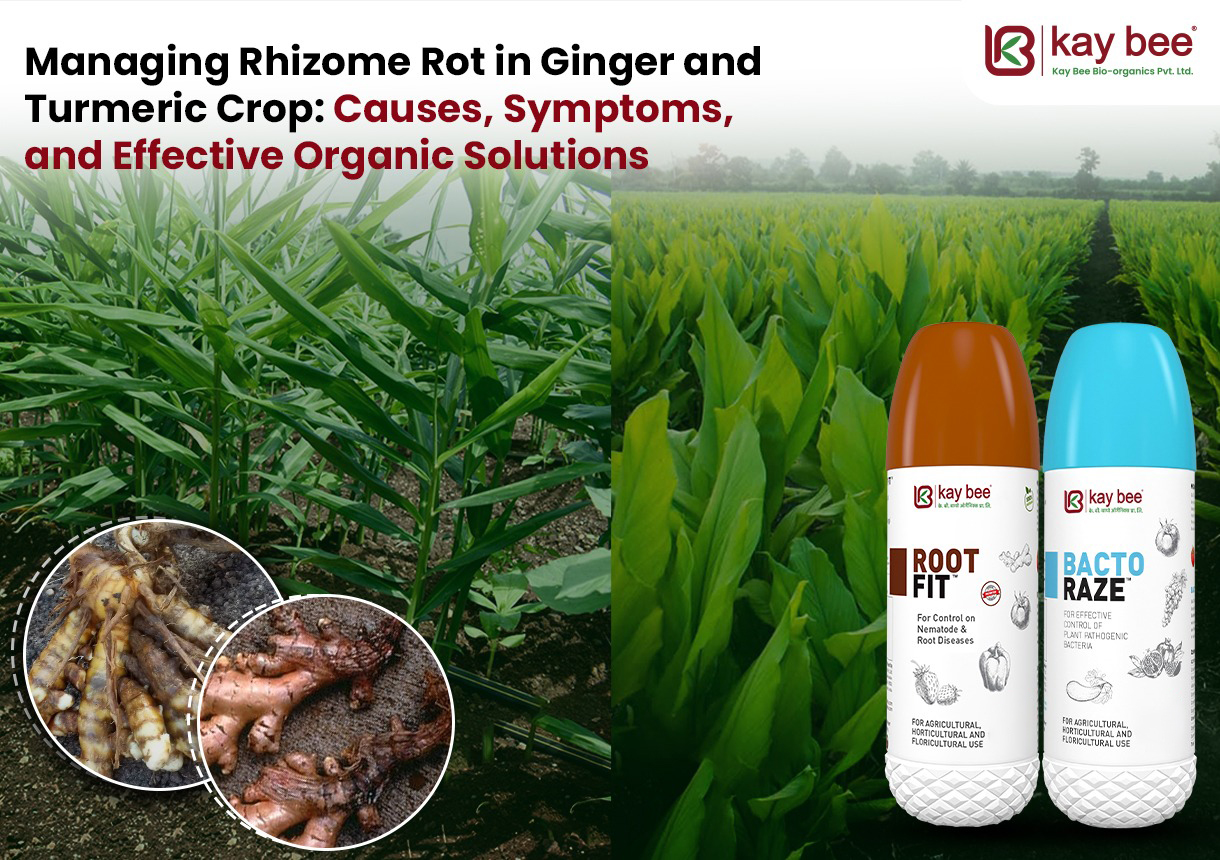
Managing Rhizome Rot in Ginger and Turmeric Crop: Causes, Symptoms, and Effective Organic Solutions
During the Kharif season, large-scale cultivation of ginger and turmeric is commonly observed across many regions. However, even with thorough crop planning, farmers often witness sudden yellowing of leaves and wilting of the crop in the field. Have you ever wondered why this happens? Why does yellowing appear on ginger and turmeric plants despite proper care? Or why do rhizomes rot even when the field is well managed?
Ginger and turmeric are crops that are particularly prone to rhizome rot, a common issue that affects both plant health and yield. This rot is typically accompanied by increased yellowing of leaves and a foul odor from the affected plants. Regardless of the crop type, leaf yellowing can occur due to various factors, such as irregular irrigation, nutrient deficiency, climatic fluctuations, and soil-borne fungal infestations.
In the case of ginger and turmeric, excess moisture, poor drainage, and the presence of fungal pathogens like Pythium and Fusarium in the soil often lead to rhizome rot. This condition appears in two primary forms: fungal rot and bacterial rot. While both display similar visual symptoms, farmers often find it difficult to identify the exact type. This leads to misdiagnosis and ineffective treatment, resulting in further crop loss due to improper fungicide application.
How to Identify Rhizome Rot in Ginger and Turmeric Crops:
The symptoms of fungal rot in ginger and turmeric first appear on the foliage. The leaves begin to turn yellow and gradually dry out. The rhizome and the stem section near the soil line start showing dark discoloration. As the disease progresses, the darkening spreads to the underground rhizome, turning it completely black. Water-soaked, decaying rhizomes may even release a foul-smelling fluid, and heavily infected plots emit a noticeable, unpleasant odor.
Bacterial and fungal rot differ in terms of the causal pathogens. Fungal rot results from fungal colonization on the rhizome, which causes internal decay. However, to identify bacterial rot, one simple method can be used: Cut an infected rhizome using a sterile, sharp blade and immerse the cross-section in a glass of clean water. If a milky white discharge oozes out from the cut surface, it is a sign of bacterial infection. Understanding whether the rot is fungal or bacterial is crucial before planning an appropriate fungicidal drenching treatment.
What Preventive Measures Should Be Taken for Rhizome Rot in Ginger and Turmeric?
1) Selection of Suitable Soil:
For cultivating ginger and turmeric, choosing the right type of soil is essential. A light to medium-textured soil with excellent drainage is ideal, as it reduces the chances of rhizome rot. The selected field should also have a balanced soil pH, as both yield and plant health depend heavily on the soil’s physical and chemical properties. Follow recommended spacing between plant rows and rhizomes to ensure adequate aeration and nutrient availability.
2) Regular and Balanced Irrigation Management:
Ginger and turmeric are highly sensitive to water levels. Excess moisture leads to increased rot, while water deficiency causes rhizomes to dry and restricts plant growth. Therefore, ensure the selected plot has proper drainage. If waterlogging is noticed, drainage channels should be created immediately. As the crop develops, irrigation should be scheduled based on the growth stage and moisture requirement of the plant.
3) Reliable Organic Solution from Kay Bee Bio for Rhizome Rot:
To effectively manage rhizome rot in ginger and turmeric, it is essential to first understand the nature of the rot, whether fungal or bacterial, and then plan the treatment accordingly. Kay Bee Bio’s Root Fit and Bacto Raze provide a scientifically proven solution to this problem.
For application:
Mix 750 ml of Root Fit and 250 ml of Bacto Raze per acre then dilute in 200 liters of water and apply as a soil drenching in the infected and surrounding areas of turmeric or ginger, also to avoid and spread we should drench for whole acre of crop. This application halts the spread of rot and promotes recovery. Both products are 100% organic, ensuring no harm to beneficial soil microbes. Regardless of whether the infection is bacterial or fungal, this drenching protocol effectively controls rhizome rot in ginger and turmeric crops.
Conclusion:
Understanding the cause of sudden yellowing and rot in ginger and turmeric is crucial for sustainable farming. While symptoms may look similar, proper diagnosis and treatment are vital for protecting crop health and maximizing yields. Selecting suitable soil, maintaining correct irrigation, and applying targeted organic treatments like Root Fit and Bacto Raze from Kay Bee Bio organics can prevent significant losses. These solutions are not only effective but also safe for the environment, ensuring healthy rhizomes, thriving crops, and profitable harvests.
Latest Blogs
 Boost Your Cotton Yield: A Practical Guide to Soil Nutrient Mobilization
 The Neem Miracle: How We Extract Azadirachtin from Neem
 Stop Fall Armyworm Before It Destroys Your Maize Farms
 Red Spider Mite Control for Citrus Orchards With R-Mite
 Understanding Mycorrhizal Fungi and Their Role in Modern Agriculture
COPYRIGHT © 2026 - ALL RIGHTS RESERVED. MADE BY WebAppGigs