
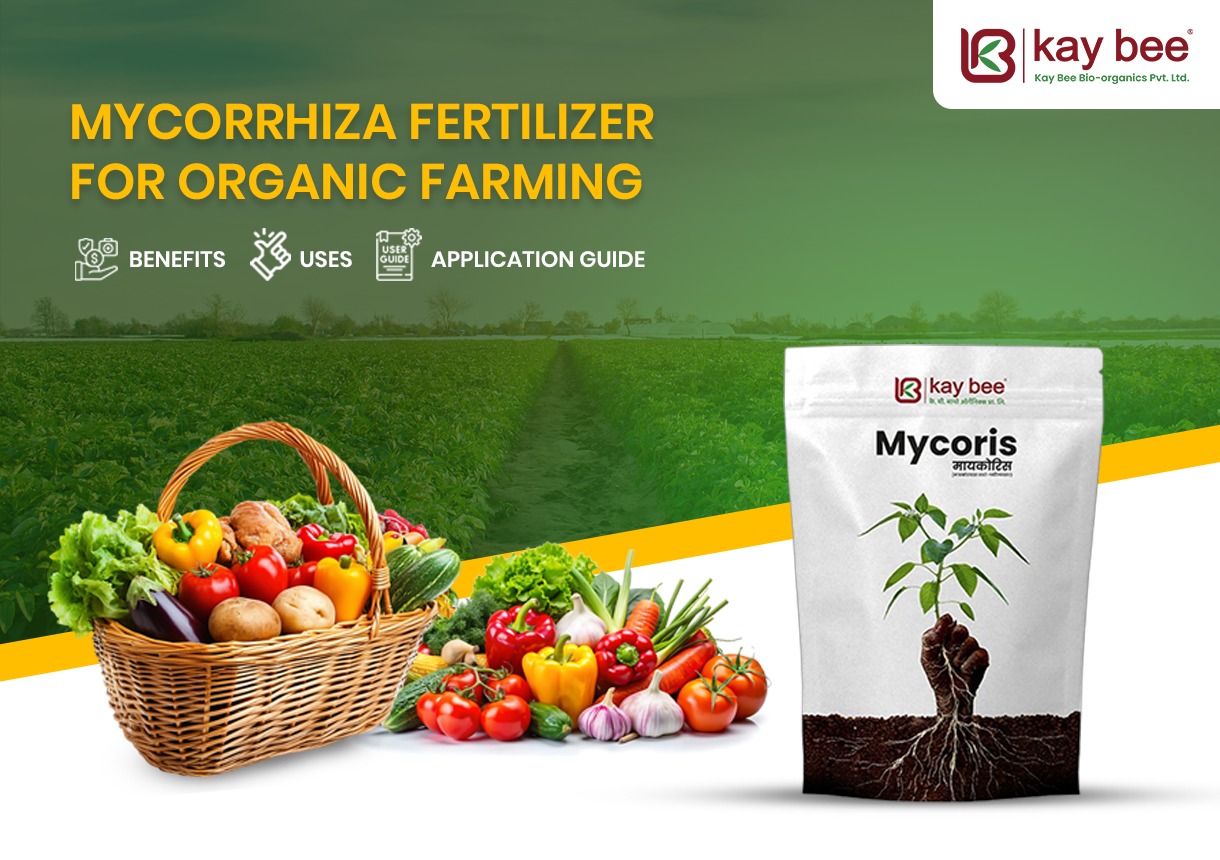
Mycorrhiza Fertilizer for Organic Farming: Benefits, Uses & Application Guide
Organic farming focuses on improving soil fertility using natural inputs instead of chemical fertilizers. In these systems, the health of soil microorganisms becomes extremely important because they help crops absorb nutrients naturally.
Organic farmers often face several challenges, such as:
- Poor nutrient availability in soil
- Low phosphorus uptake
- Slow crop growth
- Reduced yields during transition to organic farming
One of the most effective solutions to these problems is mycorrhiza for organic farming.
Mycorrhizal fungi form a natural symbiotic relationship with plant roots and help crops absorb nutrients and water from soil more efficiently. Because of this ability, mycorrhiza is widely used as a biofertilizer for organic farming systems.
If you want to understand the science, benefits and application methods in detail, read our complete guide on mycorrhiza biofertilizer.
Why Mycorrhiza Is Important in Organic Farming
Organic agriculture relies heavily on soil microbes and natural nutrient cycles rather than synthetic fertilizers.
One of the most important groups of microorganisms in soil are mycorrhizal fungi. These fungi attach to plant roots and extend a network of microscopic filaments called hyphae into the soil.
This network works like an extended root system that helps plants access nutrients beyond the reach of normal roots.
Because of this mechanism, mycorrhiza in organic agriculture plays a crucial role in improving crop nutrition and soil fertility.
The main benefits include:
- Improved phosphorus availability
- Better micronutrient uptake
- Enhanced soil microbial activity
- Stronger root development
Mycorrhizal fungi are particularly effective in improving phosphorus uptake in crops. You can learn more about this process in our detailed guide on mycorrhiza phosphorus uptake in plants.
How Mycorrhiza Works in Organic Farming Soil
Mycorrhiza works through a symbiotic relationship between fungi and plant roots.
When mycorrhizal fungi colonize plant roots, they form structures that allow nutrients and water to be exchanged between the fungi and the plant.
The process works as follows:
- Fungi attach to plant roots.
- Hyphae spread through the surrounding soil.
- These hyphae absorb nutrients and water.
- Nutrients are transferred to the plant.
- The plant supplies carbohydrates to the fungi.
This system significantly increases nutrient efficiency in organic farming systems.
MYCORIS (KayBee Bio)
Mycorrhiza and Organic Farming Soil Microbes
Healthy organic soils contain a large number of beneficial microorganisms.
These include:
- Beneficial bacteria
- Fungi
- decomposers
- Aactinomycetes
These organic farming soil microbes work together to break down organic matter and release nutrients for plant growth.
Mycorrhiza strengthens this microbial ecosystem by improving nutrient exchange between soil and plant roots.
Mycorrhiza Organic Farming Benefits for Soil and Crops
There are many mycorrhiza organic farming benefits that make it one of the most valuable inputs for sustainable agriculture.
Improved Nutrient Uptake
Mycorrhiza increases the ability of plant roots to absorb nutrients such as:
- Phosphorus (P)
- Zinc (Zn)
- Copper (Cu)
- Iron (Fe)
Phosphorus is often locked in soil minerals and unavailable to plants. Mycorrhiza releases enzymes that help dissolve phosphorus and make it accessible.
Farmers across many crops have reported improved crop performance after using mycorrhiza. Read the detailed guide on mycorrhiza biofertilizer benefits for crops.
Improved Soil Health
Healthy soil forms the foundation of sustainable organic farming.
Mycorrhiza contributes to soil health by:
- Improving soil structure
- Increasing microbial diversity
- Enhancing soil aggregation
- Improving root growth
These improvements help maintain long-term soil fertility.
Improved Water Absorption
Water stress is a common problem in agriculture, especially in rainfed farming areas.
Mycorrhiza helps plants absorb water more efficiently because fungal hyphae extend deeper into the soil than plant roots.
This improves:
- Drought tolerance
- Water uptake efficiency
- Plant survival during dry conditions
Improved Crop Yield
Better nutrient and water uptake leads to stronger plant growth and higher productivity.
Farmers using mycorrhiza often observe:
- Faster root development
- Improved plant vigor
- Better flowering and fruiting
- Higher crop yield
These benefits are particularly important in organic farming systems where synthetic fertilizers are limited.
Crops That Benefit from Mycorrhiza in Organic Farming
Mycorrhiza works with a wide variety of crops including vegetables, fruits, and field crops.
Vegetable Crops
Vegetables have high nutrient requirements and respond strongly to mycorrhiza inoculation.
Common vegetable crops include:
- Tomato
- Chilli
- Brinjal
- Cabbage
- Onion
Vegetable crops respond strongly to mycorrhiza inoculation. Read the complete guide on mycorrhiza fertilizer for vegetable crops.
Fruit Crops
Fruit trees benefit significantly from mycorrhiza because they require long-term nutrient supply.
Important fruit crops include:
- Mango
- Banana
- Citrus
- Pomegranate
- Grapes
Orchard crops benefit greatly from mycorrhiza. Learn more about mycorrhiza for fruit trees.
Field Crops
Field crops also benefit from improved nutrient uptake and root growth.
Examples include:
- Rice
- Wheat
- Maize
- Pulses
- Soybean
Field crops like rice and wheat also benefit from fungal root symbiosis. See the full guide on mycorrhiza fertilizer for paddy and wheat.
How to Apply Mycorrhiza in Organic Farming
Correct application is essential for successful root colonization.
Proper application methods ensure that fungi establish themselves close to plant roots.
Seed Treatment
Seed treatment ensures early colonization of roots.
Steps:
- Prepare jaggery solution or sticker solution.
- Mix mycorrhiza powder with the solution.
- Coat seeds evenly.
- Dry seeds in shade for 30 minutes.
- Sow immediately.
Seedling Root Dip
This method is used for transplanted crops.
Steps:
- Prepare a slurry of mycorrhiza powder and water.
- Dip seedling roots into the mixture.
- Transplant immediately.
Soil Application
Mycorrhiza can also be applied through soil.
Method:
- Mix with compost or farmyard manure.
- Apply near the root zone.
- Cover lightly with soil.
Best Time to Apply Mycorrhiza
Timing plays an important role in successful root colonization.
The best stages include:
- Seed sowing stage
- Transplanting stage
- Early root development stage
Read the full article on the best time to apply mycorrhiza.
Mycorrhiza Dosage Per Acre
Application rates vary depending on crop type and soil condition.
Typical dosage guidelines:
| Crop Type | Application Rate |
| Field crops | 2–4 kg per acre |
| Vegetable crops | 4–6 kg per acre |
| Orchards | 5–10 g per plant |
Check the detailed dosage chart for mycorrhiza dosage per acre.
Common Mistakes Farmers Make
Farmers sometimes do not see results due to incorrect application.
Common mistakes include:
- Applying far from the root zone
- Using expired products
- Applying in dry soil
- Mixing with chemical fungicides
Correct application improves fungal colonization and crop response.
Frequently Asked Questions
Is mycorrhiza suitable for organic farming?
Yes. Mycorrhiza is a natural microorganism and widely used as an organic farming biofertilizer.
Can mycorrhiza replace chemical fertilizers?
It cannot completely replace fertilizers but can significantly reduce fertilizer requirements.
How long does mycorrhiza take to work?
Root colonization usually begins within 2–4 weeks.
Conclusion
Mycorrhiza for organic farming is one of the most effective ways to improve soil health and crop productivity naturally.
By forming a natural partnership with plant roots, mycorrhiza helps plants absorb nutrients and water more efficiently.
Key benefits include:
- Improved nutrient uptake
- Stronger root systems
- Improved soil microbial activity
- Higher crop productivity
For a complete understanding of types, benefits and crop-wise applications, read our complete guide to mycorrhiza biofertilizer.
Latest Blogs
 Tomato Nematode Damage: Underground Signs, Crop Loss and Organic Control with Root Fit
 Sugarcane Growth Stages: Complete Root, Tillering & Vegetative Growth Schedule
 Guava Flowering & Fruit Development: Calbolite Powder for Calcium Nutrition
 Next-Generation Botanical Crop Protection with Kay Bee Bio Organic’s CIB Registered Molecules
 Turmeric Cultivation in India: Vegetative Stage Care with Nova Drip + MYCORIS
COPYRIGHT © 2026 - ALL RIGHTS RESERVED. MADE BY WebAppGigs