
Whitefly in Brinjal: Symptoms, Spread & Organic Management
Every crop has its peak season, the time when farmers earn the best returns for their hard work. For brinjal, that season is summer and winter. In the months of June & November market rates are higher, demand increases, and profit potential is strong.
But this opportunity also comes with challenges. During peak season, pest pressure, especially from whiteflies, becomes a major barrier. These tiny insects can quickly reduce crop health, spread viral diseases, and directly impact both yield and quality.
If not managed at the right time, whitefly infestation can turn a profitable season into a loss. That’s why timely pest control and proper crop management are essential to protect your brinjal crop and maximize returns.
What is Whitefly?
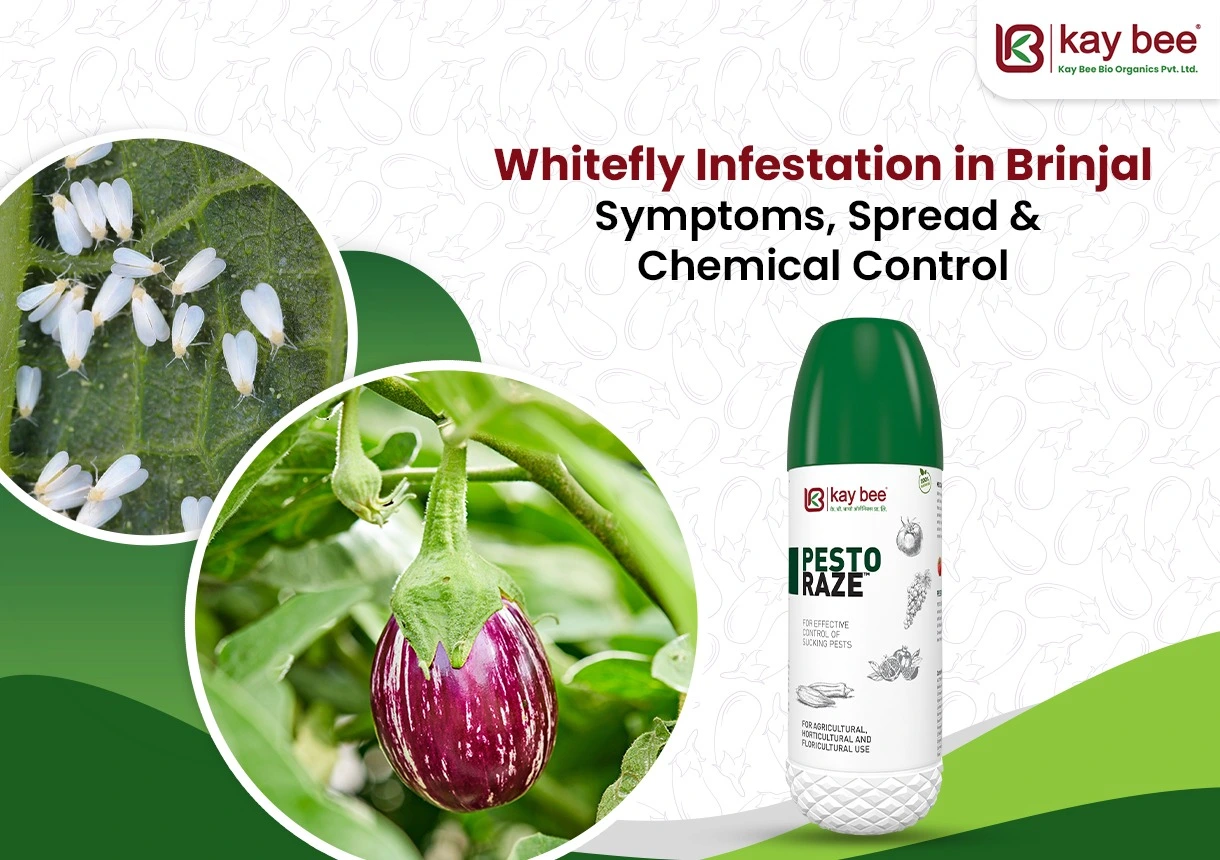
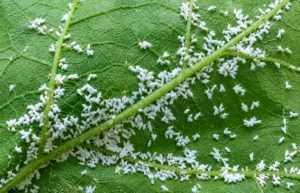
Whiteflies are tiny, white-colored insects found mostly on the underside of leaves. Both young ones (nymphs) and adults suck sap from plants.
Damage symptoms:
 |
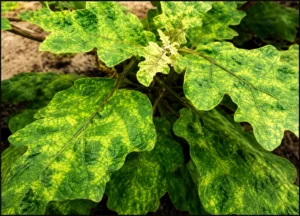 |
- Leaves turn into yellow and curling
- Weak plants with stunted growth.
- Secrets sticky substance honeydew on leaf surface.
- Black sooty mold develops on the honeydew secretion.
- Spread of leaf curl and mosaic virus
Whitefly Life cycle
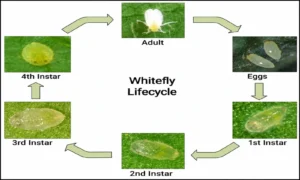
Efficient management of whiteflies requires understanding of their lifecycle:
- Egg stage—Eggs laid on lower surface of leaves
- Nymph stage – Sap-sucking stage causing maximum damage
- Pupal stage – Development stage
- Adult stage – Flying insects that reproduce quickly
- The whitefly life cycle in brinjal is completed during 2–3 weeks, leading to rapid population increase.
Why Whitefly Control is Important
Whiteflies are fast-multiplying sucking pests.
- It reduces plant growth
- It causes yellowing and curling of leaves
- Spreads viral diseases
- Lower fruit quality and yield
Early use of proper whitefly insecticide helps avoid heavy crop losses.
Brinjal Pest Management by IPM
-
Cultural Practices
- Use virus-free and also use resistant varieties
- Maintain recommended plant spacing between plat to plat and Row to Row.
- Remove and extinguish infected plants in field
- Don’t give excessive nitrogen fertilization application
- Install the yellow sticky traps in plot
-
Mechanical Control
- Regularly inspect the underside of leaves
- Use water sprays for the removal of whiteflies and its control.
- Use insect proof nets in nurseries
-
Biological Control
- Apply natural enemies like ladybird beetles and lacewings
- Use biopesticides such as Pesto Raze and neem-based formulations
-
Chemical Control
When infestation crosses economic threshold levels, insecticides may be used carefully:
When Should Farmers Use Whitefly Insecticide?
Use insecticides only when:
- Whiteflies are seen in large numbers on leaf underside
- Leaves starts curling or turning yellow
- Sticky honeydew appears on leaves
- Regular observing in every 3–4 days is key for better application
Why is chemical control not a good choice for farmers?
Farmers are using a chemical insecticide, but this approach is becoming less effective and riskier.
Drawbacks of Chemicals Insecticides
Development of resistance to chemical pesticides has made the pest management strategies increasingly complex. Most of the insect species have developed tolerance to such chemicals, and the reckless use of these chemicals has impacted the human health and the ecosystem. Resurgence of invasive pest species and the negative effect of synthetic pesticides on non-target organisms is also a matter of concern.
Why Organic Pest Control is Best Choice for Farmers?
Key Benefits of Organic Control
- Harmless for human being.
- Suitable for organic farming
- Ideal for export-oriented production
- Supports Integrated Pest Management (IPM)
- Reduces pest pressure on a long-term basis.
Why Farmers Should Use KBBO’S Pesto Raze on Brinjal Whitefly?
- Controls whitefly effectively
- Provides fast, lethal action on pests
- Visible results within 48 hours
- Residue-free and safe for export crops
- Suitable for organic farming
- Improves crop quality and yield
Pesto Raze-a Wonderful product to control Whiteflies in Brinjal:
Pesto Raze is a botanical based organic insecticide made by using marker compound technology, mixing of number of secondary metabolites and alkaloids extracted by from multiplicity of botanicals.
Working of Pesto Raze:
Multi-mode action: Contact + systemic + fumigant effect
- Feeding stop (antifeedant): Insects stop sucking immediately
- Stomach poison: Kills after ingestion
- Neurotoxic shock: Causes rapid muscle contraction – paralysis – death
- Growth disruption (IGR): Affects molting & development of larvae
- Cell damage: Desiccation & cytolysis in early stages
- Knockdown effect: Fast action on nymphs/early instars
- Reproductive damage: Reduces future pest population
- Resistance breaker: Multi-target action prevents resistance build-up
It attacks pests at multiple levels-feeding, nervous system, growth, and survival-giving quick knockdown and long-term control.
Recommended Dosage
- Pesto Raze – 2 ml/lit
Advantages of Pesto Raze on Brinjal Whitefly:
- Reduces sap-sucking damage and protects tender plant parts
- Farmers get results within 48 hours of application
- Minimizes honeydew secretion and sooty mold development
- Enhances plant vigor and photosynthetic activity
- Improves fruit shine, size, and overall appearance
- Eco-friendly solution suitable for sustainable farming
On field Results of Pesto:
After spray application of Pesto Raze farmers can see following results:
- Population reduction in whitefly
- Reduced sooty mold incidence
- Reduced viral disease intensity.
- Improved fruit quality and shine
- Higher yield and productivity
- Better market and export reception
Why Pesto Raze is better performing product:
- Residue-free pest management
- ECOCERT Certified and 100% Organic Product
- Fast lethal action on sucking pests
- Sustainable long-term protection.
- Improved crop quality and yield.
- Zero Residue, Zero PHI (Preharvest Interval) and zero Re-entry period.
- Marker Compound Technology Based Product.
- Target oriented and Multi action product
- Phyto-tonic effects on plants.
- Never create resistance in insects.
- Eco-friendly product.
Virus Vector Control in Brinjal
Sucking pests like whiteflies and aphids act as virus carriers (vectors), spreading diseases such as leaf curl virus.
Whiteflies are notorious for transmitting plant viruses
- Leaf curl virus
- Mosaic viruses
Control Measures:
- Remove and destroy virus-infected plants immediately
- Use insect-proof net nurseries for raising seedlings
- Install border crops like maize to reduce pest entry
- Control whiteflies and aphids at early stages
- Avoid planting during peak pest seasons
Effective virus vector control helps maintain healthy plants and improves overall yield.
Once a plant is infected, there is no cure only prevention through virus vector (whitefly) control.
If farmers are practicing management given below, then they will be getting good results on brinjal cultivation:
- Early whitefly control in brinjal is very important
- Manage all sucking pest brinjal together
- Use proper whitefly insecticide only when needed
- Focus on virus vector control to prevent disease
- Follow integrated brinjal pest management practices
Conclusion
Whitefly management is not just about saving a crop , it is about securing your profit during the most valuable season. With the right approach, farmers can protect plant health, improve yield, and ensure better market quality produce.
Using effective and safe solutions like Kay bee bio organic’s Pesto Raze helps control pests like whitefly without harming the crop or soil health. It supports better plant growth, reduces pest pressure, and helps farmers maintain consistent productivity.
By combining smart pest management with reliable solutions, farmers can make their brinjal cultivation more profitable, sustainable, and future-ready.
Latest Blogs
 Brown Plant Hopper Paddy Organic Control with Pesto Raze & Mealy Raze
 Mycorrhiza Technical Manufacturer in India | Kay Bee Bio-Organics Pvt. Ltd.
 Cotton Whitefly Management During Square Formation Stage: Effective Control with Pesto Raze & OrgaNeem
 Calcium for Cabbage Head Formation: How Calboost (Ca-11%) Ensures Tight & Crack-Free Heads
 Citrus Canker Organic Control: A Complete Farmer’s Guide
COPYRIGHT © 2026 - ALL RIGHTS RESERVED. MADE BY WebAppGigs