
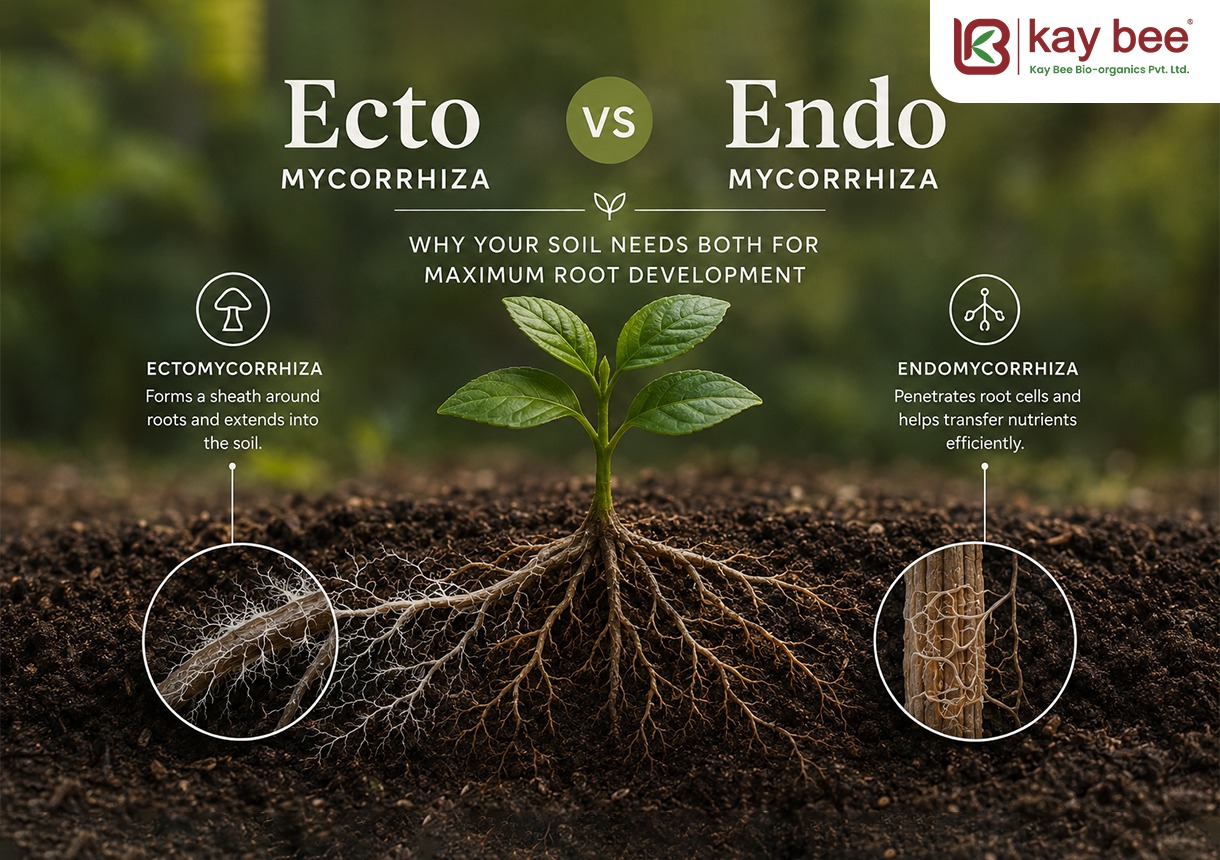
Ecto vs Endo Mycorrhiza: Why Your Soil Needs Both for Maximum Root Development
If you visit an abandoned farm that has not been farmed in many years, you can see what has happened to the soil before you ever look at the crop. The ground will have a different type of crumb structure than a rich farm would. The roots of a plant, when pulled out, are thin and lonely. And it isn’t always a lack of fertilizer that causes this, but many times there is a lack of life; the underground network that healthy crops depend on is not present. This underground network is called mycorrhiza.
What Exactly Is Mycorrhiza?
The term was derived from Greek origins, where ‘mykes’ means fungus and ‘rhiza’ means root; mycorrhizal fungi are soil microorganisms that create a mutualistic association with a plant’s root system; the fungus will connect itself to the plant’s root, grow into the surrounding soil, and pass on nutrients and water back to the plant; the plant in turn provides the fungus with carbon sugars created during photosynthesis.
More than 80% of all Earth’s land-based plants have developed an evolutionary relationship with a group of mycorrhizal fungi. It is also important to note that mycorrhizae do not constitute a singular species. There are two types of mycorrhizal fungi, which are divided into ectomycorrhizae and endomycorrhizae; understanding these different forms of mycorrhizae is essential to developing the greatest possible root system expansion.
Ecto Mycorrhiza: The Outer Layer Architect
Ectomycorrhiza develops externally to the roots. The hyphae of the fungus wrap around the root and form an outer layer or mantle. The hyphae then grow inward through the intercellular spaces of the cortex and form an intercellular network known as the Hartig net. The Hartig net provides the main location for nutrient transfer between the fungus and the plant root. The fungus does not actually enter the cell wall.
This type of mycorrhiza is found most commonly on trees that grow in forests. Mycelium formed by ectomycorrhiza extends out into the soil to capture minerals (especially phosphorus and nitrogen) and return them to the root zone. In addition to providing mechanical protection to the root tip, ectomycorrhiza functions well under conditions where soil varies or is under stress. Ectomycorrhizae also assist with root zone health and the stability of soil aggregates for commercial crops. Ectomycorrhizal associations promote the growth of micro-organisms and include enough diverse types as to maintain the healthy growth of the beneficial bacteria actively associated with plants.
Endo Mycorrhiza: The Deep Worker
Limited to VAM-type endomycorrhiza, fungi are more involved with the direct penetration of their hyphae into root cell walls, forming specially branched structures (arbuscules) that serve as the site of transfer of nutrients from the fungus to the plant on a cellular basis.
In addition, VAM fungi produce a natural glycoprotein known as glomalin that aids in the binding together of soil particles to improve soil structure and water retention, as well as increase the long-term carbon content of the root zone of the plant. It is one of the most overlooked benefits of mycorrhizal fungi in support of organic agriculture.
VAM fungi, such as. Multi-strain Rhizophagus irregularis, Glomus mosseae, and Glomus etunicatum colonize a variety of crop plants, including vegetables, fruits, cereals, pulses, and plantation crops, to provide improved phosphorus uptake, better absorption of zinc, iron, manganese, and boron, enhanced root mass, and less reliance on chemical fertilizers for their nutrient requirements.
View Product: MYCORIS—Mycorrhizal Bio-Fertilizer
Why Your Soil Needs Both: The Dual Power Mycorrhiza Advantage
Soil is not only about one thing. Other types of mycorrhiza fungi are needed. Ectoactive mycorrhiza will build the outer part of the roots, making long strands out into the soil and forming a barrier around the outside of the roots to keep them from drying out. Endoactive mycorrhizae are responsible for the many cellular structures associated with roots; they are responsible for the inward growth of roots, transfer of molecules directly into the root cells, transfer of nutrients from the soil and root systems deep into the root zone, and growth to a level that no root system alone can attain.
When they are both working together, the results multiply. In fact, many farms that use dual-active mycorrhiza have shared their experiences and consistently reported greater success in the first three weeks after planting (with regard to establishment and reducing transplant shock), greater success under drought or low water availability, and a substantial reduction in the cost of phosphorous fertilizer, by 30-40% over the growing season. This type of work has become critical to how serious farmers are looking at soil biology for both traditional (open-field) and non-traditional (protected) growing environments within India today.
Spore Count, Quality, and Why It Matters
Not every mycorrhizal product lives up to its claims. The performance of these products depends greatly on the spore count and inoculum potential (IP), which refers to the number of viable propagules/gm that can be propagated into the root system. Products manufactured with Root Organ Culture (ROC) technology have a higher level of purity than traditional soil-based products due to having a greater consistency of spore viability and fewer chances of contamination from traditional soil-based media. The best products will provide a minimum of 1,200 IP/gm of product and offer a combination of live spores and colonized root material to facilitate rapid initial colonization of plant roots.
Kay Bee Bio-Organics is one of the leading producers of endo and ecto types of mycorrhizae in India and has developed a reputation for quality products using a manufacturing process called Eco-Bridge Technology and comprising a blend of multi-strain mycorrhizae including Rhizophagus irregularis, Glomus mosseae, Glomus etunicatum, and Pisolithus tinctorius; these products provide a high spore count, faster root colonization, enhance the plant’s ability to uptake nutrients including P, K, Zn, Fe, Mn, B & Mg, and will help reduce the need for synthetic chemical fertilizers when used in conjunction with several crops (vegetables, fruits, cereals, pulses, and plantation crops) in both protected and open-field production systems.
The root zone is where yield is ultimately determined. A grower’s best investment may be found in the root zone when constructed with the best ratio of endo-to-ecto mycorrhizae and a high spore count.
Latest Blogs
 Tomato Nematode Damage: Underground Signs, Crop Loss and Organic Control with Root Fit
 Sugarcane Growth Stages: Complete Root, Tillering & Vegetative Growth Schedule
 Guava Flowering & Fruit Development: Calbolite Powder for Calcium Nutrition
 Next-Generation Botanical Crop Protection with Kay Bee Bio Organic’s CIB Registered Molecules
 Turmeric Cultivation in India: Vegetative Stage Care with Nova Drip + MYCORIS
COPYRIGHT © 2026 - ALL RIGHTS RESERVED. MADE BY WebAppGigs