
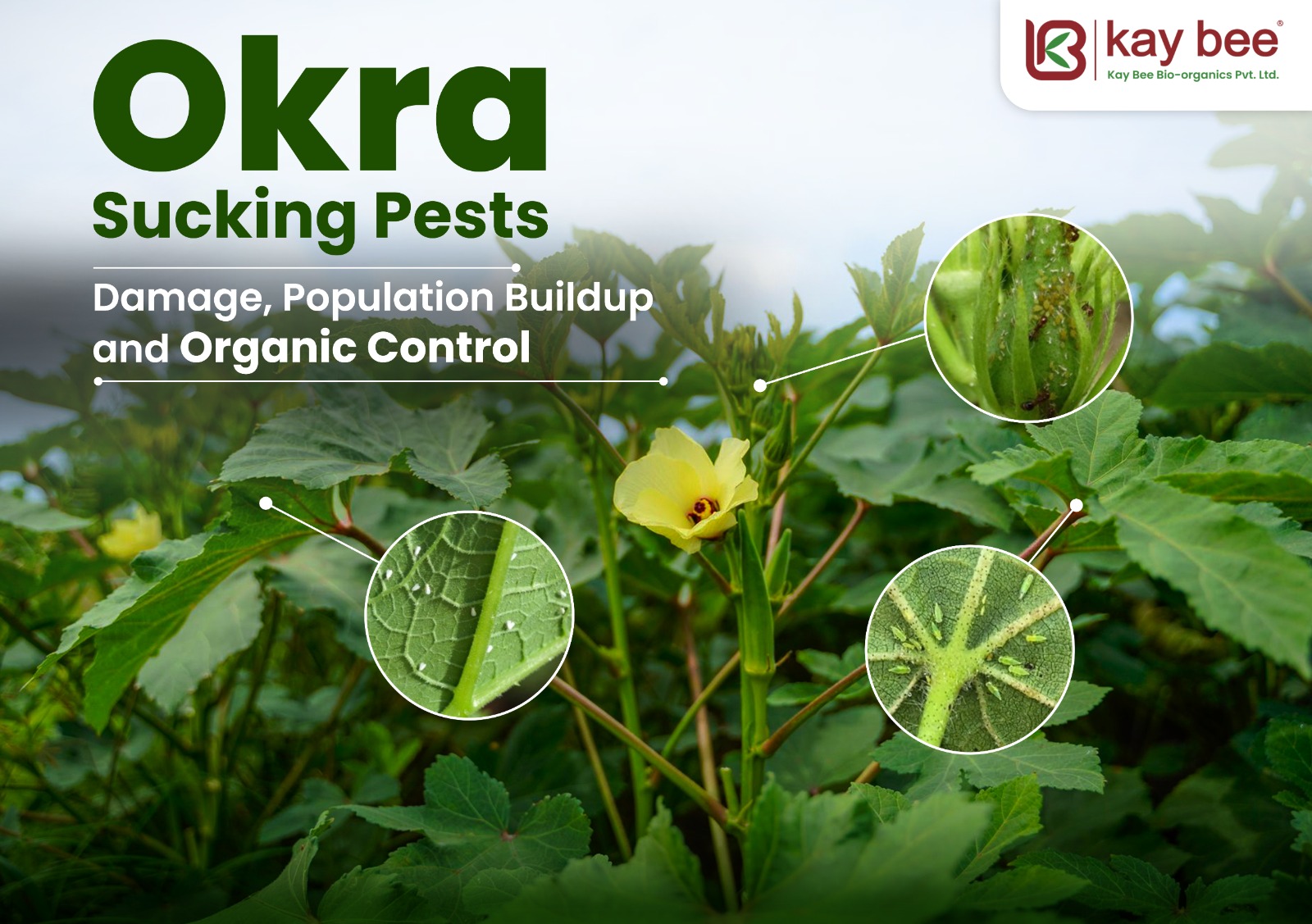
Okra Sucking Pests: Jassids, Aphids & Whitefly — Organic Control with Kay Bee’s Pesto Raze
Okra, also known as bhindi or lady’s finger, is one of the most popular vegetable crops among Indian farmers because of its short duration and steady market demand. But okra is also a favourite target for sap-sucking insects, and any serious okra insect pest problem can pull down both yield and fruit quality within just a few weeks. The three most common root causes behind this damage are jassids, aphids, and whiteflies.
In this blog, we will look point-wise at how jassids in okra, aphids in okra, and whitefly in okra attack the crop, what symptoms to watch for, and how you can achieve reliable okra sucking pest control using Kay Bee’s organic bio-insecticide, Pesto Raze. For a broader understanding of how sucking pests are managed across vegetable crops, read our guide on whitefly control in cotton and chilli.
1. Jassids in Okra
Jassids, also called leafhoppers, are small, wedge-shaped, greenish insects that are one of the earliest and most damaging pests to appear on an okra crop. Jassids in okra feed by piercing the underside of the leaf and sucking out the sap, while also injecting a toxic saliva that damages the surrounding tissue.
1.1 Symptoms of Jassid Attack
- Yellowing of leaves, starting from the tip and margins
- Curling and downward cupping of affected leaves
- A reddish-brown scorched look on the leaf edge, commonly called “hopper burn”
- Stunted plant growth and reduced flowering in severe cases
- Premature drying and shedding of infested leaves
1.2 Why Jassids Are a Serious Okra Insect Pest
Because jassids multiply quickly in warm, humid weather and feed mostly from the underside of the leaf, infestations are often missed until real damage has already been done. Left unmanaged, this okra insect pest can cause yield losses of 30 to 50 percent, making early monitoring essential.
2. Aphids in Okra
Aphids are tiny, soft-bodied insects that cluster in large colonies on tender shoots, buds, and the underside of young leaves. Aphids in okra reproduce very rapidly, and a small colony can turn into a full infestation within just a week under favourable conditions. For organic management of aphids across crops, read our guide on how to control aphids in chilli and tomato organically.
2.1 Symptoms of Aphid Infestation
- Clusters of small green or black insects on shoot tips and leaf undersides
- Curling, crinkling, and distortion of young leaves
- A sticky, sugary substance called honeydew coating the leaves
- Black sooty mould developing on the honeydew deposits
- Weak, stunted growth and reduced pod formation on heavily infested plants
2.2 Hidden Damage from Aphids
Beyond direct sap loss, aphids are known to spread plant viruses from infected to healthy plants as they move around the field. This makes prompt okra sucking pest control measures important, not just for the current crop but also to prevent virus spread to neighbouring fields.
3. Whitefly in Okra
Whiteflies are small, moth-like, white-winged insects that settle in large numbers on the underside of okra leaves. When a plant is disturbed, a cloud of tiny white insects can be seen flying up, which is usually the first clear sign of whitefly in okra infestation.
3.1 Symptoms of Whitefly Damage
- Tiny white insects flying up in swarms when the plant is shaken
- Yellowing and premature drying of leaves
- Sticky honeydew deposits followed by sooty mould growth
- Reduced photosynthesis leading to weaker plants and smaller pods
- Transmission of yellow vein mosaic virus, a serious viral disease of okra
3.2 Why Whitefly Control Cannot Be Delayed
Since whiteflies are the primary carriers of yellow vein mosaic virus in okra, delaying action against this okra insect pest can lead to losses far beyond simple sap-feeding damage. Once a plant shows viral symptoms, no spray can reverse the infection, so prevention is the only real option. For more on how whitefly spreads viral diseases across crops, read our guide on leaf curl virus symptoms and spread.
4. Organic Okra Sucking Pest Control with Kay Bee’s Pesto Raze
Chemical insecticides can knock down sucking pests quickly, but repeated use often leads to resistance and harms beneficial insects like ladybird beetles, bees, and butterflies. For farmers looking for a safer, residue-free option, Kay Bee’s Pesto Raze offers effective, organic okra sucking pest control. To understand the broader case for organic pest management in vegetable farming, read our guide on why India needs biopesticides in agriculture.
4.1 What Makes Pesto Raze Effective
- Pesto Raze is a botanical, phyto constituent-based bio-insecticide that shows very high mortality against sucking pests such as aphids, jassids, and whiteflies
- It has contact and systemic modes of action, which allow it to reach pests hiding on the underside of leaves
- It acts through antifeedant activity, desiccation, cytolysis, and a knock-down effect on nymphs and early instars
- It also causes stomach poisoning and anti-moulting hormonal disruption in later insect stages, so pests do not easily develop resistance
- It is effective against all life stages of the pest, including eggs, nymphs, and adults
- It is safe for beneficial insects such as honeybees and butterflies
4.2 How to Use Pesto Raze for Okra
- Preventive dose: 1 to 1.5 ml per litre of water, sprayed before pest population builds up
- Curative dose: 2 to 2.5 ml per litre of water, used once jassids, aphids, or whiteflies are already visible
- Spray at an interval of 7 to 8 days, or on a need basis depending on pest intensity
- For best results, spray early in the morning or during the late evening
- Make sure the spray covers the underside of leaves, where most sucking pests feed and hide. Adding Balanstick (0.4 ml/l) to the spray mix improves adhesion and coverage on leaf undersides.
4.3 A Complete Approach to Okra Insect Pest Management
Combining regular field monitoring, timely spraying, and an effective organic product like Pesto Raze gives okra growers a dependable way to manage jassids in okra, aphids in okra, and whitefly in okra together, without relying on harsh chemical residues that can affect both crop quality and farmer health.
5. Final Thoughts
Jassids, aphids, and whiteflies remain three of the toughest sucking pests that okra growers have to deal with every season. Recognising the early symptoms of each okra insect pest and acting before the population explodes is the key to protecting yield and fruit quality. With regular monitoring and a reliable organic solution like Kay Bee’s Pesto Raze, farmers can achieve effective, sustainable okra sucking pest control while keeping their okra crop residue-free and market-ready.
For similar organic pest management approaches across other kharif vegetable crops, also read our guide on cotton sucking pests in kharif and explore the range of best neem-based pesticides for agricultural crops for additional tools to strengthen your crop protection programme.
Latest Blogs
 Tomato Nematode Damage: Underground Signs, Crop Loss and Organic Control with Root Fit
 Turmeric Cultivation in India: Vegetative Stage Care with Nova Drip + MYCORIS
 Grapes Downy Mildew, Anthracnose & Powdery Mildew in Monsoon: Downy Raze + Fungo Raze Guide
 Turmeric Shoot Borer: Lifecycle, Damage & Organic Control with Larvo Raze
 Onion Thrips in Kharif: Damage, Population Buildup and Organic Control
COPYRIGHT © 2026 - ALL RIGHTS RESERVED. MADE BY WebAppGigs