
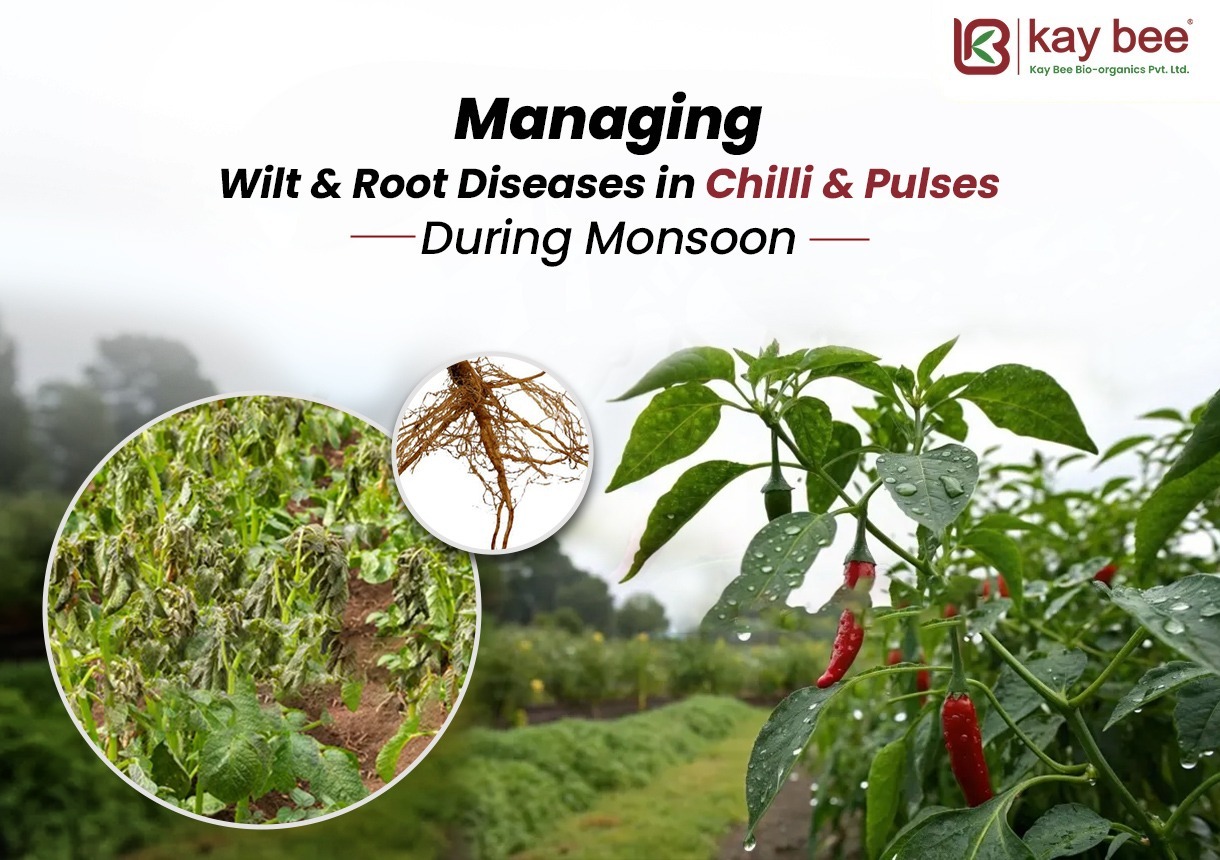
Managing Wilt and Root Diseases in Chilli and Pulses During Monsoon
The monsoon season brings much-needed relief from the summer heat and gives life to our fields. For farmers growing cash crops like chilli and essential food crops like pulses (pigeon pea, chickpea, green gram, and black gram), the rainy season is the most critical time of the year. However, the high moisture and continuous rains also bring a major threat hiding beneath the soil.
During the rainy months, soil-borne fungi become highly active, leading to devastating crop losses. Among these, wilt disease in chilli monsoon crops and root rot in pulses are two of the most destructive problems faced by farmers. If left unchecked, these hidden killers can destroy an entire field within days.
Understanding these threats and adopting wilt management organic solutions is essential to saving your harvest, keeping the soil healthy, and securing your profits.
Symptoms of Wilt and Root Rot in Chilli & Pulses
To fight these diseases, you must recognize them early. Because these are types of chilli soil borne disease and pulse infections, the damage starts under the ground before showing up on the leaves.
- Wilt Disease in Chilli – Wilt disease in chili is of two type one is fungal wilt and second is bacterial wilt
-
Fungal Wilt-
- Early Signs: The leaves at the top of the chili plant start drooping or wilting during the middle of the day when it is warm. The plant looks like it needs water, even if the soil is wet.
- Progressive Damage: Within a few days, the yellowing and wilting move downwards, affecting the whole plant. The leaves stay attached to the plant but lose all their strength.
- The Inside Test: If you pull up an infected chilli plant and cut open the main root or lower stem lengthwise, you will see a dark brown or black discoloration inside the water-conducting tissues.
-
Bacterial Wilt:
- Sudden Daytime Wilting: The entire plant (or specific branches) wilts rapidly without prior yellowing, often drooping during the hot afternoon and seemingly recovering in the morning.
- Vascular Discoloration: If you cut open the lower stem or roots, the inner water-conducting tissues (vascular bundles) will appear distinctly brown instead of a healthy white or light green.
- Milky Bacterial Ooze: When a freshly cut infected stem is placed in a glass of clear water, a distinct, milky-white stream of bacterial slime will ooze out from the cut end within a few minutes.
-
Root Rot in Pulses
- Above-Ground Signs: Pulse crops like pigeon pea or green gram show sudden yellowing of leaves. The plants become stunted and weak.
- Root Damage: When you pull up an infected pulse plant, you will see that the root system is severely damaged. The healthy white roots turn dark brown or completely black.
- Decaying Texture: The lower stem near the soil line (the collar region) becomes soft, dark, and rotten. The outer skin of the roots easily peels away, and the essential nitrogen-fixing nodules disappear.
Difference between Fungal wilt, Bacterial wilt and Root rot:
| Specification | Fungal Wilt | Bacterial Wilt | Root Rot |
| Key Symptoms | When we uproot the affected crop and cut open the stem, brown or blackish discoloration can be observed in the vascular system. | When we Uproot the affected crop and check the roots for moisture and rotting smell. In the ooze test, cut the root and place it in transparent water; milky secretion indicates bacterial infection. | When we uproot the affected crop, secondary root hairs are found to be rotted, leaving only the main root with a blackened upper surface. |
| When we uproot the wilt-affected plant, it requires a little force to pull it out | When we uproot the root rot affected plant, it easily pull out due the damaged of secondary hair roots | ||
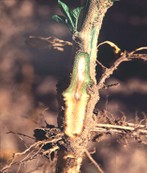
Fungal Wilt |
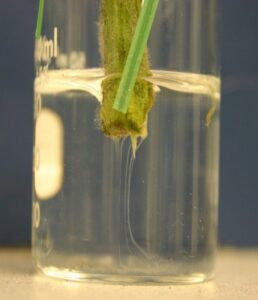
Bacterial Wilt |
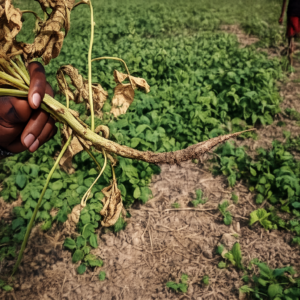
Root Rot |
Favourable Environment for Disease Spread
Fungi love the monsoon season because it provides the exact conditions they need to wake up, grow, and attack your crops.
- Waterlogging: Heavy rains cause water to stand in the fields. Poorly drained soil deprives roots of oxygen, weakening them and making it easy for fungi to break inside.
- High Humidity and Warm Temperatures: Warm temperatures mixed with constant moisture create a “greenhouse effect” in the soil, which helps fungal spores multiply by the millions.
- Improper Crop Rotation: Planting chilli or pulses in the exact same field year after year allows the chilli soil borne disease fungi to build up a massive population in the soil, waiting for the rains to strike.
The Organic Solution: How Root Fit Fights Wilt and Root Rot
Using heavy chemical fungicides can damage your soil health, kill beneficial earthworms, and leave toxic chemical residues on your crops. Fortunately, advanced science now offers an eco-friendly and powerful tool for wilt management organic practices: Root Fit.
Root Fit is a 100% natural, botanical-based bio-fungicide and nematicide manufactured using pure plant blended with nano-formulation technology. It is specially designed to eliminate soil-borne pathogens like Fusarium, Pythium, Rhizoctonia and Phytophthora while keeping your soil clean and safe.
Mode of Action: How Root Fit Works
Unlike single-chemical alternatives, Root Fit works through a unique, multi-strategic action plan that leaves no room for fungi to develop resistance.
| Action Type | How It Protects the Crop |
|---|---|
| Contact Action | When applied to the soil, Root Fit directly comes into contact with fungal spores and mycelium. It breaks down and degrades the protective cell wall of the fungus, destroying the pathogen immediately. |
| Systemic Action | The natural components are absorbed by the healthy roots of the chilli and pulse crops. It travels up through the plant’s tissue, killing any hidden fungal spores that have already entered the root system and halting the disease from spreading further. |
| Fumigant Action | Root Fit releases natural botanical vapors within the soil pores. This carries out a deep fumigation process, rendering sleeping or hibernating fungal spores unviable before they even get a chance to germinate. |
Major Benefits of Root Fit for Farmers
- Phyto-tonic Effect: Besides killing the bad fungi, Root Fit stimulates the plant to grow fresh, healthy white roots. More white roots mean better nutrient uptake and a stronger plant.
- No Resistance: Because it is formulated from multiple medicinal plant extracts, fungi cannot adapt or become immune to it.
- Zero Residue: It is fully safe for organic farming, leaves no dangerous chemicals on your green chillies or pulses, and keeps the soil fertile.
Application Guide for Farmers
To get the best protection against wilt disease in chilli monsoon outbreaks and pulse rot, use Root Fit correctly:
- Dosage: Mix 2 to 3 ml of Root Fit per liter of water (or 750 ml to 1 Liter per acre mixed with 200 liters of water).
- Combination: Mix 750 ml Root fit +250 ml Bacto Raze per acer for controlling fungal and bacterial wilt.
- Method: Apply directly to the soil via root drenching near the base of the plants or through your drip irrigation system.
- Best Time: Always apply during the cool hours of the morning or evening. Avoid application during peak afternoon heat. Follow up with light irrigation if needed.
- Caution: Do not mix Root Fit with sulfur, copper-based fungicides, or Bordeaux mixture.
Conclusion
Managing wilt disease in chilli monsoon and root rot in pulses does not require overloading your land with harsh chemicals. By ensuring proper drainage in your fields to avoid waterlogging and applying organic botanical solutions like Root Fit, you can protect your crops from the inside out.
Invest in smart wilt management organic steps this monsoon. Safeguard your roots today, and enjoy a green, bountiful, and highly profitable harvest tomorrow!
Latest Blogs
 Brown Plant Hopper Paddy Organic Control with Pesto Raze & Mealy Raze
 Mycorrhiza Technical Manufacturer in India | Kay Bee Bio-Organics Pvt. Ltd.
 Cotton Whitefly Management During Square Formation Stage: Effective Control with Pesto Raze & OrgaNeem
 Calcium for Cabbage Head Formation: How Calboost (Ca-11%) Ensures Tight & Crack-Free Heads
 Citrus Canker Organic Control: A Complete Farmer’s Guide
COPYRIGHT © 2026 - ALL RIGHTS RESERVED. MADE BY WebAppGigs