
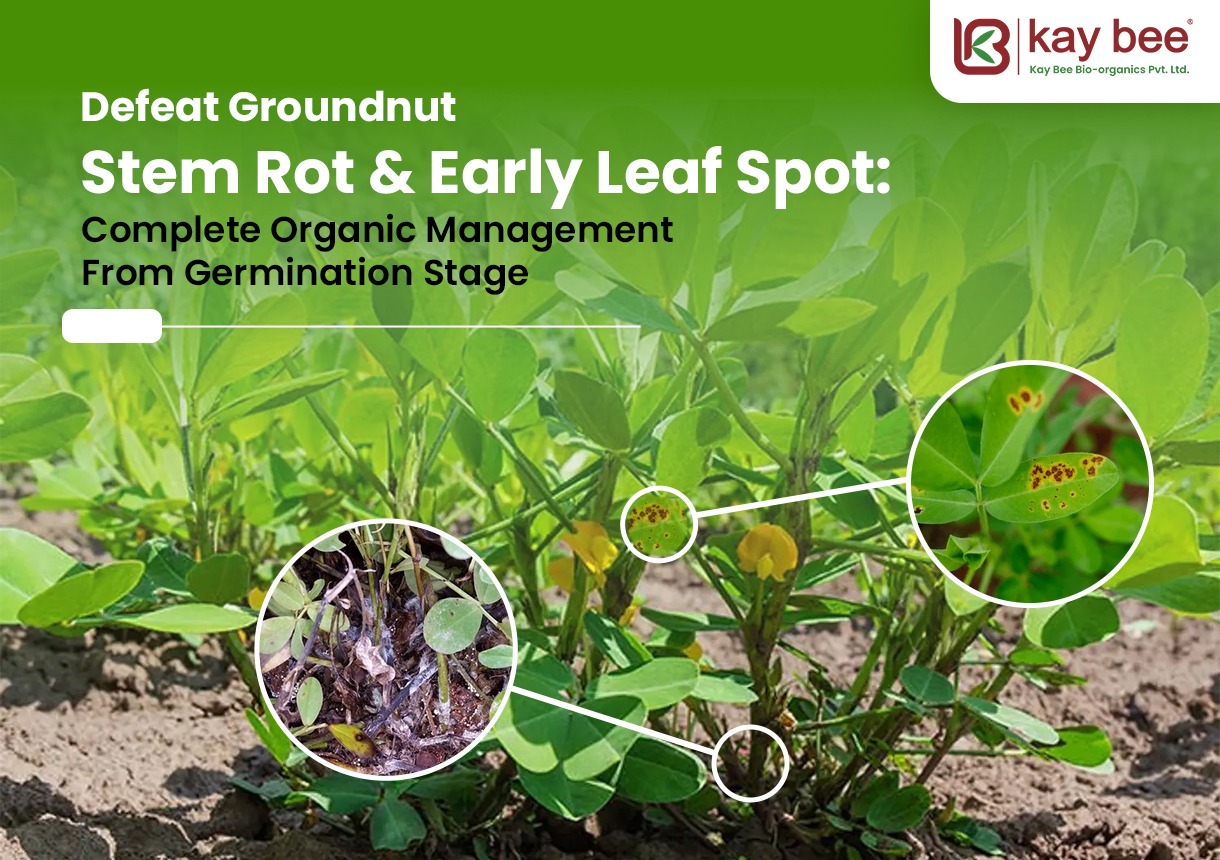
Defeat Groundnut Stem Rot & Early Leaf Spot: Complete Organic Management From Germination Stage
As a groundnut grower, ensuring a healthy crop right from the germination stage is the secret to a high-yielding harvest. However, fungal diseases like groundnut stem rot and early leaf spot of groundnut can quickly jeopardize your hard work if left unchecked.
Adopting a proactive organic management strategy is the best way to safeguard your yield, improve soil health, and keep chemical residues away. This guide breaks down how to identify these diseases, understand their ideal conditions, and manage them organically using advanced bio-fungicides like Root Fit and Fungo Raze. To understand why chemical fungicides can harm your soil long-term, read about the impact of fungicides on plant roots and soil.
Understanding the Enemy: How to Identify
Early detection at the germination and seedling stages prevents heavy field losses. Here is how you can spot these two destructive fungal diseases:
1. Groundnut Stem Rot Disease (Peanut Stem Rot)
- What to check for: Caused by the Sclerotium rolfsii fungus, groundnut stem rot disease (also known as peanut stem rot) targets the base of the plant.
Symptoms:
- Web-like white fungal growth (mycelium) wrapped around the stem near the soil line.
- Sudden drying of branch completely or partially.
- White mycelium over the soil around the stem.
- Mustard-like sclerotia on the infected part.
Favourable Conditions:
- Soil moisture: 40–50% water holding capacity.
- Temperature: 29–32°C during day and 25°C during night.
2. Groundnut Early Leaf Spot (Early Tikka Leaf Spot)
- What to check for: Caused by Cercospora arachidicola, groundnut early leaf spot mostly targets the foliage.
Symptoms:
- Small, circular, dark brown spots on the upper surface of the lower leaves.
- A classic sign of groundnut early tikka leaf spot is the distinct yellow halo surrounding these brown lesions.
- As the early leaf spot peanut disease progresses, leaves turn yellow and drop prematurely, severely reducing the plant’s photosynthesis capacity.
Favourable Conditions:
- Prolonged high relative humidity for 3 days.
- Low temperature (20°C) with dew on the leaf surface.
- Heavy doses of nitrogen and phosphorus fertilizers.
- Deficiency of magnesium in the soil.
Ultimate Organic Management Strategy From Germination
Effective organic management relies on building plant immunity and preventing the fungus from establishing itself right from day one. For a complete picture of how soil-borne diseases are managed across crops, read our guide on managing soil-borne wilt and nematodes.
1. Pre-Sowing & Land Preparation Stage
- Deep Ploughing: Turn the soil deep (8–10 inches) before sowing to bury crop debris and the overwintering fungal structures (sclerotia) deep into the ground, reducing their ability to germinate.
- Organic Soil Amendment: Apply Neem cake, Castor cake, or Mustard cake at 500 kg/ha.
- Bio-enrichment: Mix 2.5 to 4 kg of Trichoderma viride or Trichoderma harzianum talc formulation with 250 kg of well-decomposed Farm Yard Manure (FYM) per hectare. Let it incubate in the shade for a few days under optimum moisture before applying it to the furrows at the time of sowing.
2. Seed Treatment & Germination Stage (0–10 Days After Sowing)
- Biological Seed Treatment: Before sowing, treat the groundnut seeds with Trichoderma viride or Trichoderma harzianum formulation at 10 g/kg of seed.
- Dual Formulation Option: For enhanced protection, combine Trichoderma with a bacterial bio-agent like Pseudomonas fluorescens or Bacillus subtilis at 10 g/kg of seed. This dual action defends against stem rot while boosting systemic plant immunity against leaf spots.
- Sowing Depth: Avoid deep sowing (do not exceed 2 inches) as deeper planting weakens seedlings and makes them highly susceptible to early stem rot attacks.
3. Early Vegetative Stage (15–35 Days After Sowing)
- Root Fit Application: Use Root Fit to control groundnut stem rot — a botanical-based organic fungicide and nematicide. Formulated with natural plant extracts like Cinnamomum cassia and Allium sativum, it enters the root system to destroy fungal pathogens and inhibit spore germination. Learn more about how Root Fit controls soil-borne fungal disease and nematodes.
- How to apply: Apply Root Fit via soil drenching or drip irrigation at a dosage of 750 ml to 1 L per acre. For best results, apply during the cool morning or evening hours. It acts as a shield, destroying pathogen inoculums and boosting healthy white root development.
- Cultural Intercropping: Intercrop groundnut with pearl millet or sorghum at a 1:3 ratio. These tall companion crops act as physical barriers that restrict the movement of foliar fungal conidia (spores) causing early leaf spot.
- Weed Management: Keep the base of the crop clean. Weed hosts can harbour pathogens, and heavy weed growth increases canopy humidity, triggering leaf spot outbreaks.
4. Pegging to Pod Development Stage (40–60 Days After Sowing)
- First Foliar Spray (40–45 Days): For controlling early leaf spot of groundnut, use Fungo Raze. This botanical bio-fungicide relies on active marker compounds from Ferula asafoetida (hing) and Cinnamomum cassia (cinnamon) to deliver contact and systemic protective action.
- How to apply: Spray Fungo Raze at a dosage of 2 ml per litre of water directly onto the foliage. It coats the leaves, preventing mycelial growth and restricting spore adhesion, while providing a phyto-tonic stress shield that enhances overall crop growth. For better spray coverage, add Balanstick (0.4 ml/l) to the spray mix.
- Second Foliar Spray (55–60 Days): Follow up with a second round of 5% NSKE or a spray of Pseudomonas fluorescens liquid formulation (5 ml/L of water) to maintain foliar protection.
- Moisture Management: Stem rot thrives in hot, waterlogged environments. If irrigating, opt for raised-bed cultivation to facilitate quick drainage and reduce moisture traps within the lower canopy. Avoid pushing soil up around the plant base (non-dirting cultivation) during intercultural operations, as this pushes the stem rot fungus directly onto the plant stems.
Important Note: Both Root Fit and Fungo Raze are pure botanical formulations completely free from chemical residues. However, they are not compatible with sulphur, copper-based fungicides, or Bordeaux mixtures — avoid mixing them with these products.
Conclusion
Safeguarding your groundnut crop from the devastating impacts of Stem Rot and Early Leaf Spot requires a proactive, multi-layered approach that begins well before the seeds even sprout. By combining traditional cultural practices — like deep ploughing, non-dirting cultivation, and strategic intercropping — with early biological interventions (Trichoderma seed treatments), you establish a robust defence network for the young seedlings.
When the crop transitions into its most vulnerable vegetative and pegging stages, targeted, residue-free botanical bio-fungicides like Root Fit (for root and stem protection) and Fungo Raze (for foliar health) ensure comprehensive control. This organic management timeline not only suppresses aggressive fungal pathogens effectively but also preserves soil health, builds long-term plant immunity, and secures a high-yielding, chemical-free harvest.
For more on the power of botanical biopesticides in sustainable farming, read our guide on why India needs biopesticides in agriculture, and explore our range of best neem-based pesticides for agricultural crops for complete crop protection.
Latest Blogs
 Brown Plant Hopper Paddy Organic Control with Pesto Raze & Mealy Raze
 Mycorrhiza Technical Manufacturer in India | Kay Bee Bio-Organics Pvt. Ltd.
 Cotton Whitefly Management During Square Formation Stage: Effective Control with Pesto Raze & OrgaNeem
 Calcium for Cabbage Head Formation: How Calboost (Ca-11%) Ensures Tight & Crack-Free Heads
 Citrus Canker Organic Control: A Complete Farmer’s Guide
COPYRIGHT © 2026 - ALL RIGHTS RESERVED. MADE BY WebAppGigs