
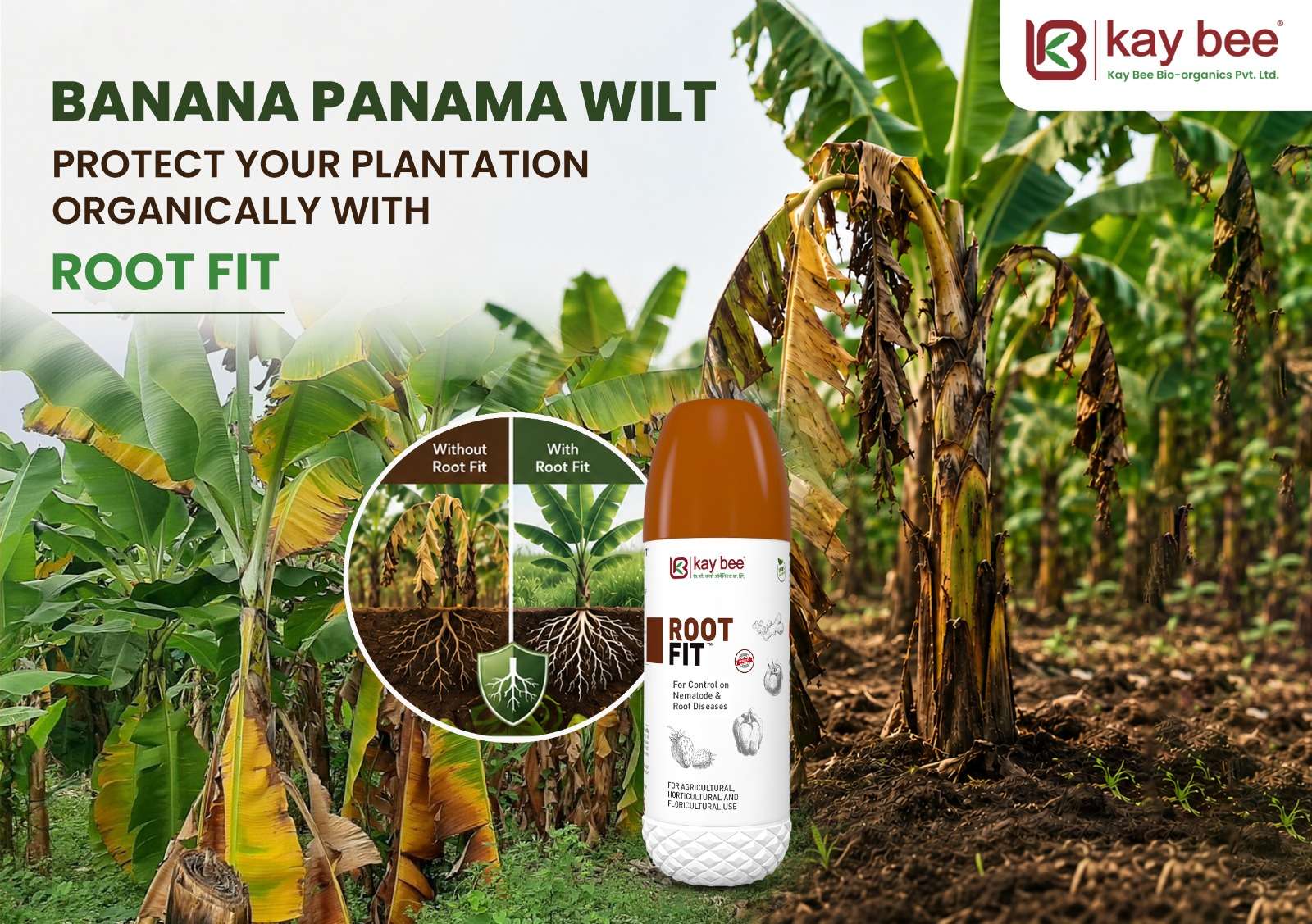
Banana Panama Wilt: Protect Your Plantation Organically with Root Fit
It Started with Just One Yellow Leaf…
Your banana plantation looks healthy. The irrigation is on time, fertilizers have been applied, and the plants appear to be growing well.
Then one morning, you notice a single plant with yellowing leaves. You may think, “Maybe it’s just the heat.” “Perhaps it needs more water.”
A few days later, another plant begins to wilt. Soon, an entire row starts showing the same symptoms. The surprising part? The real damage didn’t begin on the leaves, it started beneath the soil weeks ago.
These are often the first banana Panama wilt symptoms, one of the most destructive diseases affecting banana cultivation worldwide. Because the disease develops inside the roots before visible signs appear, early identification is the key to protecting your plantation. To understand how soil-borne diseases are managed broadly, read our guide on managing soil-borne wilt and nematodes.
Meet the Hidden Enemy beneath Your Plantation
Panama Wilt, also known as Fusarium Wilt, is caused by the soil-borne fungus Fusarium oxysporum.
Unlike many foliar diseases, this fungus doesn’t attack the leaves first. It survives in the soil and enters the plant through young roots or wounds. Once inside, it spreads through the plant’s vascular tissues, the natural pipelines responsible for transporting water and nutrients from the roots to every part of the plant.
As the fungus multiplies, these pipelines become blocked. Even though the soil may contain enough moisture and nutrients, the plant slowly begins to starve because it can no longer transport them efficiently.
One of the biggest challenges is that the fungus can survive in soil for many years, making Panama disease banana treatment difficult once the plantation is heavily infected. For more on how calcium helps strengthen banana plants against such stress, read our guide on calcium for banana.
How Panama Wilt Develops?
Understanding how the disease progresses helps farmers recognize the problem before it’s too late.
Favourable Conditions
- Soil temperature: 25–30°C
- Poor water drainage
- Continuous banana cultivation
- Root injuries caused by nematodes or intercultural operations. To understand how nematodes damage roots and open entry points for Fusarium, read our guide on botanical nematicides and how they keep roots moving.
- Acidic soils and nutrient imbalance
Think of your banana plant like a house with a water pipeline. If the main pipe gets blocked, every tap in the house runs dry. Panama Wilt works in a similar way — the roots may still be in the soil, but the plant can no longer receive the water and nutrients it needs.
Banana Panama Wilt Symptoms: From One Yellow Leaf to Plant Collapse
Recognizing banana Panama wilt symptoms at an early stage can help reduce disease spread across the plantation.
Stage 1: Early Warning
The oldest leaves begin turning pale green or yellow while the younger leaves remain healthy.
Stage 2: Wilting Begins
The yellow leaves start drooping and fold down around the pseudostem, giving the plant a wilted appearance.
Stage 3: Internal Damage
If you cut the pseudostem or rhizome, you’ll notice brown or dark reddish streaks inside the vascular tissue. These internal discolorations are one of the most reliable banana Fusarium wilt symptoms. Learn more about the significance of white root development and why healthy vascular flow starts from the roots.
Stage 4: Plant Collapse
Eventually, the entire plant dries out and dies because water and nutrients can no longer move through the vascular system.
Why Early Action Matters?
By the time visible symptoms appear, the fungus has often been active inside the plant for several weeks. Even worse, infected soil can become a source of infection for future crops.
That’s why successful Panama disease banana treatment focuses on prevention rather than waiting until severe symptoms develop.
Using disease-free planting material, maintaining field hygiene, removing infected plants promptly, and avoiding the movement of contaminated soil are all essential steps in reducing disease spread.
Why Farmers Are Choosing Natural Protection
While chemical fungicides may provide disease suppression under certain conditions, repeated use can disturb beneficial soil microorganisms, reduce microbial diversity, and affect the long-term health of the soil ecosystem. To understand the broader impact, read our guide on the impact of fungicides on plant roots and soil.
Healthy soil is home to millions of beneficial microbes that naturally support root growth and nutrient availability. Protecting this biological balance is just as important as controlling disease.
This is why many growers are now including a natural fungicide for banana plants as part of an integrated disease management program that focuses on both disease control and healthier roots. For more on why biopesticides are the right choice for sustainable farming, read our guide on why India needs biopesticides in agriculture.
Root Fit: A Botanical Approach to Banana Panama Wilt Management
Since Panama Wilt begins in the root zone, protecting the roots is the first step toward protecting the entire plantation.
Root Fit is a botanical formulation developed for effective banana Panama wilt management. Its contact, fumigant, and systemic action helps create an unfavourable environment for soil-borne fungal pathogens while protecting the root zone. Root Fit also helps to control nematodes to protect roots from hidden underground damage. For a detailed breakdown of how Root Fit works, read our pillar guide on Root Fit — a breakthrough in soil-borne fungal disease and nematode control.
Along with disease management, Root Fit encourages healthy white root development, improves nutrient absorption, and supports stronger plant growth throughout the crop cycle.
Recommended Dose
- Drenching: 1–2 ml per litre of water
- Field Application: 750–1000 ml per acre
When used as part of an integrated management program, Root Fit helps farmers protect their plantations naturally while maintaining healthier soils.
Final Thoughts
The first signs of banana Panama wilt symptoms may appear on the leaves, but the real battle begins beneath the soil.
Learning to identify banana Fusarium wilt symptoms early, maintaining good field sanitation, using healthy planting material, and following an effective Panama disease banana treatment strategy can significantly reduce losses.
Adding a natural fungicide for banana plants like Root Fit to your crop management program further strengthens banana Panama wilt management by protecting the root zone before the disease gains a foothold. For complete banana crop nutrition support alongside disease management, also read our guide on calcium for banana.
Because the healthiest banana plantations don’t just grow from fertile soil — they grow from healthy roots.
Latest Blogs
 Brown Plant Hopper Paddy Organic Control with Pesto Raze & Mealy Raze
 Mycorrhiza Technical Manufacturer in India | Kay Bee Bio-Organics Pvt. Ltd.
 Cotton Whitefly Management During Square Formation Stage: Effective Control with Pesto Raze & OrgaNeem
 Calcium for Cabbage Head Formation: How Calboost (Ca-11%) Ensures Tight & Crack-Free Heads
 Citrus Canker Organic Control: A Complete Farmer’s Guide
COPYRIGHT © 2026 - ALL RIGHTS RESERVED. MADE BY WebAppGigs