
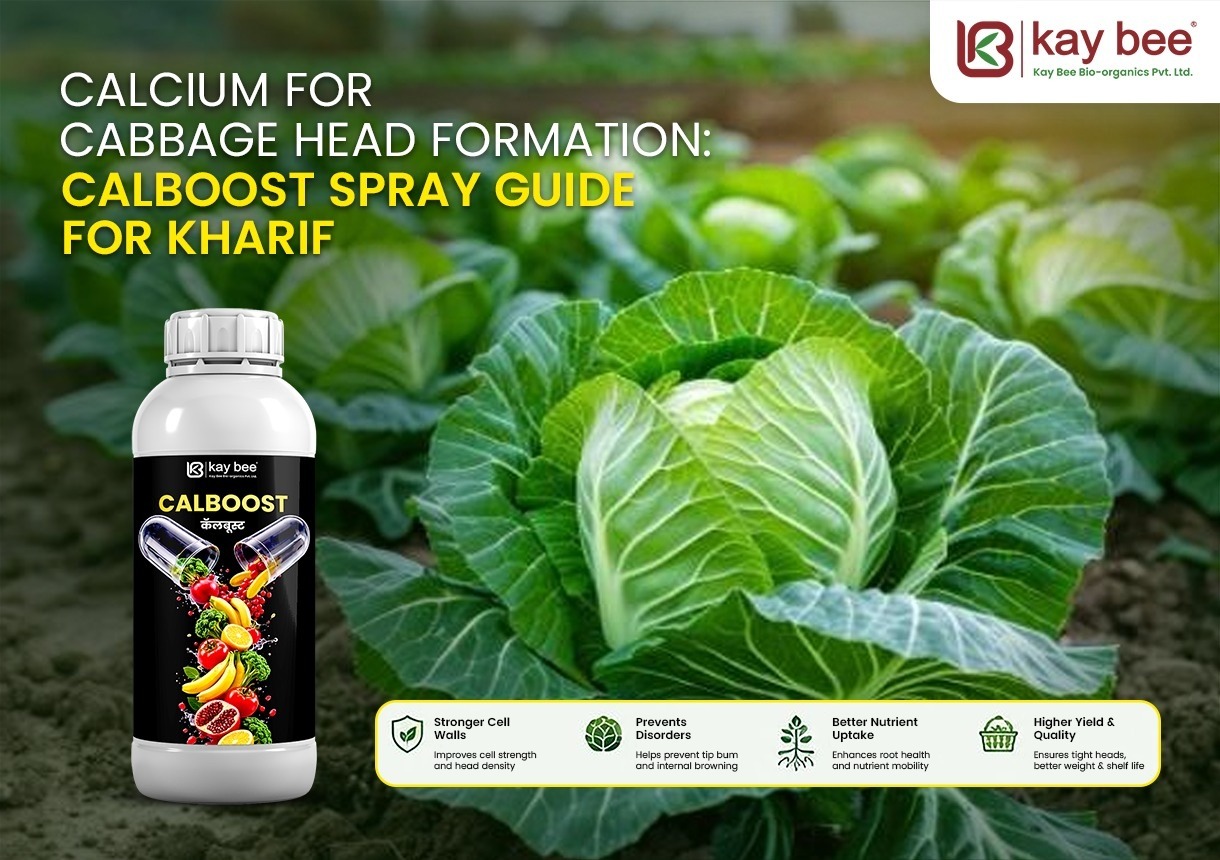
Calcium for Cabbage Head Formation: How Calboost (Ca-11%) Ensures Tight & Crack-Free Heads
Cabbage is one of the most popular and profitable vegetable crops grown in India, especially during the Kharif and Winter seasons. But every cabbage grower knows the biggest worry — loose, cracked, or poorly formed heads that reduce both yield and market price. Most of the time, the real reason behind this problem is not disease or pests, but a simple nutrient gap: lack of calcium for cabbage head formation. This is exactly where Calboost, a calcium-boron nutrient formulation (Ca-11%), comes in as a game-changer.
Let’s understand in simple language why calcium matters, how Calboost works, and practical cabbage head development tips every farmer should follow. For a detailed understanding of how calcium deficiency shows up across vegetable crops, read our guide on calcium deficiency in plants — symptoms and treatment.
1. Why Calcium Is So Important for Cabbage
Calcium is not just “one more nutrient” — it is a building block nutrient for cabbage.
- Cell Wall Strength: Calcium strengthens plant cell walls, which directly supports tight, compact head formation.
- Prevents Head Cracking: Weak calcium levels make the outer leaves brittle and prone to splitting.
- Improves Shelf Life: Cabbage heads with proper calcium stay firm for longer after harvest, which matters a lot for transport and market sale.
- Root Development: Calcium also supports healthy root growth, which helps the plant absorb other nutrients better. Read more about the significance of white root development in crop health.
This is why calcium for cabbage head formation is considered one of the most critical nutrients during the head-filling stage — more important than most farmers realize. For the complete picture of how calcium works across fruiting and head crops, read our guide on the hidden power of calcium in crops.
2. What Is Calboost? (Ca-11%)
Calboost is a specialized foliar nutrient product designed specifically for crops like cabbage, cauliflower, and other head-forming vegetables.
- Composition: Contains 11% Calcium along with a trace amount of Boron & Plant extract.
- Why Boron Is Added: Boron helps calcium move properly inside the plant. Without Boron, even if calcium is present in the soil, the plant may not absorb it efficiently.
- Fast Foliar Absorption: Because it is applied as a spray, Calboost gets absorbed quickly through the leaves compared to soil-applied calcium.
- Balanced Formula: The Ca-11% ratio is specially balanced to avoid nutrient burn while giving the plant enough calcium during the critical head formation window.
3. Calboost Technology
Calboost is built on Advanced Solubilization Technology, which powers two complementary systems inside the plant — one that moves calcium to where it’s needed, and one that puts it to work strengthening the cell wall.
3.1 Dual Mobility Calcium Technology (DMCT)
An advanced calcium delivery system designed to enhance absorption and facilitate movement of calcium toward metabolically active tissues, so it reaches the growing points of the plant rather than staying locked in older leaves.
3.2 Anti Cracking Shield Technology (ACST)
An integrated cellular reinforcement system that strengthens cell wall structure and improves epidermal elasticity, directly supporting tighter heads and reducing the risk of cracking.
4. How Calcium and Boron Work Together
- Calcium Builds Structure: Calcium strengthens the cell walls of leaves, making them thick and tightly packed.
- Boron Transports Calcium: Boron acts like a “carrier,” helping calcium reach the growing points of the plant, especially the inner leaves that form the head.
- Combined Effect: Together, they reduce the chances of tip burn, hollow heart, and loose heads — common problems in cabbage cultivation.
This dual-nutrient action is what makes calcium for cabbage head formation so effective when it comes through a product like Calboost, rather than calcium alone. For more on how this same calcium-boron combination supports fruiting crops, read our guide on calcium deficiency in tomato and chilli — Calbolite and Calboost guide.
5. Cabbage Nutrient Management in Kharif Season
Kharif season brings its own set of challenges — heavy rainfall, humidity, and faster nutrient leaching from soil.
- Nutrient Loss Due to Rain: Continuous rain washes away soil calcium quickly, making foliar spray more reliable than soil application.
- Higher Disease Pressure: Weak, calcium-deficient plants are more prone to fungal and bacterial issues in humid Kharif weather. Read our guide on damping off and black rot in cabbage and cauliflower for how disease-stressed plants are more vulnerable.
- Split Application Strategy: For proper cabbage nutrient management kharif, growers should split calcium application into 2–3 sprays instead of one heavy dose.
- Combine with NPK Schedule: Calboost should be used alongside your regular NPK program, not as a replacement — it fills the calcium-boron gap specifically.
- Monitor Soil Drainage: In Kharif, waterlogged fields reduce calcium uptake even further, so good drainage is equally important for cabbage nutrient management kharif
6. Cabbage Head Development Tips
Here are some simple, practical cabbage head development tips that work well alongside Calboost:
- Start Early: Begin calcium application from the early vegetative stage, not just when head formation starts.
- Spray in Cool Hours: Apply spray early morning or late evening to avoid leaf burn and improve absorption.
- Maintain Consistent Moisture: Irregular watering affects calcium movement inside the plant — keep soil moisture steady.
- Avoid Excess Nitrogen: Too much nitrogen speeds up leafy growth but can reduce calcium uptake, leading to loose heads.
- Regular Field Monitoring: Check outer leaves weekly for early signs of calcium deficiency like curling or yellow edges.
Following these cabbage head development tips consistently makes a visible difference in head size, shape, and firmness. For complete vegetable root health alongside nutrition, also read our guide on improving vegetable root development in June.
7. When and How to Use Calboost Cabbage Spray
Timing is everything when it comes to nutrient sprays.
- First Spray: 25–30 days after transplanting, to build strong plant structure.
- Second Spray: At the start of head initiation stage — this is the most critical time for calboost cabbage spray
- Third Spray: 15 days after the second spray, to support head filling and firmness.
- Dosage Care: Always follow the recommended dilution rate; over-concentration can stress the plant.
Foliar Spray Dosage:
- Apply Calboost as a foliar spray at 1.0–2.0 ml per litre of water.
- For better spray adhesion and coverage, add Balanstick (0.4 ml/l) to the spray mix.
Soil Application Dosage:
- For soil application, use 500–1000 ml per acre.
Spray Technique: Use a fine mist and cover both upper and lower leaf surfaces for even absorption of the calboost cabbage spray.
8. Signs of Calcium Deficiency to Watch For
- Tip Burn: Brown, dry edges on young leaves.
- Loose Heads: Heads that don’t tighten up properly even at maturity.
- Hollow Heart: Internal cavity inside the cabbage head, visible only when cut open.
- Poor Storage Life: Heads that soften or rot faster after harvest.
If you notice these symptoms, it’s a clear sign to increase focus on calcium for cabbage head formation through timely Calboost application. For more on how calcium deficiency symptoms appear and are managed across crops, read our complete guide on calcium deficiency in plants — symptoms and treatment.
Conclusion
Healthy, tight, market-ready cabbage heads don’t happen by chance — they need the right nutrient support at the right time. Calcium for cabbage head formation is the foundation, and Calboost’s Ca-11% with trace Boron formula gives cabbage growers a simple, reliable way to strengthen their crop from the inside out. By following proper cabbage nutrient management kharif practices, using calboost cabbage spray at the correct growth stages, and keeping these cabbage head development tips in mind, farmers can significantly improve both the quality and yield of their cabbage crop.
A small investment in calcium-boron nutrition today can mean bigger, firmer, and more profitable cabbage heads at harvest. For complete cabbage crop protection including disease management, also read our guide on damping off and black rot in cabbage and cauliflower and our guide on diamondback moth cabbage control with Larvo Raze + OrgaNeem for a complete cabbage crop care programme.
Latest Blogs
 Mycorrhiza Technical Manufacturer in India | Kay Bee Bio-Organics Pvt. Ltd.
 Citrus Canker Organic Control: A Complete Farmer’s Guide
 Orthosilicic Acid (OSA) for Monsoon Stress: Building Crop Strength & Resilience
 Ginger Nematode and Soft Rot Control: Organic Management with Root Fit & Bacto Raze
 Tomato Nematode Damage: Underground Signs, Crop Loss and Organic Control with Root Fit
COPYRIGHT © 2026 - ALL RIGHTS RESERVED. MADE BY WebAppGigs