
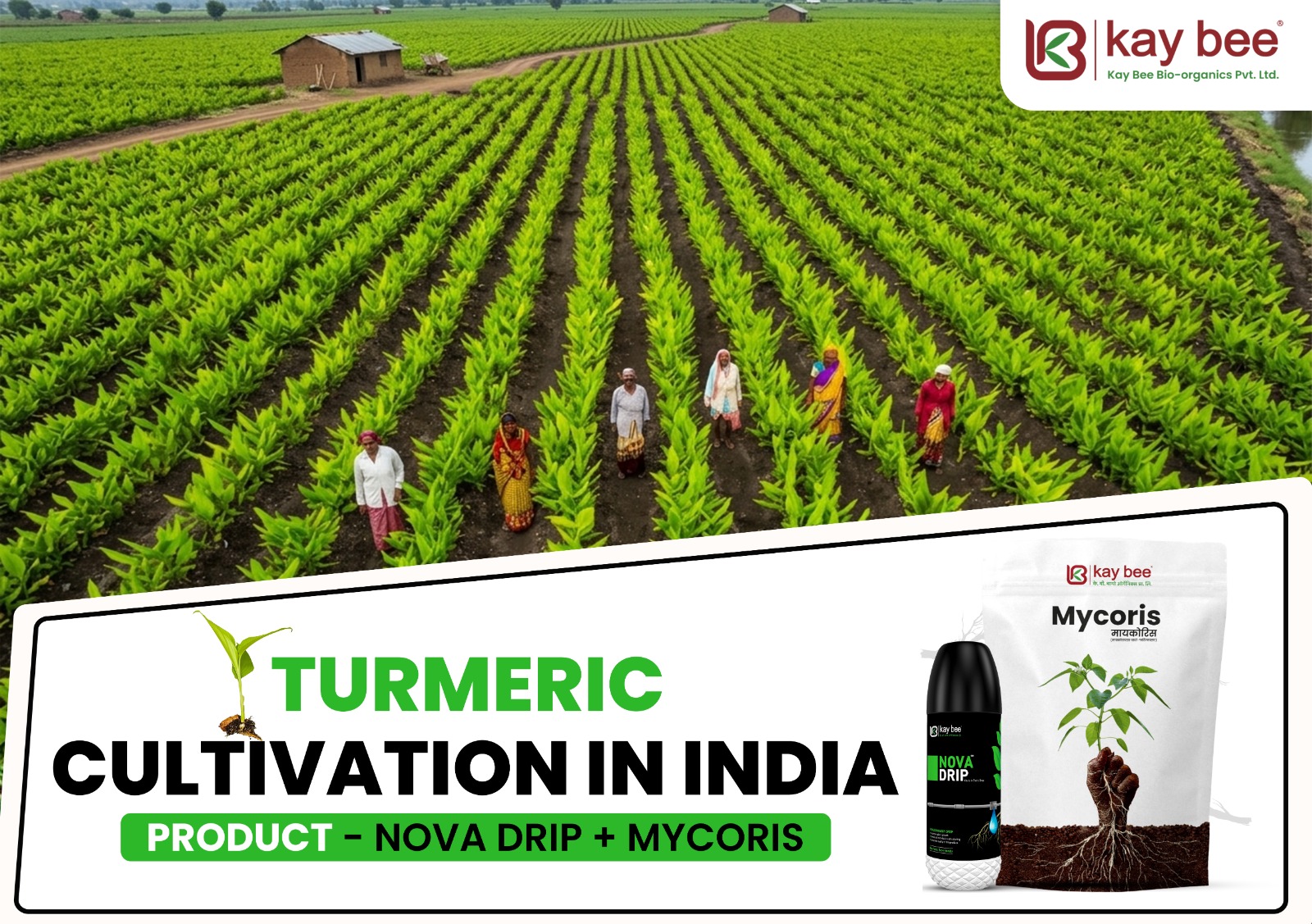
Turmeric Cultivation in India: Vegetative Stage Care with Nova Drip + MYCORIS
Build Strong Roots Today for a Healthier Turmeric Harvest Tomorrow
Turmeric is one of India’s most valuable spice crops, known for its high demand in domestic and export markets. While farmers often focus on rhizome development later in the season, the truth is that a successful harvest begins much earlier.
During turmeric cultivation in India, the vegetative stage lays the foundation for healthy rhizomes. This is the period when the plant develops its roots, leaves, and tillers, the structures that will eventually support higher yield and better quality. A healthy start during this stage can make a significant difference to the final harvest.
Why the Vegetative Stage Matters?
The turmeric plant growth stages begin with sprouting, followed by vigorous vegetative growth before rhizome bulking starts. During this phase, the crop invests most of its energy in developing a strong root system and producing lush green foliage.
Healthy leaves capture more sunlight through photosynthesis, while healthy roots absorb water and essential nutrients from the soil. Together, they create energy reserves that later contribute to rhizome formation.
If root development is weak during this stage, the plant may struggle to absorb nutrients efficiently, resulting in uneven growth and reduced yield potential.
Common Challenges During Early Crop Growth
The vegetative stage may look simple above the ground, but several hidden factors can affect crop performance below the soil.
Some of the common challenges include:
-
- Slow or poor root development
- Low nutrient uptake despite fertilizer application
- Soil compaction and poor aeration
- Reduced microbial activity in the root zone
- Early nutrient deficiencies affecting leaf growth
In addition, proper turmeric crop management also includes regular field monitoring for weeds, balanced irrigation, and timely turmeric pest and disease management to minimize stress during the early growth stage.
Note: Healthy roots are the first line of defense against many production challenges.
Strong Roots Build Strong Rhizomes
Many farmers believe bigger rhizomes are created during the final months of the crop. In reality, the plant begins preparing for that much earlier.
A well-developed root system helps the crop:
-
- Absorb more phosphorus, potassium, and micronutrients
- Improve water-use efficiency
- Produce vigorous tillers and healthy foliage
- Supporting uniform plant growth
- Build the foundation for better rhizome size and quality
This makes root health one of the most important priorities during turmeric growth stages.
MYCORIS: Activating the Root Zone Naturally
Healthy roots depend not only on fertilizers but also on beneficial microorganisms living in the soil.
MYCORIS contains a high spore count multi-strain endo and ecto mycorrhiza that quickly colonizes the root zone and forms a beneficial association with turmeric roots.
Once established, it helps improve the uptake of essential nutrients such as phosphorus (P), potassium (K), zinc (Zn), boron (B), iron (Fe), manganese (Mn), and magnesium (Mg) that are often less available in the soil.
MYCORIS also:
-
- Promotes faster root activation
- Enhances beneficial soil microbial activity
- Improves long-term soil fertility
- Helps strengthen the plant’s natural resistance against soil-borne pathogens
- Can reduce chemical fertilizer requirements by 30–40% as part of an integrated nutrient management program
Recommended dose: 2 kg per acre
For best results, apply near the root zone through soil application or soil drenching while maintaining adequate soil moisture. Avoid fungicide application immediately before or after use.
Nova Drip: Supporting Healthy Root Growth
While MYCORIS improves nutrient availability through beneficial fungi, Nova Drip supports the physical development of the root system.
Applied through drip irrigation or soil drenching, Nova Drip promotes the formation of healthy white roots, allowing plants to absorb moisture and nutrients more efficiently.
Its additional benefits include:
-
- Encourages vigorous root development
- Improves soil porosity and aeration
- Increases beneficial soil microbial populations
- Strengthens plants and helps reduce crop lodging
- Improves the size and quality of turmeric rhizomes
Recommended dose: 750 ml to 1 liter per acre through drip irrigation or soil drenching during the morning or evening, followed by light irrigation.
Note: Avoid mixing Nova Drip with sulphur, copper-based fungicides, or Bordeaux mixture.
A Smarter Approach to Turmeric Crop Management
Successful turmeric cultivation in India is not just about applying fertilizers at the right time. It is about building a healthy root ecosystem that supports the crop throughout its life cycle.
An integrated turmeric crop management program should include:
-
- Quality seed rhizomes
- Proper field drainage
- Balanced nutrient management
- Timely irrigation
- Regular turmeric pest and disease management
- Root health improvement using biological solutions like MYCORIS and Nova Drip
This holistic approach helps plants grow stronger while improving soil health for future crops.
Choosing the Right Start for a Better Harvest
Across different turmeric varieties in Maharashtra and other turmeric-growing regions of India, one principle remains the same – healthy roots lead to healthier plants.
By focusing on haldi plant care during the early turmeric plant growth stages, farmers can improve nutrient uptake, encourage vigorous vegetative growth, and prepare the crop for better rhizome development.
Combining MYCORIS for enhanced nutrient absorption with Nova Drip for healthy root development provides a strong foundation for sustainable turmeric cultivation in India. Because when the roots grow stronger, every stage that follows grows stronger too.
Latest Blogs
 Tomato Nematode Damage: Underground Signs, Crop Loss and Organic Control with Root Fit
 Grapes Downy Mildew, Anthracnose & Powdery Mildew in Monsoon: Downy Raze + Fungo Raze Guide
 Turmeric Shoot Borer: Lifecycle, Damage & Organic Control with Larvo Raze
 Okra Sucking Pests: Jassids, Aphids & Whitefly — Organic Control with Kay Bee’s Pesto Raze
 Onion Thrips in Kharif: Damage, Population Buildup and Organic Control
COPYRIGHT © 2026 - ALL RIGHTS RESERVED. MADE BY WebAppGigs