
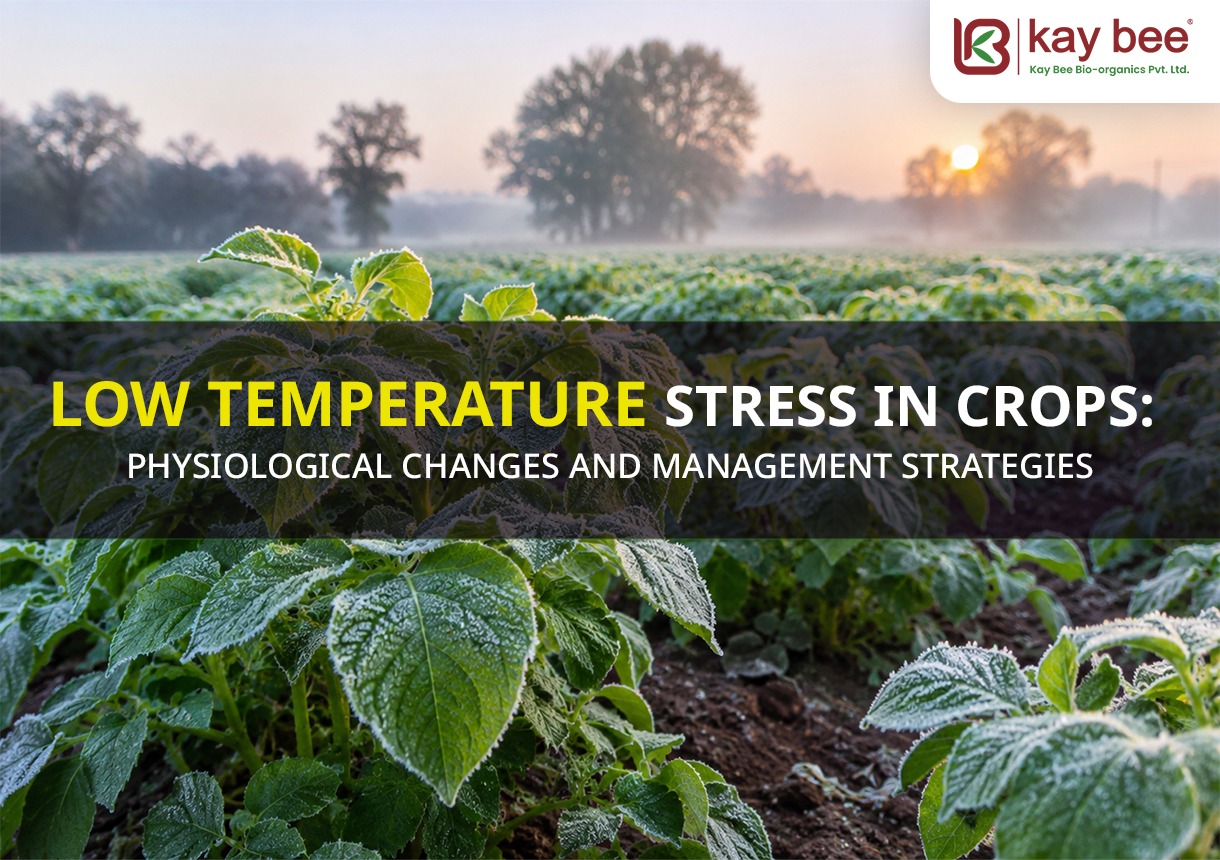
Low Temperature Stress in Crops: Physiological Changes and Management Strategies
Introduction: Low Temperature Stress in Crops
Low-temperature stress is one of the major environmental factors affecting crop growth, development and productivity. Cold stress mainly affects the plasma membrane at both the cellular and physiological levels, as it serves as the main site for stress detection and damage. When the temperature drops, cold winds, frost and continued chilling conditions can negatively affect crops, nutrient uptake, photosynthesis and reproductive development. The severity of cold injury depends on crop species, growth stage, duration of exposure and temperature intensity. This guide to low temperature stress in crops covers the physiological changes, symptoms and management strategies for winter crops.
Low temperature stress in crops slows photosynthesis, damages cell membranes, reduces root activity and harms flowering and pod or grain formation. Choose suitable varieties, sow on time, keep nutrition and soil moisture balanced, protect against frost, and support the crop with stress management products as per label.
Crops such as wheat, gram (chickpea), mustard, vegetables and fruit crops may experience different levels of cold tolerance. Some crops can adapt to low temperatures, but severe cold stress can cause physiological damage, poor growth and significant yield losses.
Low-temperature stress is generally categorised into three conditions:
| Type of cold stress | Temperature condition |
|---|---|
| Chilling stress | Above 0°C but below the crop’s optimum temperature |
| Freezing stress | Below 0°C, when ice formation may occur in plant tissues |
| Suboptimal temperature | Below optimum growth temperature but above the crop’s growth-limiting range |
Frost injury is mainly caused by ice forming outside the cells, which pulls water out and dehydrates them. This is also why chilling injury in plants can occur without any ice at all.
Physiological Changes in Crops Under Low-Temperature Stress
Low Photosynthetic Activity
Cold conditions can restrict the movement of nutrients and water, reducing carbon dioxide assimilation and carbohydrate production.
Damage to Cell Membrane
Low temperature changes the fluidity and functioning of cell membranes. Under chilling and freezing conditions, membrane permeability may increase, resulting in leakage of electrolytes and damage to cellular structures. This may lead to tissue injury, leaf curling, wilting and necrosis.
Reduced Nutrient Uptake and Water Absorption
Cold temperatures reduce root activity and slow water absorption from the soil. Nutrient uptake, particularly nitrogen, phosphorus and potassium, may also be affected because of reduced root metabolism, slower diffusion and restricted transport. As a result, plants may exhibit nutrient deficiency-like symptoms even when nutrients are available in the soil.
Increased Oxidative Stress
Cold stress can increase the production of reactive oxygen species like superoxide radicals and hydrogen peroxide. Excessive reactive oxygen species damage proteins, membrane lipids and DNA. Plants activate antioxidant defence systems, including catalase, superoxide dismutase and peroxidase, to reduce oxidative damage.
Disorder in Plant Growth and Development
Low temperatures slow cell division, elongation, seed germination and root development. Crop growth may become inactive, resulting in shorter plants, reduced leaf expansion, delayed development and poor biomass growth.
Effects on Flowering and Yield
Cold stress during flowering and reproductive development may affect pollen viability, pollination, fertilisation and grain or pod formation. In sensitive crops, these effects can result in flower abortion, poor pod setting, grain filling problems and reduced final yield.
Symptoms of Low-Temperature Stress
- Yellowing or discolouration of leaves.
- Leaf curling, drooping or wilting.
- Brown patches, necrosis or frost injury.
- Slow seedling growth and poor crop formation.
- Reduced root growth and nutrient uptake.
- Flower abortion and poor fruit, pod or grain formation.
- Delayed crop maturity.
Management Strategies to Minimise Low-Temperature Stress
Good stress management in plants starts before the cold wave arrives. These strategies reduce damage from cold stress in crops.
-
Selection of Suitable Crop Varieties
Selecting cold-tolerant varieties and cultivars suitable for the local climatic conditions is one of the most effective strategies for reducing cold-related crop damage. Seed selection should consider sowing time, crop duration and expected temperature conditions during critical growth stages.
-
Appropriate Sowing Time
Timely sowing helps crops avoid exposure to severe cold during sensitive growth stages. Adjusting sowing dates according to local weather patterns can improve germination, establishment and reproductive development.
-
Balanced Nutrient Management
Balanced fertiliser application supports healthy plant growth and improves crop resilience. Suitable potassium helps maintain osmotic balance, stomatal regulation and cellular stability. Nitrogen and phosphorus should be supplied according to crop requirements and soil test results. For a full nutrient plan, read our guide on efficient nutrient management.
-
Soil Moisture Management
Maintaining soil moisture helps reduce stress. Irrigation before an anticipated frost event may help protect certain crops by controlling temperature changes near the soil surface, especially under suitable conditions. Irrigation methods and timing should be selected according to crop, soil and frost conditions. Moist, compacted soil stores and conducts heat better than dry, fluffy soil, which is why a moist field stays a little warmer at night. See our guide on irrigation management for rabi crops.
-
Mulching and Soil Protection
Organic mulches, crop residues and other suitable ground covers can reduce soil temperature fluctuations, conserve moisture and protect root zones. Mulching may support root activity and reduce the impact of sudden temperature changes.
Frost Protection Measures for Crops
Frost protection for crops depends on the type of cold event and on the cost. Wind-borne freezes, where a cold air mass moves in with wind, are difficult to protect against. Wind machines are mostly used on high-value crops, and their cost is often too high for subsistence farmers, while furrow or flood irrigation is commonly used for frost protection where water is cheap and available.
- Sprinkler irrigation during frost events, where a properly designed system and continuous water supply are available.
- Row covers, low tunnels or protective nets.
- Smoke-based methods are generally unreliable and may be restricted; prioritise effective and environmentally responsible techniques.
- Wind machines in suitable orchard systems where inversion conditions permit.
- Protected cultivation for sensitive vegetable and nursery crops.
Plant Stress Management Product: Silixil
SILIXIL – Stabilised Orthosilicic Acid
SILIXIL contains 2% orthosilicic acid (OSA). It provides plant-available silicon while supporting plant strength, stress tolerance and nutrient uptake. As a liquid silicon fertiliser based on silicic acid, it is used as a foliar spray.
Research shows that applied silicon can induce stress tolerance by regulating reactive oxygen species and reducing electrolyte leakage. In a 2024 study on pea, silicon improved cell membrane integrity and cold and freezing tolerance. Reviews also note that the mechanisms still need more validation. Silicon Regulates Antioxidant Activities of Crop Plants under Abiotic-Induced Oxidative Stress: A Review +2
Its key focus areas include:
- It gives better stress tolerance in low temperature.
- It supports the crop against environmental pressure.
- It improves stronger plant structure.
- It improves nutrient utilisation in all crops.
- It maintains healthy crop growth and quality.
These are the main silicon fertiliser benefits, and they make Silixil a plant stress relief fertiliser for winter crops.
SILIXIL Is a Three-Way Formulation Advantage
- Orthosilicic acid: Stabilised, plant-ready silicon. Strengthens cell walls, builds a physical barrier against pests and disease, improves standing strength.
- Stress-Reliever Plant Hormones: Plant-based growth hormones that help the crop recover faster from drought, heat, transplant shock and spray stress.
- Amino Acids: Ready-to-use building blocks for protein synthesis — faster recovery, better nutrient uptake, stronger chlorophyll formation.
How to Use Silixil
- Tank-mix with selective herbicides to relieve stress on the plant.
- Use at the pre-defoliation stage in fruit crops.
- Blocks pathogen spore entry in all crops.
- Boosts photosynthesis.
- Combine with calcium and boron. See our guide on micronutrient deficiency in rabi crops.
- Helps protect against sunburn.
Dose of application: 1–2 ml per litre of water. Apply it as a foliar spray before the expected cold period, and not after the damage shows. In a grapevine study, foliar silicon worked better than soil application against freezing. Do a jar test before tank mixing, as explained in common fertiliser and pesticide application mistakes.
Crop-Specific Considerations
| Crop | Major cold-stress concern |
|---|---|
| Wheat | Frost injury during flowering and grain development |
| Gram (chickpea) | Flowering, pod formation and reproductive damage |
| Mustard | Flowering and pod development |
| Tomato | Chilling injury, poor flowering and fruit setting |
| Potato | Frost damage to foliage and reduced growth |
| Fruit crops | Flower and bud injury, reduced fruit setting |
Frequently Asked Questions (FAQs)
Q1. What is low temperature stress in crops?
It is damage caused when cold winds, chilling temperatures or frost slow crop growth. It mainly affects the cell membrane, photosynthesis, root activity and flowering.
Q2. What are the symptoms of cold stress in crops?
Yellowing, leaf curling or wilting, brown patches or frost injury, slow seedling growth, reduced root growth, flower abortion and delayed maturity.
Q3. What is the difference between chilling and freezing stress?
Chilling stress occurs above 0°C but below the crop’s optimum temperature. Freezing stress occurs below 0°C, when ice may form in plant tissues.
Q4. How can farmers protect crops from frost?
Choose suitable varieties, sow on time, keep soil moisture and nutrition balanced, use mulch, and use row covers or sprinklers where practical.
Q5. How does silicon help plants under cold stress?
Research indicates that silicon can support membrane stability and antioxidant defence under stress. Silixil provides plant-available silicon as orthosilicic acid.
Q6. What is the dose of Silixil?
1–2 ml per litre of water as a foliar spray, as per the product label.
Conclusion
Effective management of low temperature stress in crops may support plant resilience. Low-temperature stress changes photosynthesis, cell membrane stability, root activity, water and nutrient uptake, oxidative metabolism and reproductive development. Silixil may support crop growth, plant vigour and final yield when used as part of a complete plan with suitable varieties, balanced nutrition, soil moisture management and frost protection. Good plant stress management is about preparing the crop before the cold arrives.
Worried about cold stress in your crop? Talk to the Kay Bee Bio Organics team for free crop advice. Call 1800 532 2612 or visit kaybeebio.com.
Latest Blogs
 Wheat Aphid Management: Effective and Sustainable Control with Pesto Raze
 Thrips Management in Grapes: Effective Crop Protection with Thrips Raze
 Onion Twister Disease Prevention and Integrated Disease Management Strategies
 Sesame Phyllody Disease: Symptoms, Disease Cycle and Organic Management Strategies
 Nutrient Management for Mustard and Gram Crops: Best Micronutrient Practices
COPYRIGHT © 2026 - ALL RIGHTS RESERVED. MADE BY WebAppGigs