
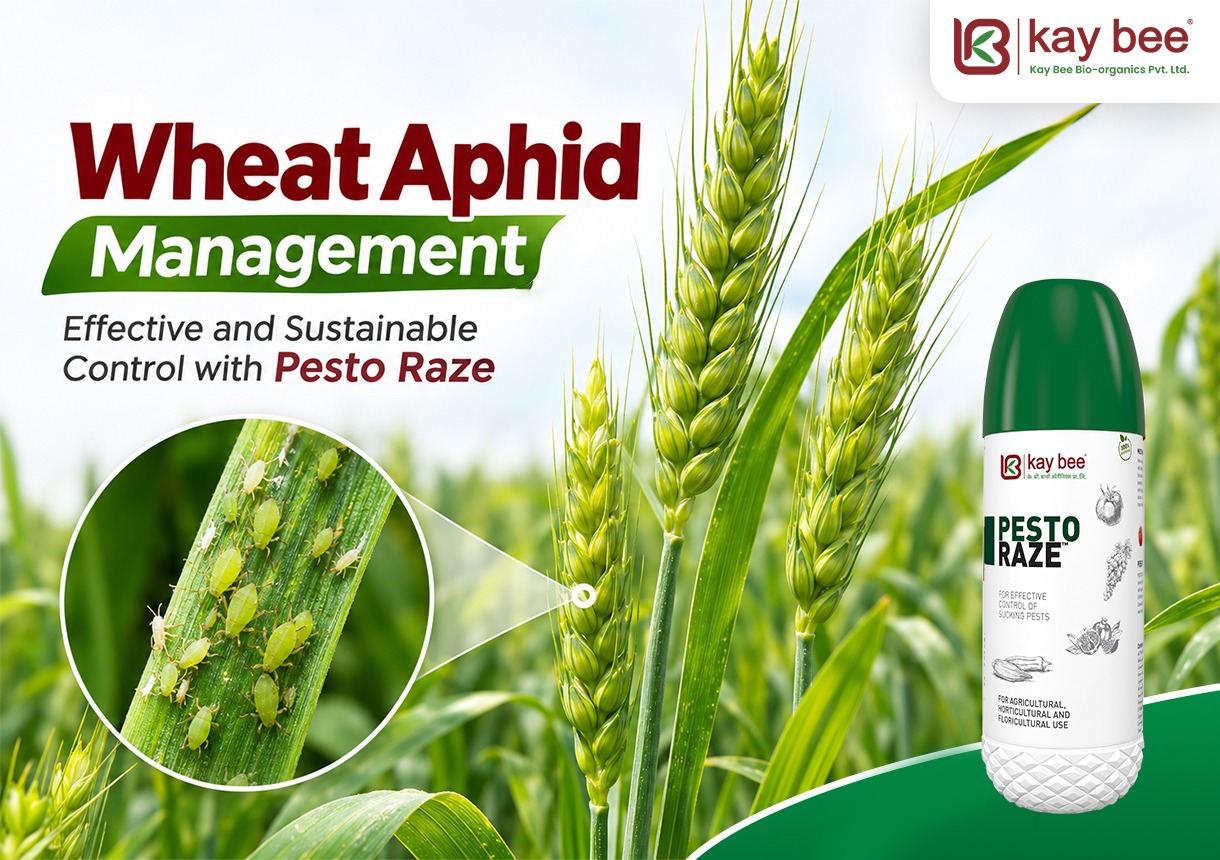
Wheat Aphid Management: Effective and Sustainable Control with Pesto Raze
Introduction: Wheat Aphid Management
Wheat is an important Rabi-season crop in India, and protecting it from insect pests is essential for achieving good grain quality and yield. Among the different insect pests affecting wheat, aphids are particularly troublesome because of their rapid multiplication and sap-feeding behaviour. Wheat aphids are small, soft-bodied insects that usually occur in colonies on leaves, stems, tender shoots and earheads. Both nymphs and adults feed by sucking plant sap, gradually weakening the crop. Their infestation can become particularly damaging during earhead emergence, flowering and grain-filling stages, when the plant requires sufficient nutrients for proper grain development.
Aphid populations may increase rapidly under favourable weather conditions. Therefore, identifying the infestation at an early stage and adopting timely management practices are important. Botanical-based crop protection solutions, such as Pesto Raze from Kay Bee Bio-Organics, can be included in an integrated approach to wheat aphid management. This guide to wheat aphid management explains how to spot aphids early and how to get better control for aphids with natural enemies and a botanical spray.
Wheat aphid management starts with regular field inspection from January. Check leaves and earheads for aphid colonies, protect ladybird beetles and other natural enemies, avoid excess nitrogen, and spray a botanical insecticide such as Pesto Raze when aphids cross the threshold, as per label.
In studies, aphid incidence on wheat started in the first week of January, and the aphid complex caused yield losses of about 3.5% to 21%. The period from mid-February to early March was the most favourable for aphid multiplication.
Life Cycle of Wheat Aphid
Wheat aphids reproduce mainly through live birth (viviparous reproduction) during favourable conditions. Adult females produce young nymphs without laying eggs. Nymphs pass through four moulting stages (instars) before becoming adults. Both nymphs and adults feed on plant sap, and winged forms help spread the infestation to neighbouring plants and fields. In an ICAR-IARI study, the bird cherry-oat aphid had a nymphal period of about 4.8 days and a full life cycle of about 9.7 days, which shows how fast a colony can build up. In India, the bird cherry-oat aphid (Rhopalosiphum padi) and the English grain aphid (Sitobion avenae) are among the dominant and most destructive species on wheat.
How to Identify Wheat Aphid Infestation
Aphid damage is often first noticed on tender plant parts. Regular field inspection helps farmers recognise the problem before the population becomes difficult to manage. These are the main wheat aphid symptoms to look for.
-
Aphid colonies on leaves and earheads
Small green or dark-coloured insects may be observed in groups on leaves, stems and developing earheads. Close inspection reveals both adult aphids and young nymphs feeding on plant sap.
-
Yellowing of leaves
Continuous sap removal affects normal plant growth. Infested leaves may gradually develop pale or yellowish patches, particularly when aphid populations are high.
-
Reduced plant vigour
Severe infestation can weaken wheat plants and interfere with normal crop development. Affected plants may show poor growth and reduced vigour.
-
Honeydew and sooty mould
Aphids release a sticky substance known as honeydew while feeding. Its accumulation on plant surfaces may favour the development of sooty mould under suitable conditions.
-
Poor grain development
When aphids attack earheads during flowering and grain filling, their feeding may affect grain development. This can contribute to shrivelled grains, reduced grain weight and lower productivity.
Why Do Aphid Populations Increase in Wheat?
Weather and crop-growing conditions play an important role in aphid multiplication. Cool temperatures, cloudy weather and favourable crop growth can support population development.
Excessive nitrogen application may produce soft and succulent plant tissues, which can favour aphid multiplication. Winged aphids can also move between fields, helping infestations spread to new areas. This is why sucking pest control in wheat must begin before the colonies reach the earheads.
One important concern is their rapid reproductive capacity. A small colony can increase considerably within a short period when favourable conditions continue. This makes regular monitoring particularly important during earhead emergence, flowering and grain filling.
Integrated Management of Wheat Aphids
Managing wheat aphids requires more than depending on chemical sprays. Combining field monitoring, crop management, conservation of natural enemies and suitable botanical solutions provides a more balanced approach. A good plan for aphids control pesticides use should always begin with monitoring.
-
Regular Field Monitoring
Farmers should inspect wheat fields frequently, especially along field borders, tender leaves, flag leaves and earheads. Early detection of aphid colonies helps determine whether management intervention is required. The economic threshold level for wheat aphids is reported as 5 aphids per earhead or 10 aphids per flag leaf.
During inspection, beneficial insects such as ladybird beetles, lacewings and hoverfly larvae should also be observed.
-
Balanced Nutrient Management
Excessive nitrogen fertilisation should be avoided because it can encourage succulent crop growth and favour aphid multiplication. Fertiliser application should be based on soil conditions and the nutritional requirements of the crop. For a full plan, read our guide on efficient nutrient management.
-
Protect Beneficial Insects
Natural enemies play an important role in regulating aphid populations. Ladybird beetles, lacewing larvae, hoverflies and parasitoid wasps help suppress aphids naturally. Studies list the seven-spotted ladybird (Coccinella septempunctata), hoverflies, the green lacewing (Chrysoperla carnea) and spiders as important natural enemies of wheat aphids. Unnecessary pesticide applications should be avoided to minimise harm to these beneficial organisms.
-
Botanical-Based Management with Pesto Raze
Pesto Raze from Kay Bee Bio-Organics can be incorporated into an integrated wheat aphid management programme as a botanical crop protection solution. It is a bio insecticide, and one of the botanical based biopesticides in our range for aphids, jassids and whiteflies. It is described as a botanical bio-insecticide with contact, systemic and fumigant action, and it is not compatible with sulphur, copper-based fungicides or Bordeaux mixture. Timely application during the early stages of infestation is important. The spray should provide adequate coverage of affected plant parts, particularly leaves, stems and earheads where aphid colonies are present. It is among the best insecticide options for aphids when you want an aphids control insecticide that fits organic and residue-conscious programmes.
Recommended dosage: 2 ml per litre of water, as per the applicable product recommendation. This insecticide for sucking pest management is best sprayed in the cool morning or evening hours. See common fertiliser and pesticide application mistakes, and our guide on mustard crop management for aphids in mustard.
Frequently Asked Questions (FAQs)
Q1. How do I identify aphids in wheat?
Look for small green or dark insects in groups on leaves, stems and earheads, yellowing patches, sticky honeydew and sooty mould, and poor grain development.
Q2. When do aphids attack wheat?
Aphid colonies often start to appear from early January and build up quickly from mid-February to early March, especially around earhead emergence, flowering and grain filling.
Q3. What is the economic threshold for wheat aphids?
It is reported as 5 aphids per earhead or 10 aphids per flag leaf. Check with your local agriculture office for the current recommendation.
Q4. Why do wheat aphids multiply so fast?
They reproduce by live birth, so females produce nymphs without laying eggs, and a small colony can grow quickly under favourable weather.
Q5. How does nitrogen affect wheat aphids?
Too much nitrogen produces soft, succulent tissue that favours aphid multiplication. Apply fertiliser based on soil testing.
Q6. What is the dose of Pesto Raze for wheat aphids?
2 ml per litre of water, as per the applicable product recommendation. Follow the label for timing and interval.
Conclusion
Wheat aphids may appear as small insects, but their rapid multiplication and continuous sap-feeding activity can create considerable problems during important crop growth stages. Delayed identification and poor field monitoring can make their management more challenging. Regular crop inspection, balanced fertiliser application and conservation of beneficial insects should form the foundation of wheat aphid management. Integrating these practices with botanical solutions such as Pesto Raze offers farmers an additional option within a planned crop protection programme. Used as per label, this organic insecticide for plants can support a more sustainable approach to wheat aphid management.
Seeing aphid colonies in your wheat? Talk to the Kay Bee Bio Organics team for free crop advice. Call 1800 532 2612 or visit kaybeebio.com.
Latest Blogs
 Low Temperature Stress in Crops: Physiological Changes and Management Strategies
 Thrips Management in Grapes: Effective Crop Protection with Thrips Raze
 Onion Twister Disease Prevention and Integrated Disease Management Strategies
 Sesame Phyllody Disease: Symptoms, Disease Cycle and Organic Management Strategies
 Nutrient Management for Mustard and Gram Crops: Best Micronutrient Practices
COPYRIGHT © 2026 - ALL RIGHTS RESERVED. MADE BY WebAppGigs