
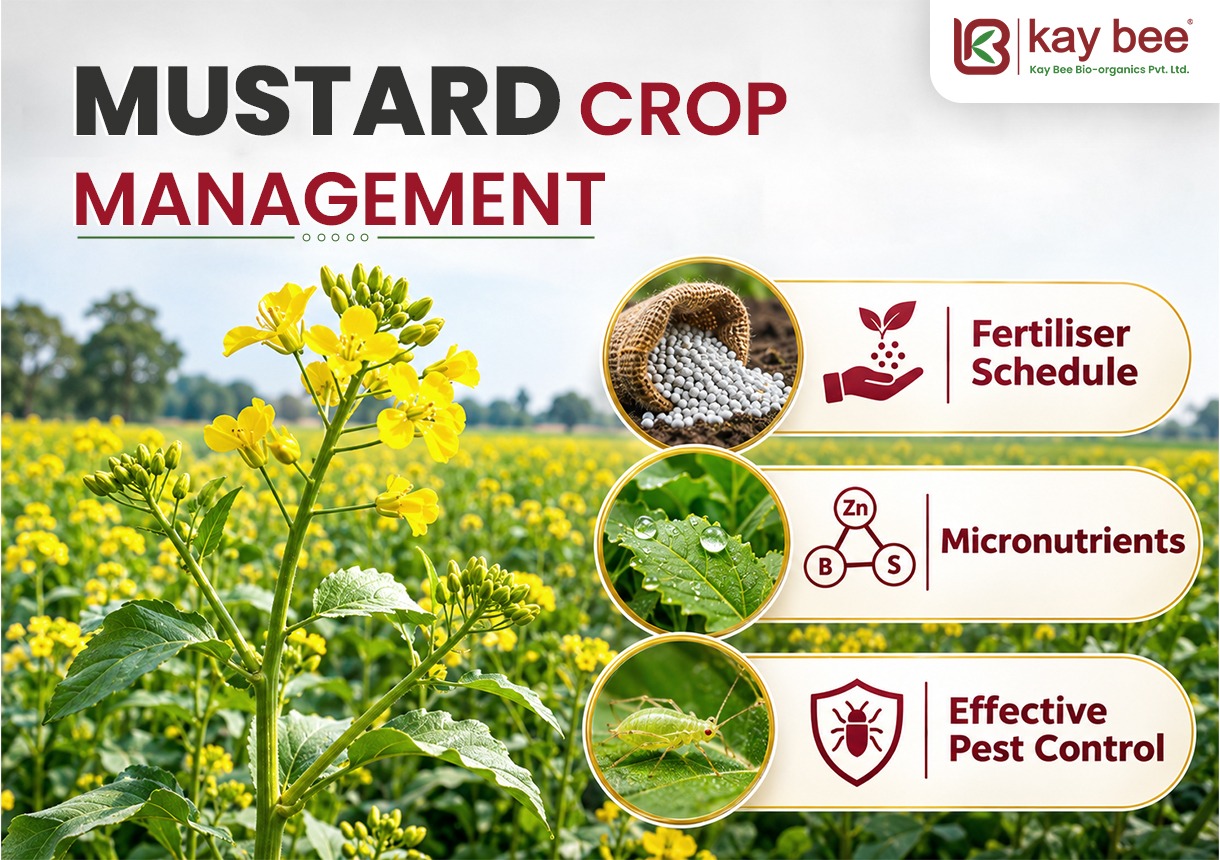
Mustard Crop Management: Fertiliser Schedule, Micronutrients and Effective Pest Control
Introduction: Importance of Mustard Cultivation in India
Mustard (Brassica juncea) is an important Rabi oilseed crop in India and plays a major role in meeting the country’s edible oil requirements. It is widely cultivated across different agricultural regions because of its economic value, relatively low water requirement and suitability for cultivation under rainfed conditions. Rapeseed and mustard contribute approximately 24% of India’s total oil production, highlighting their importance in the country’s agricultural economy.
Mustard seeds generally contain around 35–40% oil and are used for cooking, food processing, pickles and various industrial applications. The oil cake obtained after extraction is also valuable as animal feed and organic manure.
Despite its economic importance, mustard cultivation faces several challenges. Poor nutrient management, micronutrient deficiencies, irregular irrigation and insect pest attacks can affect plant growth, flowering and seed development. In many cases, farmers experience reduced productivity because they do not give crop nutrition and pest management adequate attention at the right growth stages.
A well-planned mustard crop management programme that combines balanced fertilisation, timely micronutrient application, and integrated pest management (IPM) can help maintain crop health and improve overall productivity. This guide to mustard crop management covers the rabi oilseed crop from sowing to pest control.
Mustard crop management combines timely sowing in October–November, balanced NPK with sulphur, micronutrients guided by soil tests, and regular monitoring for aphids and sawfly. Botanical products can support integrated pest management when used as directed on the label.
-
Important Cultivation Practices for Mustard
Good crop management begins with selecting a suitable field and providing favourable conditions for seed germination and plant establishment.
Soil and Climate Requirements
Mustard performs well in well-drained loamy and sandy-loam soils with a pH ranging approximately from 6.0 to 8.0. Well-drained loamy soil with a pH in this range is ideal for mustard. Avoid waterlogged fields because excess moisture can negatively affect root development. A cool and relatively dry climate during vegetative growth is favourable for mustard. Moderate temperatures during flowering and seed development also support proper crop growth and seed formation.
Land Preparation and Sowing
Prepare the field into a fine, firm seedbed through suitable ploughing and harrowing. Incorporating well-decomposed farmyard manure or compost before sowing can improve soil structure and nutrient availability. In most mustard-growing regions, sowing is generally carried out between October and November, depending on local climatic conditions and the variety selected. This is the usual window for mustard cultivation in India. Timely sowing helps establish a healthy crop and may reduce the risk of severe pest infestation.
Important sowing recommendations:
- Seed rate: Approximately 4–5 kg per hectare, depending on the variety and sowing method.
- Row spacing: Around 30 cm.
- Plant spacing: Maintain approximately 10–15 cm between plants after thinning.
- Sowing depth: Approximately 2–4 cm.
- Irrigation: Provide adequate moisture during critical stages, particularly flowering and siliqua development, based on soil moisture and rainfall. For a full water plan, read our guide on irrigation management for rabi crops.
Using healthy, certified and regionally recommended seeds helps ensure uniform germination and better crop establishment.
-
Fertiliser Schedule for Mustard Crop
Balanced fertiliser management is essential for healthy mustard growth, proper flowering, seed development and improved oil production. Nutrient requirements depend on soil fertility, variety, irrigation facilities, and local agro-climatic conditions. The schedule below is a general guide, so adjust it to your soil test report.
For a general irrigated mustard crop, a commonly used fertiliser recommendation is approximately:
- Nitrogen (N): 80 kg/ha
- Phosphorus (P₂O₅): 40 kg/ha
- Potassium (K₂O): 40 kg/ha
Sulphur is another important nutrient for mustard because it contributes to oil formation and overall seed quality. Base its application on soil-test results and regional recommendations.
Stage-Wise Fertilizer Application
| Crop stage | Fertilizer Management |
|---|---|
| Before sowing | Apply 5–10 tonnes of well-decomposed FYM or compost per hectare, depending on soil condition and availability. |
| At sowing | Apply the full recommended phosphorus and potassium dose along with half of the nitrogen dose. |
| 25–30 days after sowing | Apply the remaining nitrogen dose when adequate soil moisture is available. |
| Flowering stage | Maintain suitable soil moisture and avoid excessive nitrogen application. |
Sulphur deficiency may reduce seed yield and oil content. Depending on soil requirements, sulphur-containing fertilisers such as gypsum or single superphosphate can be included in the nutrient programme.
Farmers should also avoid excessive nitrogen application. Too much nitrogen can encourage unnecessary vegetative growth, increase lodging and create favourable conditions for mustard aphid multiplication.
-
Micronutrient Management in Mustard
In addition to major nutrients, mustard requires several secondary and micronutrients for normal growth and reproductive development. Zinc, calcium, and boron are particularly important for healthy plant growth, flowering, and seed formation.
Micronutrient deficiencies may not always produce immediate or clearly visible symptoms. However, when left uncorrected, they can affect crop development, flowering and final productivity. To learn more, read our guides on zinc deficiency in crops and micronutrient deficiency in rabi crops.
Role of Essential Nutrients in Mustard
| Nutrient | Importance in mustard |
|---|---|
| Zinc (Zn) | Supports enzyme activity, chlorophyll formation, plant growth and reproductive development. |
| Calcium (Ca) | Helps in cell wall formation, membrane stability and healthy root and shoot development. |
| Boron (B) | Plays an important role in pollen viability, flowering, fertilization and siliqua development. |
Mustard crops grown in zinc- or boron-deficient soils may respond positively to appropriate micronutrient application. However, nutrient management should ideally be guided by soil testing and crop observations.
Recommended Micronutrient Management Programme
Kay Bee Bio Organic Pvt. Ltd. offers micronutrient solutions that can be incorporated into a mustard crop nutrition programme according to crop requirements and individual product label recommendations. If a soil test also shows low boron or calcium, consider products such as Calbolite (zinc and boron) or Calboost (calcium), as per their labels.
| Crop Requirement | Product | Nutrient Composition | Application Dose |
|---|---|---|---|
| Zinc supplementation | Zillite | Zinc (Zn) | 1–2 ml/L |
| Balanced micronutrient nutrition | Nutrix | Micronutrient mixture | 1–1.5 g/L |
Zilite – Zinc Nutrition
Zinc is involved in several important physiological processes within plants, including enzyme activity, chlorophyll formation and normal growth. Zilite provides zinc nutrition and can be included in the mustard nutrient management programme, particularly where zinc deficiency has been identified.
Nutrix – Complete Micronutrient Nutrition
A mustard crop requires different micronutrients throughout its growth cycle. Nutrix is a micronutrient mixture designed to support balanced micronutrient nutrition. Its application can help supplement the crop’s nutrient requirements when additional micronutrient support is needed.
Important Guidelines for Micronutrient Application
- Select micronutrient products according to crop requirements and identified deficiencies.
- Follow the recommended dose and application instructions mentioned on the product label.
- Maintain balanced NPK and sulphur nutrition along with micronutrient application.
- Conduct a compatibility test before mixing different products in the same spray tank.
- Avoid unnecessary or repeated applications of multiple nutrient products.
-
Major Insect Pests of Mustard and Their Management
Insect pests are major factors in yield reduction in mustard cultivation. Different pests attack the crop at different growth stages, damaging leaves, shoots, flowers and developing siliquae.
Regular field monitoring and early identification help prevent pest populations from reaching damaging levels. During monitoring, also watch for other leaf-feeding insects such as caterpillars.
-
Mustard Aphid (Lipaphis erysimi)
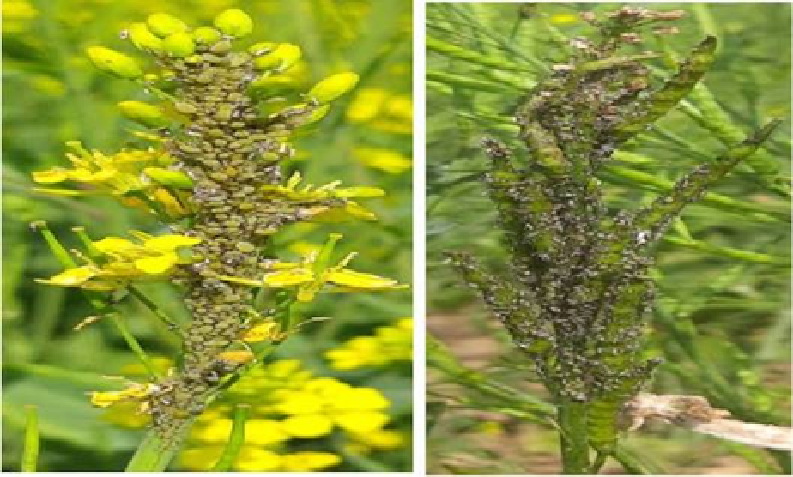
Mustard aphid is one of the most destructive insect pests of the crop. Both nymphs and adults feed by sucking sap from tender shoots, leaves, flowers and developing siliquae. As a sucking pest, it needs early attention, so sucking pest control should begin as soon as colonies appear.
Infested plants may show curled, yellowing leaves, weak growth, reduced flowering, and poor seed development. Severe infestation during flowering and siliqua formation can significantly affect crop productivity.
Management practices:
- Follow timely sowing and balanced fertiliser application.
- Regularly inspect central shoots, tender branches and flowering portions.
- Conserve natural enemies such as ladybird beetles, lacewings and syrphid flies.
- Remove heavily infested shoots early, where practical.
- Botanical pest management options such as Pesto Raze (2 ml/L) in combination with Orga Neem (1 ml/L), following the respective product label recommendations. Mustard aphid control works best when started early. Pesto Raze is a botanical bio-insecticide for aphids, whiteflies, and hoppers, so it fits well in an IPM programme.
-
Mustard Sawfly (Athalia lugens proxima)
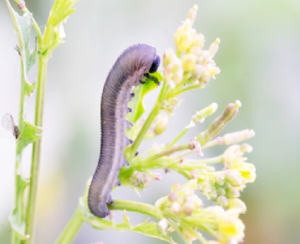
Mustard sawfly larvae feed on leaves and may cause irregular holes and extensive defoliation. Young mustard plants are particularly vulnerable because severe leaf damage during early growth can affect crop establishment and plant development. Mustard sawfly control should therefore start in the first weeks after germination.
Management practices:
- Inspect young plants regularly for larvae.
- Collect and destroy larvae where infestation is limited.
- Maintain proper field sanitation.
- Remove severely infested plant material where necessary.
- Larvo Raze (2.5 ml/L), combined with Orga Neem (1 ml/L), may be considered as a botanical management option, subject to product label directions and target-pest recommendations. Larvo Raze is a botanical bio insecticide made with marker compounds.
-
Organic and Botanical Pest Management in Mustard
Growing interest in sustainable agriculture has increased the importance of botanical and biological crop protection approaches. These methods can form part of an integrated pest management programme when used alongside regular field monitoring, balanced crop nutrition, and conservation of beneficial insects. Botanical-based biopesticides are one such option, and a neem-based insecticide such as Orga Neem can be used alongside them. For the neem range, see our neem-based products.
Kay Bee Bio Organic Pvt. Ltd. develops botanical crop protection solutions using Marker Compound Technology. This approach focuses on identifying, quantifying and maintaining important bioactive compounds in botanical formulations to support product quality and consistency.
Botanical Product Recommendations for Mustard
| Target pest | Product combination | Recommended dose per litre |
|---|---|---|
| Mustard aphid | Pesto Raze + Orga Neem | 2 ml + 1 ml |
| Mustard sawfly | Larvo Raze + Orga Neem | 2.5 ml + 1 ml |
Frequently Asked Questions (FAQs)
Q1. What is the fertiliser schedule for mustard?
A common irrigated recommendation is 80 kg N, 40 kg P₂O₅ and 40 kg K₂O per hectare. Apply full P and K with half the N at sowing, and the remaining N 25–30 days after sowing. Add sulphur as per soil test.
Q2. When is mustard sown in India?
In most mustard-growing regions, sowing is carried out between October and November, depending on local climate and variety. Timely sowing helps the crop establish well and may reduce pest pressure.
Q3. How to control mustard aphid?
Sow on time, avoid excess nitrogen, inspect shoots and flowering portions regularly, and conserve ladybird beetles, lacewings and syrphid flies. A botanical option is Pesto Raze at 2 ml/L with Orga Neem at 1 ml/L, as per label.
Q4. How to control mustard sawfly?
Inspect young plants for larvae, collect and destroy them where infestation is limited, and keep the field clean. Larvo Raze at 2.5 ml/L with Orga Neem at 1 ml/L may be considered, as per label.
Q5. Which micronutrients does mustard need?
Zinc, calcium and boron are the most important. Zinc supports growth and chlorophyll, calcium supports cell walls and roots, and boron supports pollen, flowering and siliqua development. Base the choice on a soil test.
Q6. Which soil and pH suit mustard?
Well-drained loamy and sandy-loam soils with a pH of about 6.0 to 8.0. Avoid waterlogged fields, as excess moisture harms root development.
Conclusion
Successful mustard cultivation requires proper planning at every stage, from field preparation and sowing to nutrient management and insect pest control. While major nutrients such as nitrogen, phosphorus, and potassium support overall crop development, micronutrients like zinc, calcium, and boron also contribute to healthy growth, flowering, and seed formation. Equally important is the timely identification and management of insect pests, particularly mustard aphids, sawflies and leaf-feeding caterpillars. Regular field monitoring, balanced fertilisation, conserving beneficial insects, and the responsible use of botanical crop-protection products can help reduce crop losses. By adopting an integrated approach to mustard crop management, farmers can improve crop health, support better seed development and work towards more sustainable and profitable mustard production.
Latest Blogs
 Efficient Nutrient Management: How to Reduce Crop Production Costs
 Irrigation Management for Rabi Crops: How to Save Water and Boost Yield
 Gram Pod Borer Control in Chickpea: How to Control Gram Pod Borer in Chickpea: Symptoms, Life Cycle, and Organic Management
 Zinc Deficiency in Crops: Importance of Zinc in Wheat, Potato and Other Rabi Crops
 Red Gram Pod Fly Management: Identify Pod Damage and Protect Tur Crop Yield
COPYRIGHT © 2026 - ALL RIGHTS RESERVED. MADE BY WebAppGigs