
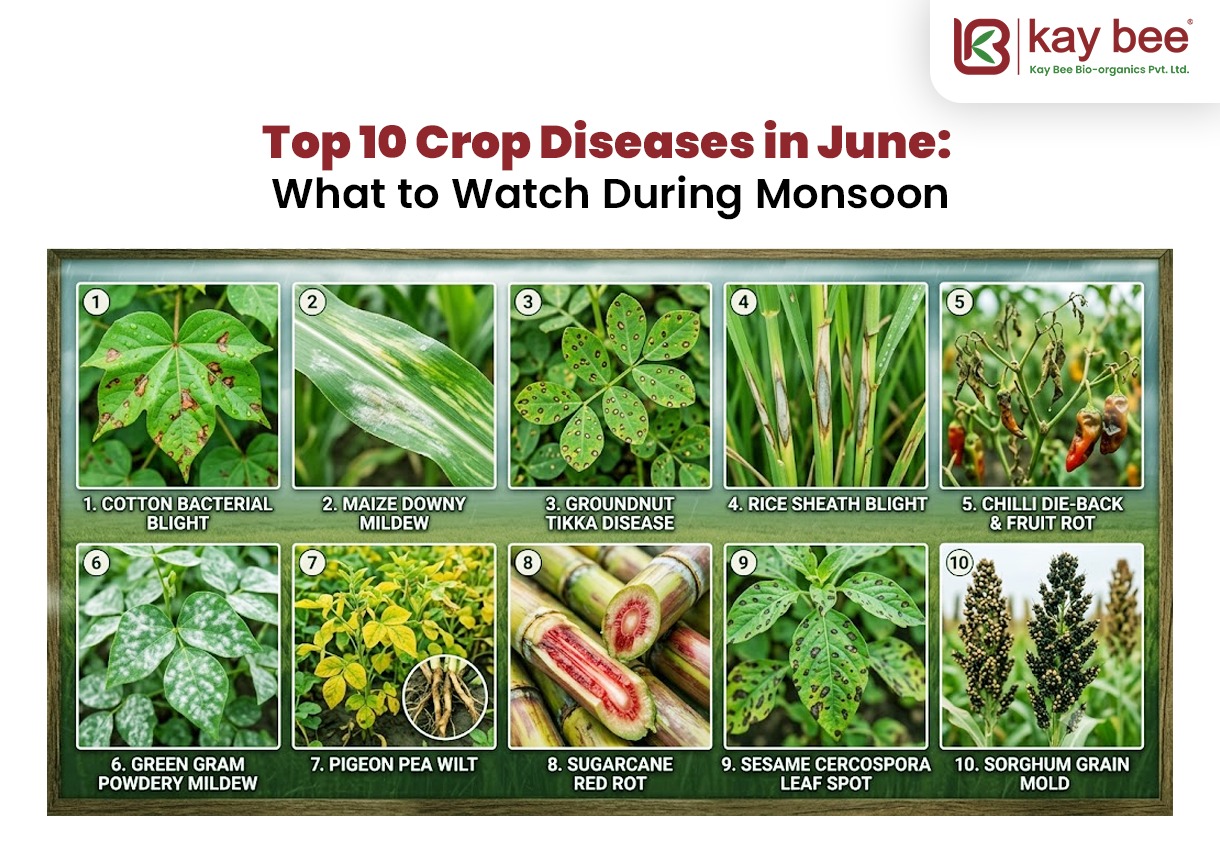
Top 10 Crop Diseases in June: What to Watch During Monsoon
Introduction
June marks the beginning of the monsoon season in India, bringing high humidity and frequent rains that create ideal conditions for crop diseases in June monsoon. This period is critical for Kharif disease management as common fungal diseases kharif crops spread rapidly. For farmers in Maharashtra and across India, understanding monsoon crop diseases India faces helps prevent devastating yield losses. Early observation and preventive practices are your best defense against these water-loving pathogens.
Top 10 Crop Diseases in June (Monsoon Season)
| Sr.No. | Disease | Affected Crop | Type | Risk Level |
|---|---|---|---|---|
| 1 | Blast Disease | Rice (Paddy) | Fungal | Very High |
| 2 | Brown Spot | Rice | Fungal | High |
| 3 | Rust | Soybean, Groundnut | Fungal | Moderate |
| 4 | Fusarium Wilt | Tur (Arhar), Urad (Pulses) | Fungal | High |
| 5 | Leaf Curl Virus | Cotton | Viral | High |
| 6 | Sheath Blight | Rice | Fungal | Moderate |
| 7 | Yellow Mosaic Virus | Moong, Urad | Viral | High |
| 8 | Tikka Leaf Spot | Groundnut | Fungal | Moderate |
How Each Disease Infects & Favorable Conditions
-
Blast Disease (Rice)
- Infection: Spores enter through leaf wounds, causing diamond-shaped lesions
- Favorable: High humidity (90%+), temperatures 23–28°C, continuous watering
-
Brown Spot (Rice)
- Infection: Circular brown spots with yellow margins on leaves
- Favorable: Humid conditions, poor soil nutrition, waterlogged fields
-
Rust (Soybean/Groundnut)
- Infection: Small reddish-brown pustules on leaves, cause premature drying
- Favorable: Monsoon humidity, temperatures 20–30°C
-
Fusarium Wilt (Pulses)
- Infection: Fungus enters roots, blocks water transport; plants yellow and die
- Favorable: Wet soil, high temperature (25–35°C), poor drainage
-
Leaf Curl Virus (Cotton)
- Infection: Transmitted by whiteflies; leaves curl upward, become thick
- Favorable: Warm humid weather, high whitefly population
-
Sheath Blight (Rice)
- Infection: Brown patches on leaf sheaths, reduce grain filling
- Favorable: Dense planting, high humidity, late monsoon
-
Yellow Mosaic Virus (Moong/Urad)
- Infection: Yellow mosaic patterns on leaves, transmitted by whiteflies
- Favorable: Humid conditions, unsprayed whitefly populations
-
Tikka Leaf Spot (Groundnut)
- Infection: Small brown spots with dark margins, cause leaf drop
- Favorable: High humidity, temperatures 25–30°C, continuous rains
Management Practices for Farmers
Preventive Practices (Do Before/At June Start)
- Proper Drainage: Ensure fields don’t waterlog; dig drainage channels
- Crop Rotation: Rotate cereals with pulses to break disease cycles
- Seed Treatment: Use Trichoderma (2 kg/100 kg goat manure/hectare) for soil health
- Resistant Varieties: Plant disease-tolerant Kharif varieties
- Spacing: Maintain proper plant spacing to reduce humidity around foliage
Organic/Natural Methods
- Trichoderma application: 2 kg/hectare with manure
- Neem leaf extract: Spray for insect pest control
- Fungo Raze: For controlling all airborne fungal diseases like leaf spot, blast, brown spot, rust,etc.
- Root Fit: For controlling soil borne fungus like wilt, root rot, sheath blight, etc
- Uproot infected plants: Destroy away from field to prevent spread
What to Watch: Observation Checklist for Farmers
Weekly Field Monitoring (Every 7 days)
- Leaf Symptoms: Look for spots, blights, curling, yellowing
- Stem/Base: Check for wilting, rotting, discoloration
- Insect Presence: Monitor whiteflies, armyworms, bollworms
- Soil Moisture: Ensure no waterlogging; check drainage
- New Growth: Young leaves show disease earliest
Early Warning Signs (Act Immediately)
| Sign | Possible Disease | Action |
|---|---|---|
| Diamond-shaped leaf lesions | Blast (Rice) | Spray fungicides |
| Reddish pustules on leaves | Rust | Spray fungicides |
| Leaves curling upward | Leaf Curl Virus | Spray appropriate insecticide + uproot |
| Yellow mosaic patterns | Yellow Mosaic Virus | Control whiteflies immediately |
| Brown spots with dark margins | Tikka Leaf Spot | Spray fungicide |
| Plants yellowing & dying | Fusarium Wilt | Uproot + drench fungicide |
Monsoon-Specific Watch
- After heavy rain: Check fields 24–48 hours later for fungal outbreaks
- High humidity days (>85%): Increase monitoring frequency
- Waterlogged fields: Drain immediately; uproot rotting plants
Conclusion
June’s monsoon brings essential rain but also threatens your Kharif crops with 10 major diseases. Blast disease in rice, and rust in soybean pose the highest risks. Success depends on early observation and preventive practices: maintain drainage, rotate crops, use Trichoderma, and spray fungicides prophylactically in May–June.
Key action for farmers: Walk your fields weekly, watch for leaf spots and insect signs, and act within 24 hours of detecting symptoms. With proper Kharif disease management, you can protect your harvest despite monsoon crop diseases India faces. Remember: prevention in early June saves crops in September.
Latest Blogs
 Brown Plant Hopper Paddy Organic Control with Pesto Raze & Mealy Raze
 Mycorrhiza Technical Manufacturer in India | Kay Bee Bio-Organics Pvt. Ltd.
 Cotton Whitefly Management During Square Formation Stage: Effective Control with Pesto Raze & OrgaNeem
 Calcium for Cabbage Head Formation: How Calboost (Ca-11%) Ensures Tight & Crack-Free Heads
 Citrus Canker Organic Control: A Complete Farmer’s Guide
COPYRIGHT © 2026 - ALL RIGHTS RESERVED. MADE BY WebAppGigs