
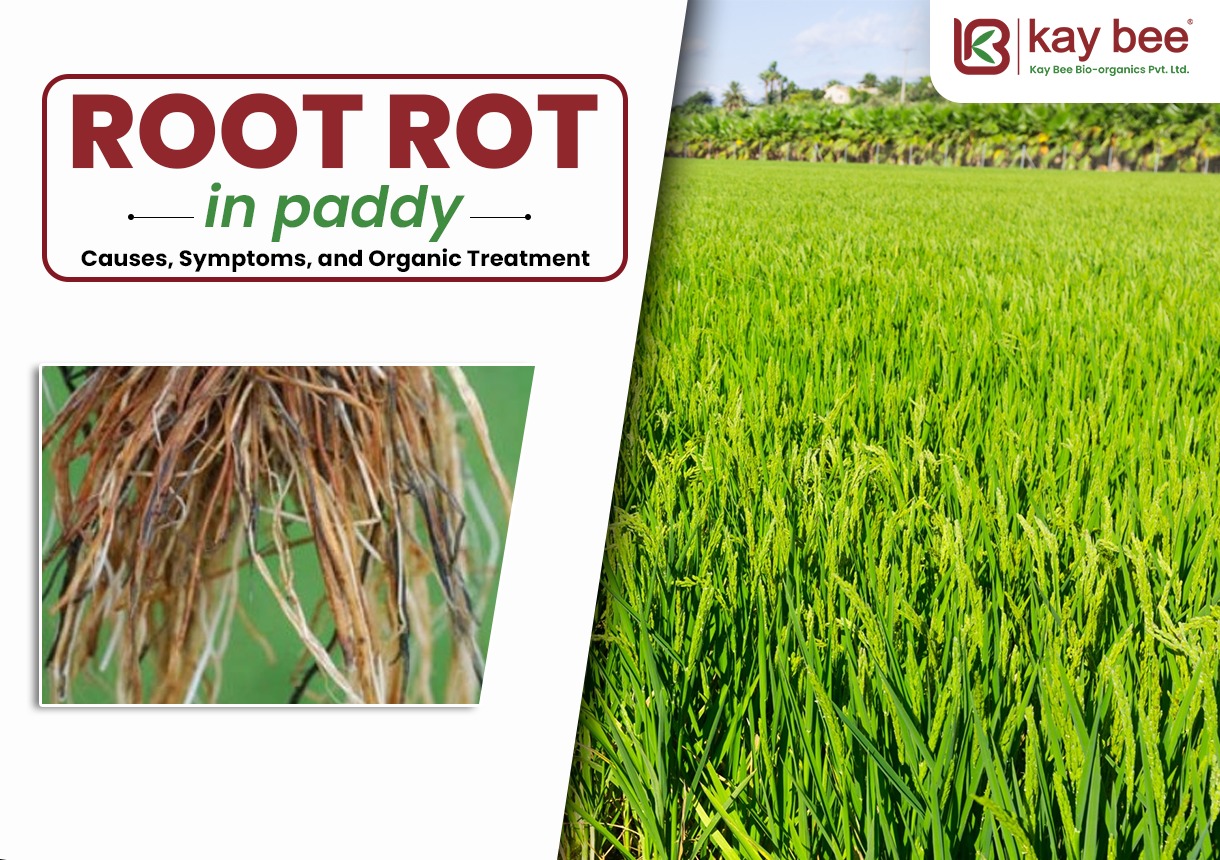
Root Rot in Paddy: Causes, Symptoms and Organic Treatment
As a paddy farmer, nothing is more heartbreaking than watching a flourishing, vibrant green field slowly turn yellow, wither, and lose its vigor. Among the various soil-borne threats that rice growers face, root rot in paddy is one of the most silent yet devastating yield killers. Because the damage occurs beneath the soil surface, the symptoms often go unnoticed until significant losses have already occurred.
Fortunately, growing awareness of sustainable agriculture has provided farmers with effective and eco-friendly ways to combat this hidden threat. By adopting organic and biological solutions that strengthen root health and improve soil microbial activity, farmers can protect their paddy crops from root rot, maintain vigorous growth, and achieve healthier yields without relying solely on chemical interventions. To understand the broader risks of chemical alternatives, read about the impact of fungicides on plant roots and soil.
What is Root Rot in Paddy?
Paddy root rot is a complex disease majorly caused by more than one soil-borne fungal pathogen and water-mold organism. The most destructive causal organisms behind this complex are Fusarium spp., Pythium spp., Rhizoctonia solani and Phytophthora spp. Additionally, the presence of parasitic plant nematodes like the Root-Knot nematode can damage rice roots, creating easy entry points for these fungal pathogens to destroy the root system. Learn more about botanical nematicides and how they keep roots moving.
Favourable Conditions for the Disease
The fungi responsible for root rot thrive under specific environmental triggers:
- Waterlogging & Poor Drainage: Continuous, stagnant waterlogging without proper aeration depletes oxygen levels in the soil, suffocating roots and inviting Pythium or Phytophthora.
- High Humidity & Warm Temperatures: Warm soil temperatures combined with high atmospheric humidity accelerate fungal spore germination.
- Heavy, Compacted Soils: Clayey soils that retain excessive moisture and restrict root growth create a playground for soil-borne pathogens.
- Uncomposted Organic Matter: Applying raw, uncomposted manure can introduce active fungal spores directly into the paddy field.
Key Symptoms of Root Rot in Paddy
Identifying the disease early can save your crop from total failure. Keep a close eye out for these above-ground and below-ground symptoms. For a broader picture of common paddy disease threats, also see our guide on paddy nematode control to protect rice roots.
1. Above-Ground Symptoms
- Stunted Growth: Infected rice plants look noticeably shorter, lack vigor, and fail to tiller properly.
- Leaf Yellowing (Chlorosis): Leaves begin to turn pale green or yellow from the tips downward, mimicking nutrient deficiencies.
- Wilting & Lodging: As the roots decay, the plant can no longer stand firmly, leading to wilting even in wet fields, and making them prone to lodging (falling over).
2. Below-Ground Symptoms
- Discolored Roots: Healthy paddy roots are creamy white. Roots infected with rot turn dark brown, dark gray, or completely black.
- Rotting and Foul Odor: The roots become soft, slimy, and emit a distinctly foul, decaying smell.
- Poor Root Mass: The secondary and tertiary root systems completely disintegrate, leaving the plant with a severely diminished, brittle root structure. Healthy white root development is key to high paddy yield — learn more about the significance of white root development.
Management to Control Root Rot in Paddy
1. Cultural & Field Management (Prevention)
- Field Aeration & Summer Plowing: Avoid continuous, stagnant waterlogging in low-lying areas. Implement periodic drying and wetting cycles to aerate the soil, which suffocates water-mold pathogens like Pythium. Additionally, practice deep summer plowing to expose hibernating fungal spores to direct sunlight.
2. Crop Rotation & Hygiene (Breaking the Cycle)
- Break Pathogen Cycles: Rotate your paddy crop with non-host crops (such as legumes or green manure crops) for at least one season to starve out soil-borne fungi. Always avoid applying raw, uncomposted farmyard manure, as it can actively introduce root rot pathogens into the soil.
3. Biological Control (Early Protection)
- Seed and Soil Immunization: Treat paddy seeds with beneficial bio-agents like Trichoderma viride or Pseudomonas fluorescens before sowing. This establishes a protective biological shield around the young root zone, preventing destructive fungi from establishing dominance.
How to Manage Root Rot with an Organic Solution: Root Fit by Kay Bee Bio-Organics
When looking for an effective paddy root rot treatment, many farmers instinctively reach for heavy chemical fungicides. However, these chemicals often leave toxic residues, damage soil health, and lead to pathogen resistance over time.
The ideal alternative is a high-efficacy, multi-ingredient botanical fungicide paddy solution. Root Fit by Kay Bee Bio-Organics is an Ecocert-certified bio-fungicide and nematicide specifically engineered to eliminate soil-borne pathogens while keeping your rice crop 100% chemical residue-free. For a detailed overview of how Root Fit works across crops, see our pillar guide on Root Fit — a breakthrough in soil-borne fungal disease and nematode control.
The Power of Botanicals
Root Fit is formulated utilizing pure medicinal plant extracts (including Cinnamomum cassia, Citrus sinensis, Allium sativum, and Melaleuca alternifolia) paired with advanced nano-formulation technology. This ensures the active botanical ingredients penetrate deeply and act fast.
How Root Fit Works: A Multi-Strategic Approach
Unlike conventional options, Root Fit doesn’t just attack the disease from one angle. It works through a unique triple-action mechanism: Contact, Systemic, and Fumigant.
- Contact Action: Upon application, it immediately stops fungal spore germination and mycelial growth by directly degrading the cell wall of pathogens like Fusarium and Pythium.
- Systemic Action: It is absorbed efficiently by the rice roots through xylem tissues. It moves inside the plant to hunt down and kill pathogens that have already breached the root system, acting as a highly reliable fungicide for rice root rot.
- Fumigant Action: Root Fit carries out a natural fumigation process within the soil profile. It targets and inactivates hibernating fungal spores and nematode inoculums before they can even germinate.
Additional Booster — The Phyto-Tonic Effect
Beyond disease control, Root Fit provides an exceptional phyto-tonic effect on the paddy crop. It stimulates the plant to develop larger, deeper root systems, enhances leaf size, increases chlorophyll content, and ultimately boosts both the quality and quantity of your rice yield. For good soil preparation before transplanting, also read our guide on better soil before paddy transplanting.
Application Guide for Paddy Farmers
To get the absolute best results out of your paddy root rot treatment, follow these application practices:
- Recommended Dosage: 500 to 1000 ml per acre (dose may vary depending on crop stage).
- Method of Application: Root Fit is designed for soil application. It can be applied near the root zones or mixed with granular fertilizer.
- Best Time to Apply: Always apply during the cooler hours of the morning or evening. Avoid application at peak noon when high temperatures prevail. Follow up with light irrigation to help the formulation seep into the root zone.
- Compatibility Note: Root Fit is 100% natural, but it should not be mixed or tank-blended with sulfur, copper-based fungicides, or Bordeaux mixture.
Conclusion
Your paddy yield is only as strong as its root system. Ignoring early signs of yellowing or stunted growth can devastate your seasonal profits. By choosing a botanical powerhouse like Root Fit by Kay Bee Bio-Organics, you aren’t just deploying a highly effective fungicide for rice root rot — you are actively restoring soil vitality and picking a safe, sustainable pathway to a bumper harvest.
For complete paddy crop protection, combine Root Fit with good nursery management — read our guide on rice nursery management best practices and how mycorrhiza improves paddy seedling development for a full-season paddy health programme.
Ready to safeguard your paddy fields against root rot? Switch to organic excellence today. Explore more or buy your pack of Root Fit here.
Latest Blogs
 Brown Plant Hopper Paddy Organic Control with Pesto Raze & Mealy Raze
 Mycorrhiza Technical Manufacturer in India | Kay Bee Bio-Organics Pvt. Ltd.
 Cotton Whitefly Management During Square Formation Stage: Effective Control with Pesto Raze & OrgaNeem
 Calcium for Cabbage Head Formation: How Calboost (Ca-11%) Ensures Tight & Crack-Free Heads
 Citrus Canker Organic Control: A Complete Farmer’s Guide
COPYRIGHT © 2026 - ALL RIGHTS RESERVED. MADE BY WebAppGigs