
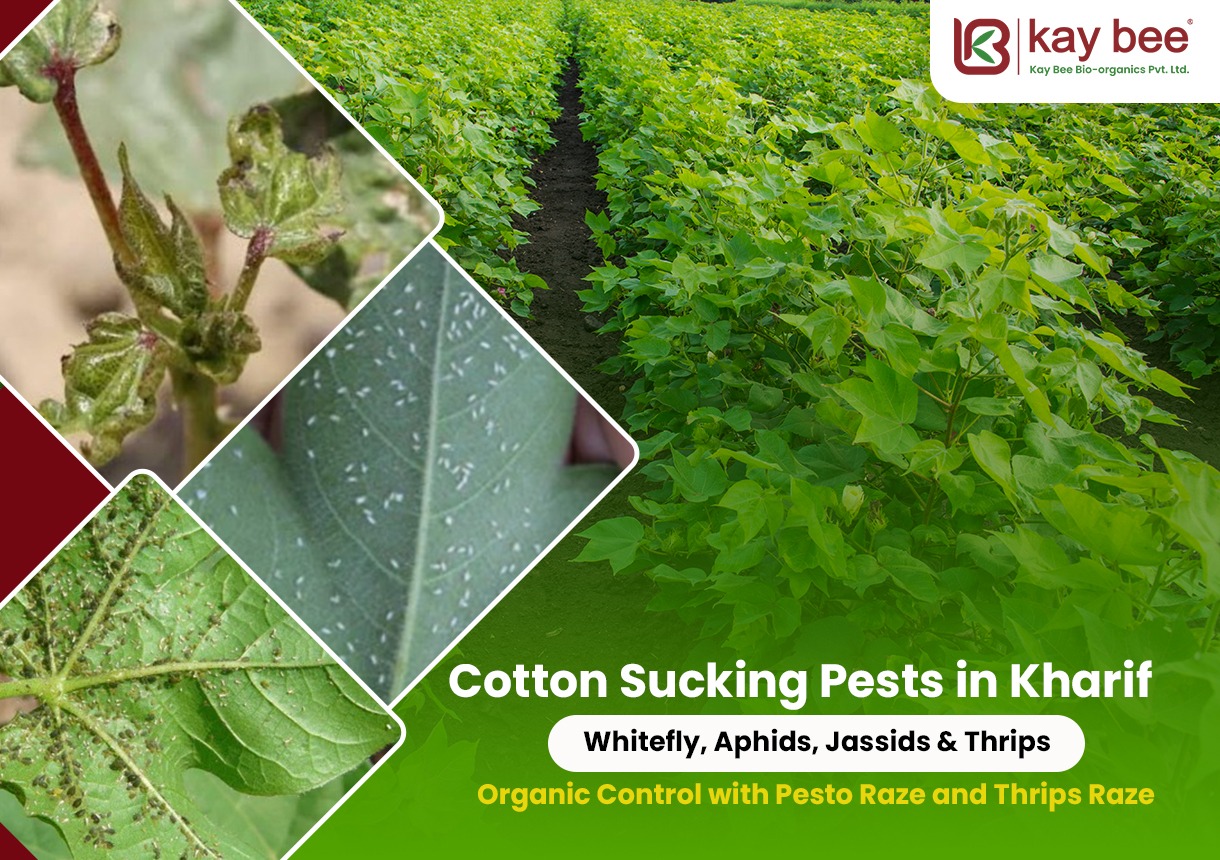
Cotton Sucking Pests in Kharif: Whitefly, Aphids, Jassids & Thrips: Organic Control with Pesto Raze and Thrips Raze
Cotton (Gossypium spp.) is one of India’s most important fibre crops, but its productivity is often threatened by major cotton insect pest infestations during the kharif season. Among the most damaging are whitefly in cotton, jassids in cotton, aphids in cotton, and cotton thrips. These sucking pests attack the crop from the seedling stage to boll development by extracting plant sap, weakening the plants and reducing yield and fibre quality.
Unlike chewing insects, sucking pests possess piercing-sucking mouthparts that feed on plant sap. Continuous feeding causes leaf curling, yellowing, reduced photosynthesis, poor boll formation, and stunted growth. Whiteflies also transmit Cotton Leaf Curl Virus (CLCuV), while honeydew produced by whiteflies and aphids encourages black sooty mould, reducing lint quality. For a complete picture of cotton disease threats this season, also read our guide on managing cotton wilt disease, root rot & alternaria. Timely cotton sucking pest control is essential for profitable cotton cultivation.
Major Cotton Sucking Pests in Kharif
1. Whitefly in Cotton (Bemisia tabaci)
Whitefly in cotton is one of the most destructive sucking pests, especially under warm and humid conditions. For more on how whiteflies spread and are managed across crops, read our detailed guide on whitefly control in cotton and chilli.
Identification
- Tiny yellowish insects (1–2 mm)
- White wax-coated wings
- Adults and nymphs remain on the underside of leaves
Damage
- Sap sucking from leaves
- Leaf yellowing and curling
- Honeydew secretion and sooty mould
- Poor boll development
- Transmission of Cotton Leaf Curl Virus (CLCuV)
2. Aphids in Cotton (Aphis gossypii)
Aphids in cotton commonly attack young plants during the vegetative stage and multiply rapidly through parthenogenesis. For organic management across crops, read our guide on how to control aphids in chilli and tomato organically.
Identification
- Small pear-shaped insects
- Green to black in colour
- Colonies on tender shoots and leaf undersides
Damage
- Continuous sap loss
- Curling of young leaves
- Stunted growth
- Honeydew production
- Sooty mould development
- Reduced flowering and boll setting
3. Jassids in Cotton (Amrasca biguttula biguttula)
Jassids in cotton are among the earliest pests to infest the crop and require immediate management.
Identification
- Small wedge-shaped pale green insects
- Highly active on leaf undersides
- Adults move sideways when disturbed
Damage
- Yellowing along leaf margins
- Upward leaf curling
- Hopper burn symptoms
- Bronzing and drying of leaves
- Reduced photosynthesis
- Premature defoliation in severe infestations
4. Cotton Thrips (Thrips tabaci)
Cotton thrips are important early-season pests that damage seedlings, tender leaves, and flower buds. To understand how thrips are managed in other crops, see our guide on thrips and mite management in capsicum and chilli.
Identification
- Tiny, slender yellowish-brown insects
- Narrow fringed wings
- Nymphs are wingless and pale yellow
- Common inside folded leaves and flower buds
Damage
- Silvery streaks on leaves
- Leaf curling and crinkling
- Drying of leaf margins
- Stunted plant growth
- Reduced photosynthesis
- Flower bud shedding under severe infestation
Conditions Favoring Pest Infestation
Populations of sucking pests increase rapidly under:
- Warm temperatures (25–32°C)
- High humidity
- Excess nitrogen fertilization
- Dense crop canopy
- Delayed sowing
- Continuous cotton cultivation
- Presence of alternate weed hosts
Monitoring for Early Detection
Regular scouting is the foundation of effective cotton sucking pest control. Begin field monitoring 15–20 days after sowing and inspect:
- Underside of young leaves
- Tender shoots
- Leaf margins
- Honeydew deposits
- Curling or yellowing symptoms
- Presence of nymphs and adults
Monitor at least 20–25 plants per acre every week for early detection.
Integrated Cotton Sucking Pest Control
Successful management of every cotton insect pest requires an Integrated Pest Management (IPM) approach.
Cultural Practices
- Timely sowing
- Balanced nitrogen and potassium nutrition
- Removal of alternate host weeds
- Proper field sanitation
Mechanical Control
- Install yellow sticky traps to monitor and suppress whitefly populations.
Biological Control
Conserve beneficial insects such as:
- Ladybird beetles
- Green lacewings
- Hoverflies
- Predatory bugs
- Parasitoid wasps
Avoid unnecessary broad-spectrum insecticides that may harm natural enemies.
Botanical Solutions for Cotton Sucking Pest Control
Botanical insecticides offer an environmentally friendly approach for cotton sucking pest control by reducing pest feeding while preserving beneficial insects. Learn why biopesticides are the best step forward in agriculture.
Pesto Raze — Botanical Protection Against Whiteflies, Aphids and Jassids
Pesto Raze is a scientifically formulated botanical insecticide designed to manage major sucking pests including whitefly in cotton, aphids in cotton, and jassids in cotton. Its plant-derived bioactive ingredients help suppress pest populations by reducing feeding activity, limiting colony development, minimizing honeydew deposition, and promoting healthier crop growth.
Mode of Action — Contact, Systemic, and Fumigant
Antifeedant, Desiccation, Cytolysis activity and Knockout effect can be seen in neonates and early instars. Stomach poisoning, anti-molting hormonal changes, neurotoxicity, IGR activity for late instar, and multilevel target action lead to a bewildering detoxification system of the insect body which fails to survive and never develops resistance to this product.
Recommended Dose: Pesto Raze @ 2 ml per litre of water
Apply as a thorough foliar spray covering:
- Underside of leaves
- Tender shoots
- Growing points
- Early pest colonies
Repeat the spray after 7–10 days depending on pest pressure. For better coverage, add Balanstick (sticker-spreader) to your spray mix.
Thrips Raze — Effective Botanical Control of Cotton Thrips
For effective management of cotton thrips, Thrips Raze is recommended as a dedicated botanical solution. It helps reduce thrips feeding, protects tender leaves and flower buds, minimizes leaf distortion, and supports healthy vegetative growth.
Recommended Dose: Thrips Raze @ 2 ml per litre of water
Apply immediately after the first appearance of thrips, ensuring complete coverage of young leaves and growing points. Repeat after 7–10 days if required based on field observations.
Benefits of Pesto Raze and Thrips Raze
- Botanical formulations suitable for sustainable cotton production
- Effective management of whiteflies, aphids, jassids, and cotton thrips
- Reduces sap feeding and pest multiplication
- Minimizes honeydew and sooty mould development
- Supports Integrated Pest Management (IPM)
- Lower pesticide residue concerns
- Compatible with beneficial insects when used as recommended
- Promotes healthier plants, improved boll retention, and better fibre quality
Recommended Spray Schedule
| Crop Stage | Recommendation |
| 15–20 DAS | Begin weekly scouting for sucking pests |
| First appearance of whiteflies, aphids or jassids | Spray Pesto Raze @ 2 ml/L |
| First appearance of cotton thrips | Spray Thrips Raze @ 2 ml/L |
| 7–10 days later | Re-monitor and repeat spray if required |
| Entire crop season | Continue scouting, weed management, and conservation of natural enemies |
Conclusion
Effective cotton sucking pest control is essential to protect cotton yield and fibre quality during the kharif season. Major pests such as whitefly in cotton, aphids in cotton, jassids in cotton, and cotton thrips can rapidly multiply and cause significant economic losses if not managed early.
An integrated strategy involving regular field scouting, balanced crop nutrition, weed management, conservation of beneficial insects, and timely application of botanical products offers sustainable protection. Pesto Raze @ 2 ml/L effectively manages whiteflies, aphids, and jassids, while Thrips Raze @ 2 ml/L provides targeted control of cotton thrips, helping farmers maintain healthy crops, improve boll development, and achieve higher-quality cotton production.
For complete protection against both pest and disease threats, combine this programme with our guide to managing cotton wilt disease and root rot — together, they give your cotton crop full-season defence.
Latest Blogs
 Tomato Nematode Damage: Underground Signs, Crop Loss and Organic Control with Root Fit
 Sugarcane Growth Stages: Complete Root, Tillering & Vegetative Growth Schedule
 Guava Flowering & Fruit Development: Calbolite Powder for Calcium Nutrition
 Management of Cabbage Diamondback Moth with Larvo Raze + OrgaNeem Organic Products
 Papaya Fruit Rot & Powdery Mildew in Monsoon: Identification and Organic Management
COPYRIGHT © 2026 - ALL RIGHTS RESERVED. MADE BY WebAppGigs